MSC
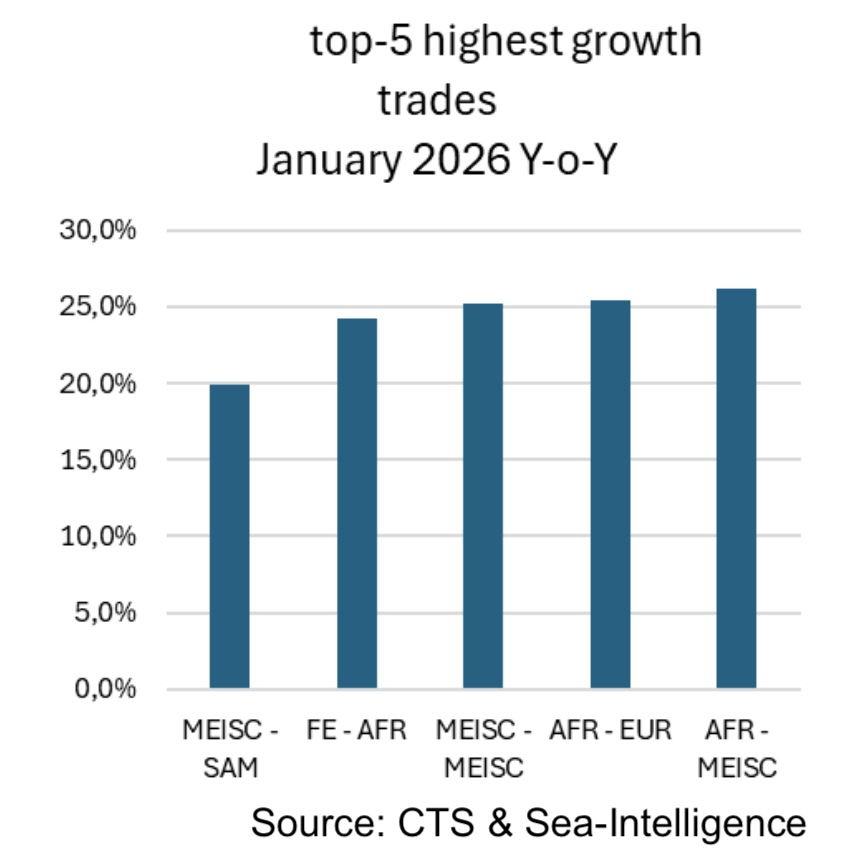
Latest data from Container Trade Statistics (CTS) for cargo loaded during January sees one of the key trends of last year show no sign of slowing down – Africa is increasingly a force to be reckoned with on the global liner map.
The four container tradelanes tracked by CTS with the highest growth rates are all related to Africa, with further analysis from consultancy Sea-Intelligence showing how Africa also tops the charts for year-on-year growth in January for imports as well as exports to and from the different regions CTS divides the world into.
Alphaliner data for November last year showed Asia– Africa capacity (excluding Middle East, India – Africa) accounted for a fleet capacity of nearly 2.2m teu, up from 1.4m teu a year prior (+54.3%). As of mid-December last year, all Sub-Saharan related African services accounted for 8.1% of the overall world container fleet (2.68m teu).
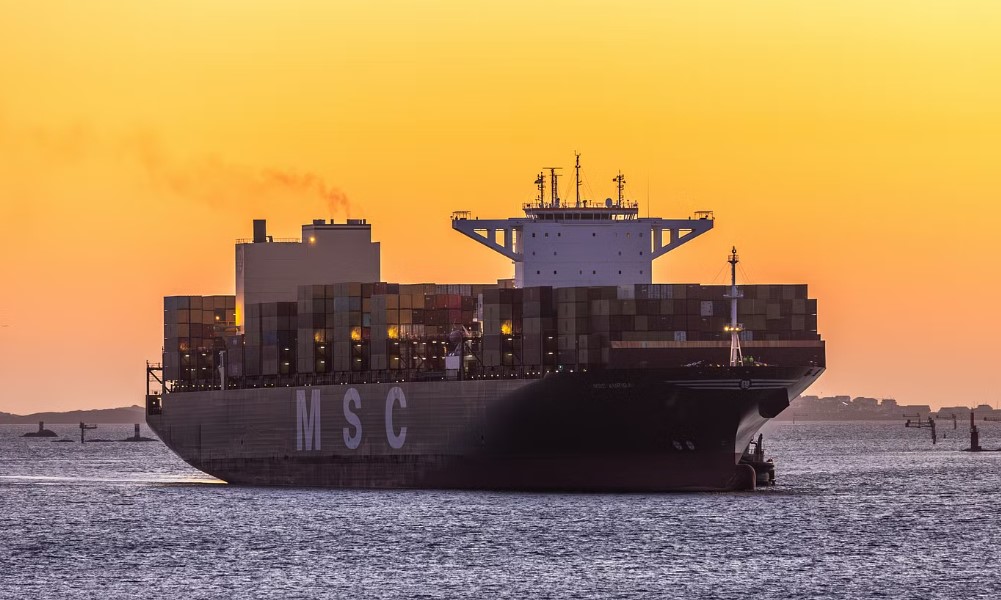
Africa’s rise up on the liner map has been led in no small part by Mediterranean Shipping Co (MSC), the world’s largest containerline, which last year single-handedly catapulted West Africa into Alphaliner’s list of the 10 trading routes with the biggest ships.
Last year, MSC started redeploying some of its largest ships from Asia-Europe to cater instead for the fast-expanding Asia-West Africa market, something that saw the average vessel size on this route jump 28% from 6,343 teu to more than 9,000 teu,
Splash has been reporting on massive new container port creations across the continent over the past couple of years.
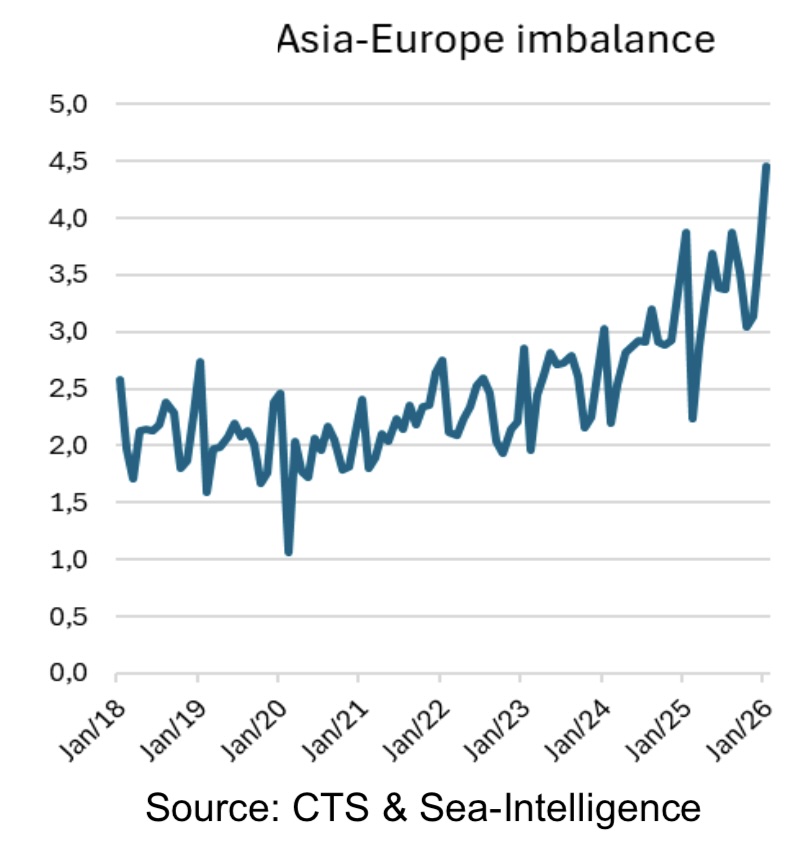
The other very notable trend from the latest CTS statistics is how the how the Asia-Europe imbalance now exceeds 4:1 for the first time amid what Sea-Intelligence described as “very weak” European exports.
“The rapid escalation in imbalance on the Asia-Europe trade skews the economics related to empty repatriation, and de facto increases the unit costs for the carriers on the head-haul,” Sea-Intelligence noted in its latest weekly report.