
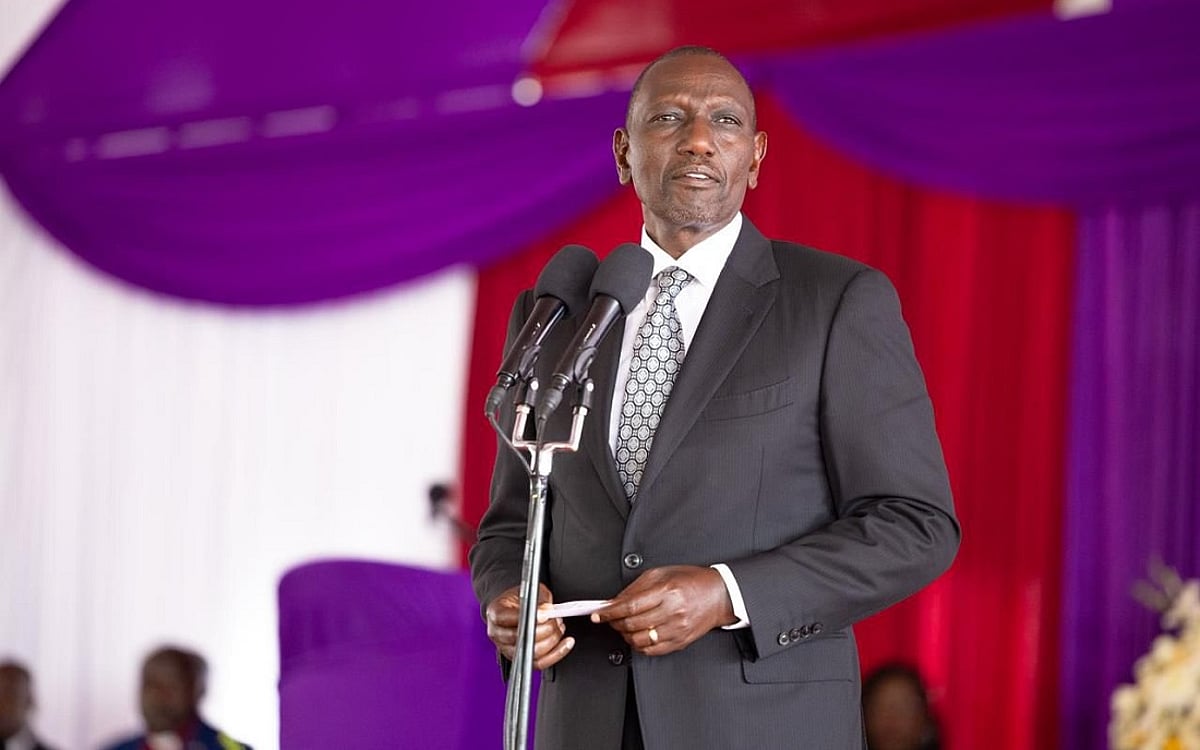
What’s more, last year Kenya began the implementation of yet another stricter policy that caps and strictly regulates the volume of traded carbon credits, denying private and public entities that deal with offset units a free hand as has been previously. The National Climate Change Council, chaired by President William Ruto will, going forward, determine the volume of tradable credits per the Nationally Determined Contribution cycle to align with climate goals as well as ensure that only excess emissions reductions are traded.
Warning shot to rogues
Needless to add, in Kenya, carbon markets are now closely supervised by the National Environment Management Authority (NEMA), which not only approves projects, but monitors environmental safeguards and also conducts audits and other key compliance checks. During the launch of the most recent regulations this February, the Kenya National Carbon Registry, which now serves as a central digital registry to track all carbon credits and projects, Kenya’s Minister/Cabinet Secretary for Environment, Climate Change and Forestry, Deborah Mlongo Barasa, fired a warning shot.
“The introduction of several regulations and safeguards is aimed at controlling carbon credit projects, as well as improve transparency, and ensure local communities fully benefit from resultant climate finance. With this National Carbon Registry, we are happy to have one single, transparent and government-backed platform to not only record but also track and verify all carbon credit transactions in the country,” said Barasa.
Other players like KOKO
The high-profile KOKO Networks’ story is just a tip of the iceberg. Besides KOKO Networks, several other players have either failed or are currently struggling with this stricter scrutiny by the Government of Kenya. Take, Northern Rangelands Trust (NRT) for instance. Its flagship project, ‘Northern Kenya Rangelands Carbon Project’, which is often described as the “world’s largest soil carbon removal project”, was declared illegal and halted two months ago.
Following successful litigation by local communities and environmental activists, the court declared that their key conservancies such as Biliqo Bulesa and others, were established unconstitutionally and without proper community consultation. The project faced multiple accusations of human rights abuses, land grabbing, and failing to obtain FPIC from local indigenous communities. So much so that, Verra, the carbon credit certifier, has suspended the project following these legal challenges and complaints.
In yet another case, Soils for the Future Africa, a company dedicated to developing, managing and implementing soil carbon projects through the restoration of degraded rangelands across East Africa, has been stopped from selling carbon credits through its ‘Kajiado Rangeland Carbon Project’. Residents of Kajiado County demanded a probe into the project in 2025, accusing the company of using exploitative, 40-year lease agreements that lacked proper community consent. Just like NRT, this project faced allegations of coercion, inadequate consultation, and targeting indigenous pastoralist lands for “sham” or low-quality carbon offsets.
Inside KOKO Networks’ over-crediting mess
Experts warn that the carbon credit market is rife with fraudulent and sneaky behaviours, often driven by the desire for high profits in unregulated markets, especially in the Global South. Some players in the industry, including project developers, sometimes rating agencies, or brokers, use sophisticated tactics to inflate the value of credits that may not represent genuine, permanent emissions reductions.
In explaining how KOKO Networks failed test of stricter scrutiny, Price said KOKO Networks used a significantly high Fraction of Non-Renewable Biomass rate (93 per cent), the metric calculating how much woodfuel comes from deforested sources, when the actual rate in cities like Nairobi is now 38 per cent. He said this single metric over credited them by over 2.4X, meaning that using the accurate number would have cut their claimed carbon credits from US$15 million to less than half that.
“They also used distorted baselines, such as claiming their urban customers used only charcoal previously, more than a ton per household per year, ignoring widespread LPG use and other alternatives. This, again, slashing their likely impact. Also, KOKO ran a high-tech walled garden — you could only fill your stove with their tanks, at their fuel ATMs, and all that data was captured in the cloud,” said Price.
He added: “They knew exactly how many litres of fuel every customer bought, to the decimal point. Yet, for carbon reporting, they ignored their own digital data and used a tiny number of surveys. Their latest, in March 2023, talked to only 159 households out of over a million customers to claim an average of 15+ litres per month, vastly boosting their claimable impact. If the reality demonstrated by fuel sales was higher, they would have used that, but they didn’t. That decision speaks for itself.”
Price closes saying: “The result? Independent carbon credit ratings agency BeZero gave KOKO’s credits a failing overall “B” grade, meaning a low likelihood of actually achieving 1 tonne of CO2 removal — and an even worse “D” sub-grade specifically for carbon accounting.”