
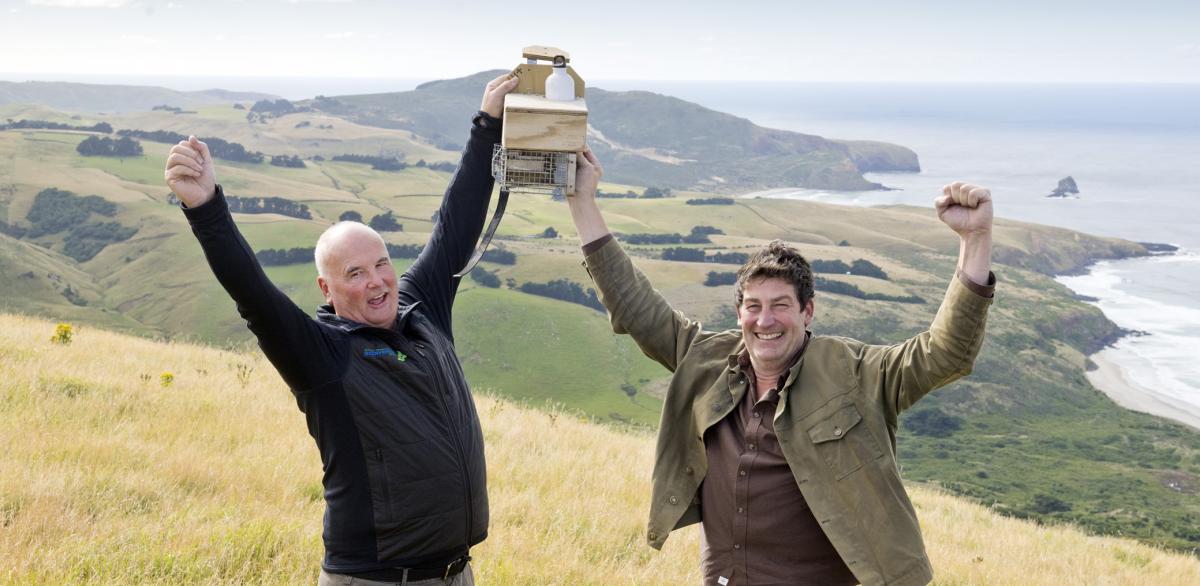
Possums have had their final termination on the Otago Peninsula.
After more than 15 years of hard graft of crawling through bush and dirt and walking seemingly every nock and cranny of the peninsula, it has been declared possum-free.
It makes the peninsula one of the first inhabited landscape-scale areas in New Zealand to eliminate possums.
It cemented Dunedin’s place as the wildlife capital of New Zealand and was a defining moment for conservation in New Zealand, chairwoman of Predator Free Dunedin’s Sally Peart said.
The achievement came from 15 years of determined community effort led by the Otago Peninsula Biodiversity Group (OPBG) and Predator Free Dunedin (PFD).
Native forests, coastal habitats and backyards had already experienced korimako/bellbirds, tūī and other birds returning in greater numbers.
This result could be credited to sustained support from key funders and partners, including the Department of Conservation, Otago Regional Council, Dunedin City Council, Predator Free 2050 Ltd, Wenita Forest Products Ltd, City Forests Ltd and individual donors.
“It proves we can remove possums from a large, lived-in landscape when communities and landowners, mana whenua, councils and national partners pull in the same direction and the benefits for our birds, forests and people will be felt for generations,” Ms Peart said.
OPBG began community possum control on the peninsula in 2009.
Volunteers, landowners and residents built trap networks, checked devices and steadily drove possum numbers down, creating the momentum for full elimination.
As the Predator Free 2050 movement grew, OPBG joined forces with PFD, Halo Project and City Sanctuary.
Together, they brought in additional funding, specialist staff and new technology to shift from “knock-back” to elimination.
“The peninsula shows the power of working as one project team rather than separate programmes,” PFD project leader Rhys Millar said.
Initially possums were everywhere on the peninsula, he said.
“There would be the cold sea-facing cliffs on the ocean side of the peninsula and you would think they is no way a possum would be there. But they were.”
Solitary creatures, the males roamed far and wide to find a mate as the population dropped, .
The final push was technically demanding.
Teams combined dense camera networks, thermal drone surveillance and scat detection dogs to find the last possums in steep gullies, coastal cliffs and farmland.
A “proof of absence” tool then turned very low detection rates into a peninsula-wide picture of risk and confidence, guiding where to focus surveillance.
“This work has been hard and, at times, exhausting for those on the ground.
“But the collective commitment to see it through has been extraordinary — every person who checked a trap, allowed access to their land or reported a sighting has helped make this possible,” Mr Millar said.
Although possums had been eliminated, OPBG and PFD emphasised the job was not over.
Residents and visitors are encouraged to report possum sightings immediately.
“Technology helps us cover a lot of ground, but it’s local people who notice changes first,” OPBG chairman Hoani Langsbury said.
“If you think you’ve seen a possum or signs of one, please let us know straight away — every report helps protect what we’ve achieved.”
Hunt to extinction
• Total of 9200ha covered
• More than 500 volunteers involved
• More than 26,000 possums captured