
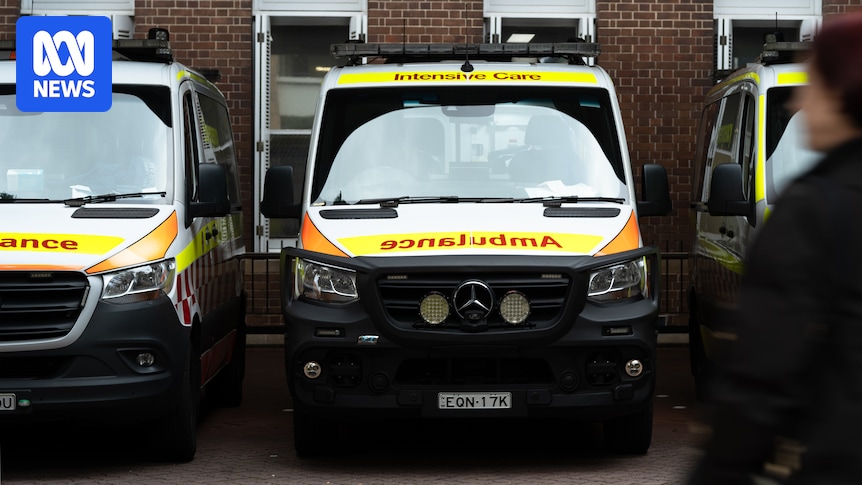
New South Wales emergency departments and ambulance services have experienced unprecedented demand, surpassing the COVID pandemic, new data shows.
The latest Healthcare Quarterly, from October to December 2025, released by the Bureau of Health Information (BHI), paints a picture of a health system which remains under immense pressure with record numbers also recorded in admitted patient episodes.
In the three-month period, there were 408,518 ambulance calls and 300,367 incidents — the highest number since the bureau began reporting in 2010.
There were 820,009 attendances in hospital emergency departments, also the highest recorded.
President of the Australian Medical Association (NSW) Kathryn Austin said the latest BHI figures were striking but not surprising.
“More and more we’re seeing a hospital system that is straining under the weight of incredible challenges and every time we report on this data we comment on this,” Dr Austin said.
“This is absolutely a crisis within our health system and, day in, day out, our nurses and doctors in our emergency departments and across our hospital system have been telling the government that this is the case.”
Further compounding the challenges, separate figures show there has been a 50 per cent increase in the number of stranded patients in NSW public hospitals over the year to December 31, 2025.
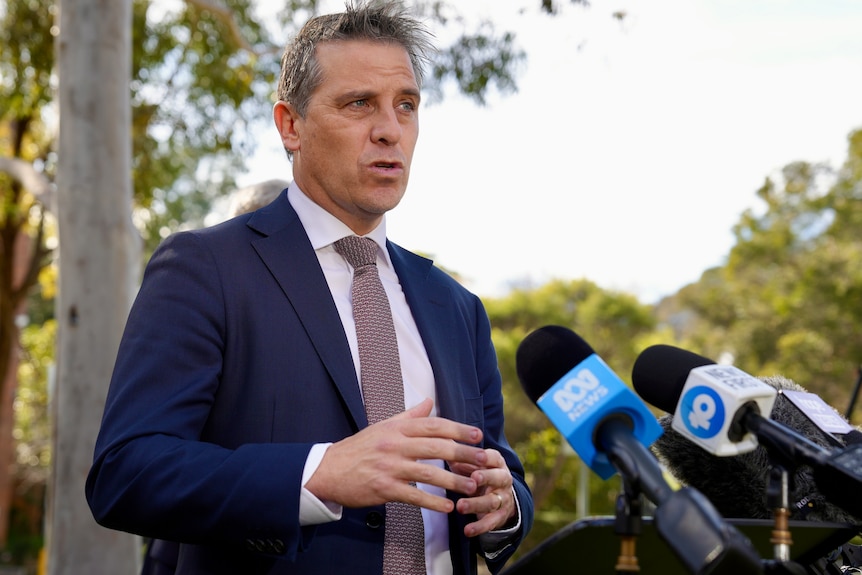
Ryan Park concedes the state’s health system is under strain. (ABC News: Andrew Whitington )
Stranded patients refer to people, like aged care patients and NDIS recipients, who are medically fit for discharge but remain in hospital because they have nowhere suitable to go.
State and territory governments have long been pressing the Commonwealth for stronger action to address the issue which creates “bed block” in hospitals.
Do you know more?
If you have any information about the story, contact Pablo Viñales
Minister blames ‘bed block’
NSW Health Minister Ryan Park has conceded the system is under strain but blamed “bed block” as a major factor exacerbating the problem.
“There’s been a 50 per cent increase in these patients, that means that there’s the equivalent of about Westmead and Mount Druitt hospitals taken offline, out of use every single day,” Mr Park said.
“We can’t have a situation where we’re seeing 50 per cent more patients languishing in our hospitals because they can’t get access to an aged care bed or they can’t get NDIS support.
“That’s not a system that’s working when it’s a two-funded system.”
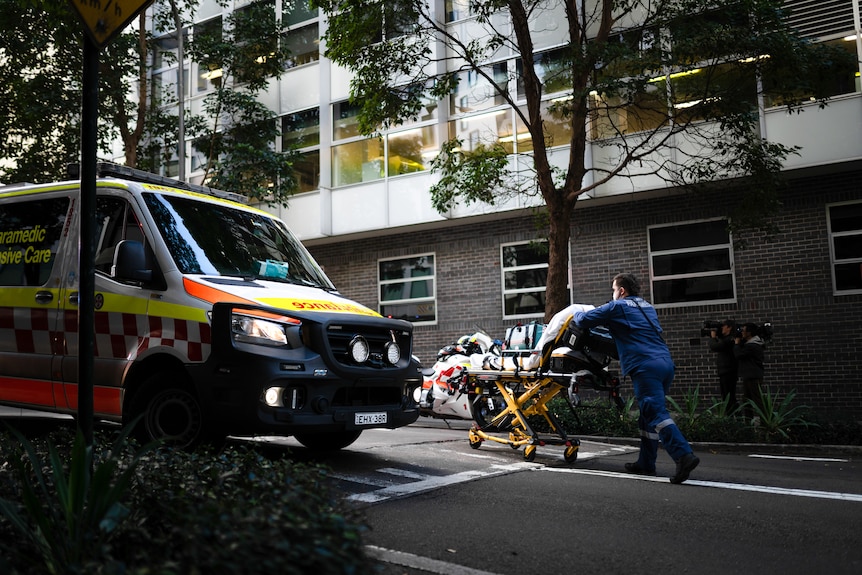
Dr Austin says the needs of patients are becoming more complex (ABC News: Keana Naughton)
Over the last year the number of patients ready to be discharged but still waiting for federally funded aged-care placement has increased from 438 to 776.
Of the emergency presentations in hospitals, the largest cohort was allocated in triage category three, which is classified as a serious condition for people in need of treatment within 30 minutes.
‘Patients are presenting later’
Dr Austin said with an ageing population, the needs of patients were becoming more complex, and it often led to people presenting into hospital or calling an ambulance.
“When we see increasing cost of living, when we see other challenges, we know that patients are presenting later,” Dr Austin said.
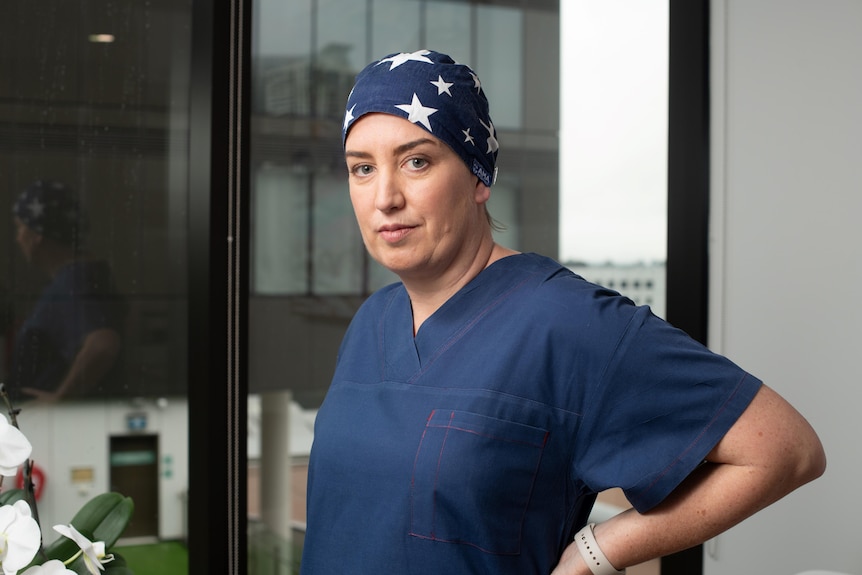
Kathryn Austin says hospitals are “straining under the weight of incredible challenges”. (Supplied: Australian Medical Association)
“Therefore needing more and more complex care, which often comes at the cost of needing to call ambulances.”
BHI senior director Hilary Rowell said the increase in demand reflected a long-term trend, but that the number of ambulance responses dispatched to the incidents across the state was stable.
“What we’ve seen when we look at ambulance is a long-term gradual increase,” Ms Rowell said.
“So there was record demand in terms of the highest number of calls, incidents, and in fact the number of responses to those calls.”
Mr Park said the state government was trying to address the challenges but relieving pressure on the system would take time.
“It’s always a concern when you’re seeing big increases in presentations. We’re doing a lot to try and avert those people coming through our health direct and virtual care services and our urgent care services,” Mr Park said.
The BHI report has shown some improvements in the system too, including an increase in the number of elective surgeries performed (58,922) and a modest drop in the number of patients on the waiting list.