
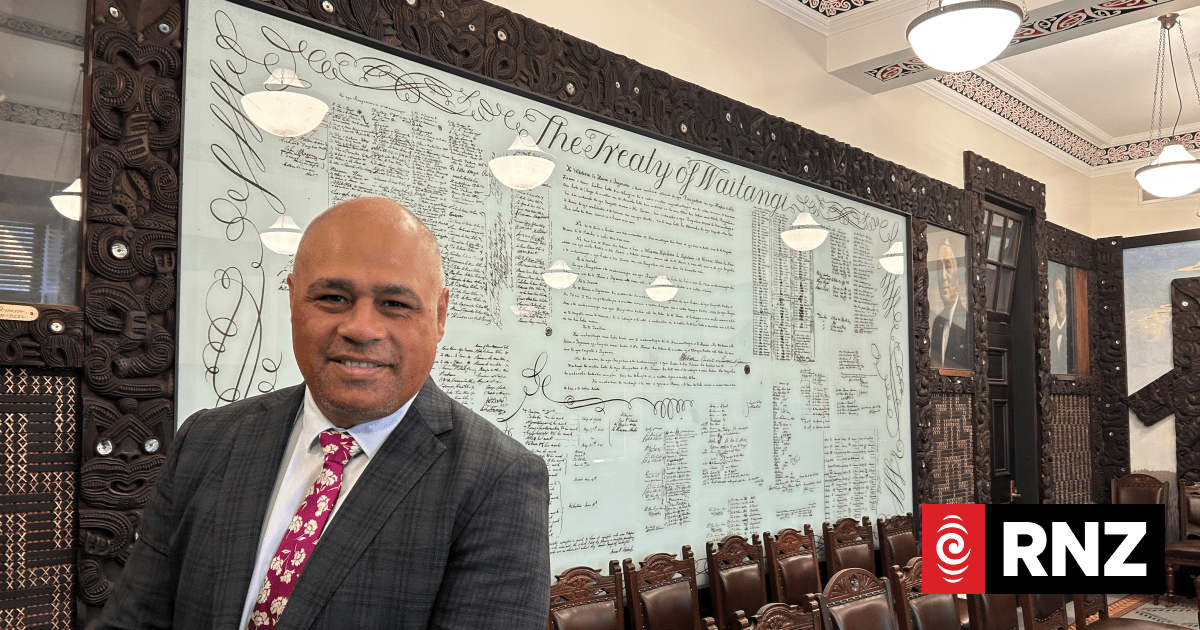
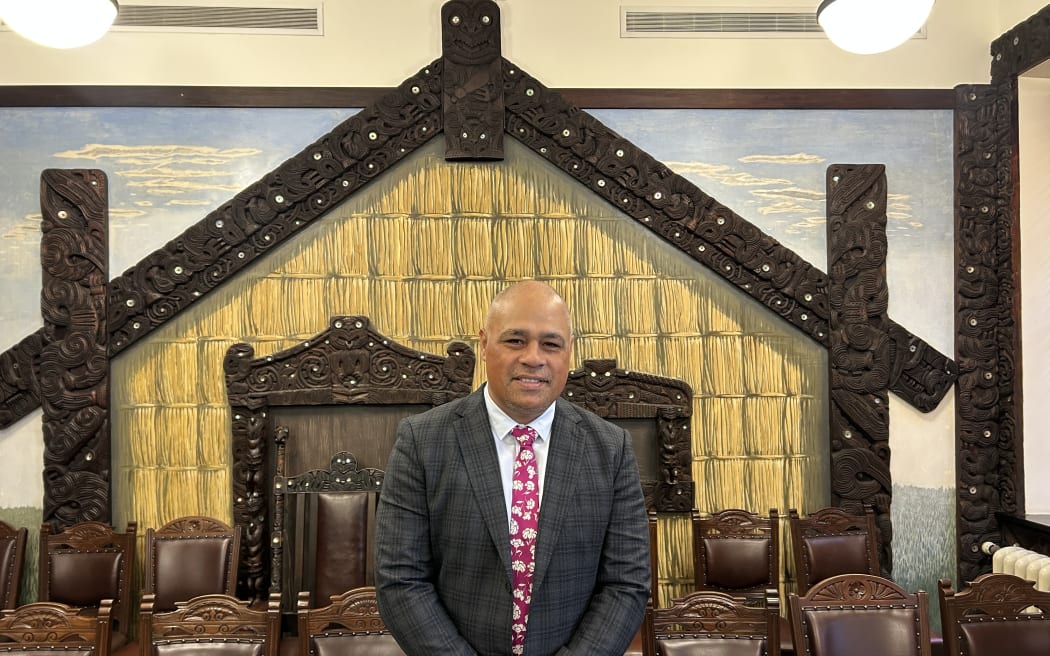
Peeni Henare stands in Matangireia at Parliament.
Photo: RNZ / Lillian Hanly
Outgoing Labour MP Peeni Henare says he is ready to “see the back of this place”, as he prepares to leave both Parliament and the party who gave him an “opportunity” after 12 years.
“You can only try your best, and I believe I’ve done that,” he said in a sitdown interview with RNZ during his final week as a Labour MP, revealing the most difficult times for him were balancing “being Māori” and “being a politician”.
Henare said he had “mixed emotions” during his last days in Parliament, and said it was the “human connections” in the place that made him feel sad this week.
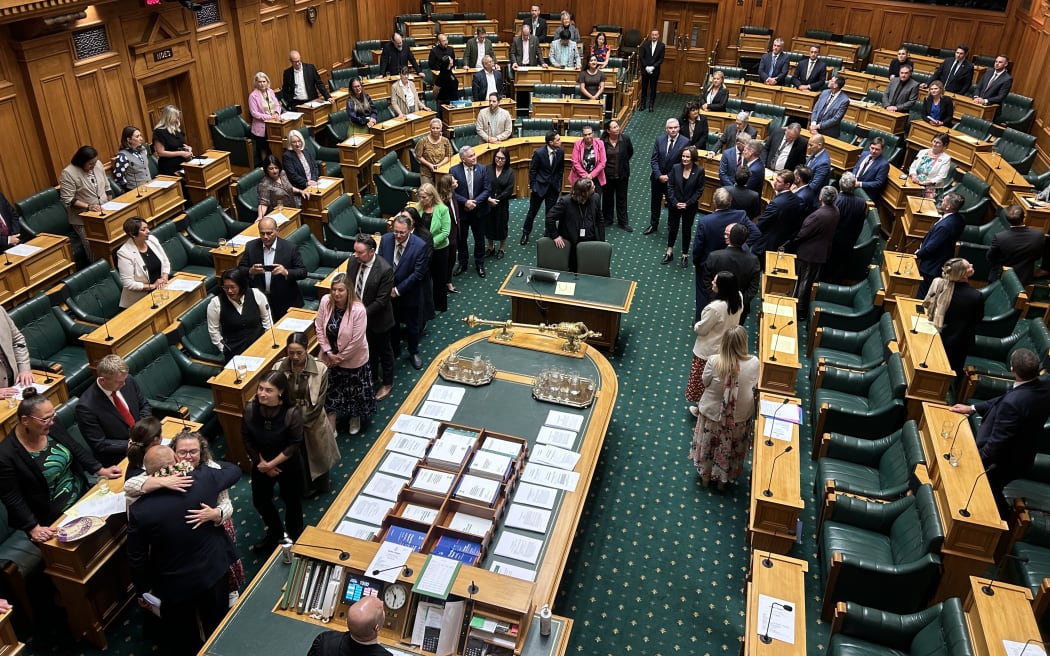
Peeni Henare is congratulated after his valedictory speech.
Photo: RNZ / Lillian Hanly
He had connections across the House, enjoying good relationships with members from all parties, saying that was a testament to how he conducted himself politically, “that’s always been my style”.
He also had connections with the security guards, earlier this week he thanked them for leaving kina in his fridge.
“I’ve had a lot of people from all different walks of life, inside and outside of Parliament, talking about how sad they are to see me leave politics, some even hope that I might change my mind,” he said.
Asked whether anyone in the Labour leadership had asked him to change his mind, he responded: “There’s always conversations with the Labour leadership, but my mind’s pretty made up”.
The resignation
Henare’s shock resignation was announced at Waitangi, after he confirmed he was not contesting the Tāmaki Makaurau seat.
Following a messy media briefing with Labour leader Chris Hipkins, Henare announced he was calling time on his 12-year Parliamentary career, citing exhaustion and a desire to spend more time focusing on his family and future.
Hipkins, who initially refused to answer questions about the resignation, denied the announcement had been bungled, but it did not stop questions being asked about the circumstances.
At the time, New Zealand First Deputy leader Shane Jones, and a relation of Henare’s, expressed his surprise at the retirement.
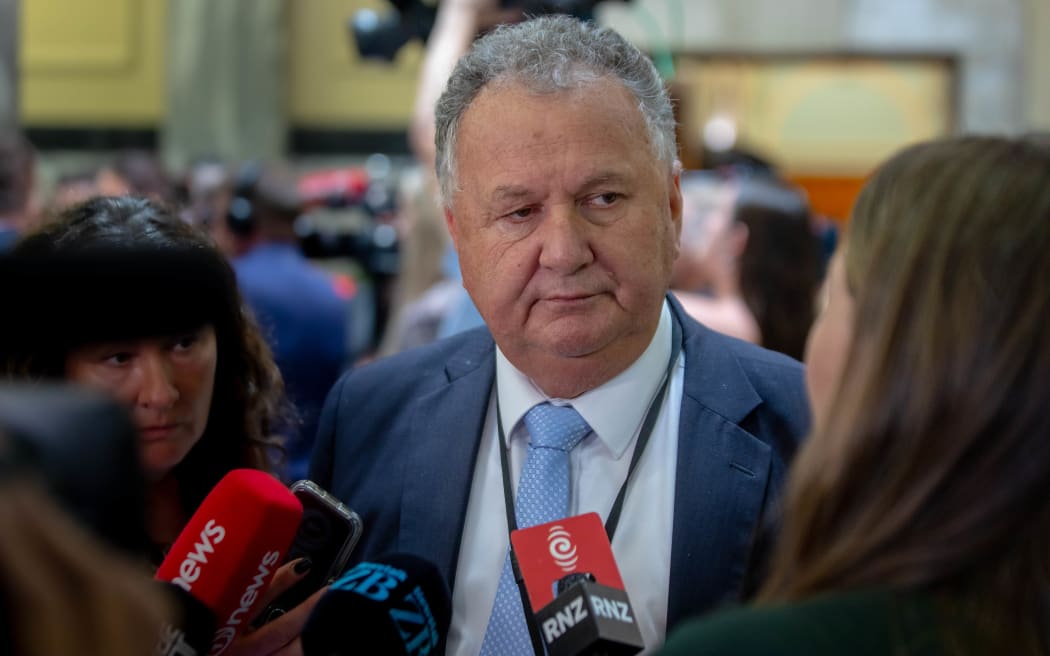
New Zealand First deputy leader Shane Jones expressed surprise when he heard of Henare’s retirement.
Photo: RNZ / Mark Papalii
He said he wanted to find out what had happened and that the “kumara vine” would inform him.
Ahead of Henare’s valedictory on Wednesday, Jones said he no longer wanted to speculate.
“That was a word said at Waitangi, and the god of wind has blown those words long way into the distance,” Jones said.
Asked if he thought Labour regretted letting Henare go, he said Henare was not the first Māori that Labour “forced out”, having left the party himself in 2014.
‘Maybe I should have been more of a Māori’ – Henare
In Henare’s maiden speech in 2014, he referred to Dr Pita Sharples of Te Pāti Māori, who had not been re-elected, saying “I have taken up the paddle of the vessel that you left behind”.
Asked about this, Henare said he believed every Māori had a bit of Te Pāti Māori in them. He described marching in the Foreshore and Seabed hīkoi in 2004, and more recently the Toitū te Tiriti hīkoi.
“I’m Māori to the core, but I make no bones about it – Labour gave me an opportunity, and one that I was fortunate to have.”
Surprising too perhaps given his family had been tied to the National Party.
“I ultimately chose Labour, and have worked hard for 12 years with them.”
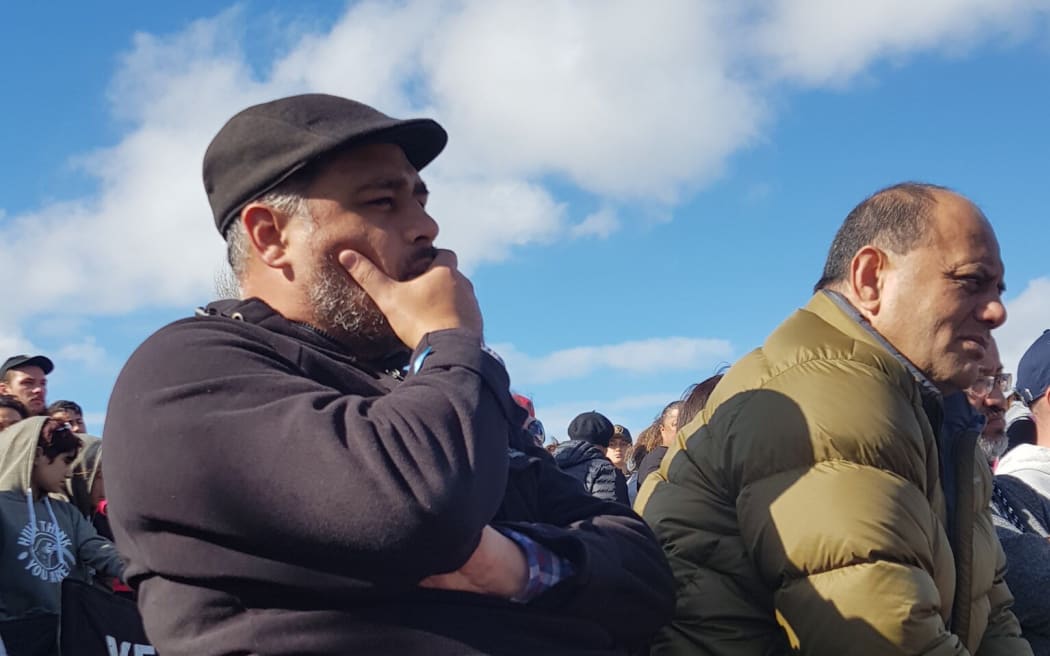
Peeni Henare (L), then Labour MP for Tamaki Makaurau, listens to speeches at Ihumātao in 2022.
Photo: RNZ
He has held multiple ministerial portfolios, such as ACC, Civil Defence, Whānau Ora, Defence, Forestry, Tourism, Veterans and Youth Development, as well as various roles in opposition.
He was also the only Labour MP to be sent to the Privileges Committee as part of the haka Te Pāti Māori started in the house over the first reading of the Treaty Principles Bill.
He was most proud of securing a significant boost of funding for Whānau Ora. In his valedictory speech on Wednesday, he described the establishment of the Māori Health Authority as a “crowning moment”.
Asked if he had any regrets from his time in Parliament, he referred to the Covid-19 pandemic response and questioned whether he had made the right decision at times.
“It was hurtful at that time, those decisions around burial and tikanga Māori and things like that were always quite difficult.”
Another “particularly challenging time” was Ihumātao he said, when he had to “dance on the head of a pin, if you like, as a politician and as a Māori”.
“I walked away from there thinking, maybe I should have been more of a Māori.”
On walking that fine line within the Labour party, he acknowledged it was challenging, however, the feeling of isolation or inability to express “your Māoritanga to its fullest” was a challenge for any Māori MP.
But because of the roles he had held in the past, and also the burden of his whakapapa (ancestry), it meant he would question “is Peeni the Māori today, or is he the politician?”
He did have fond memories of times when he was well supported in the Labour party and able to “progress kaupapa”, so it was a “bit of give and take”.
The Māori vote
Last election, Labour lost six out of the seven Māori seats. He said there was strategising taking place to win them back.
“No doubt about it, we’ve got work to do” he said, on winning the Māori vote.
“My message is always the same for Māori in the Labour Party, don’t rebuild for the election.
“Rebuild with a view towards securing the Māori vote for the next 10 to 20 years.”
He said Willie Jackson, co-chair of the Māori caucus, did a good job of talking about Labour’s key areas of focus this year (jobs, health, homes), while also listening to what Māori wanted to see from a potential Labour government, “he’s a political animal”.
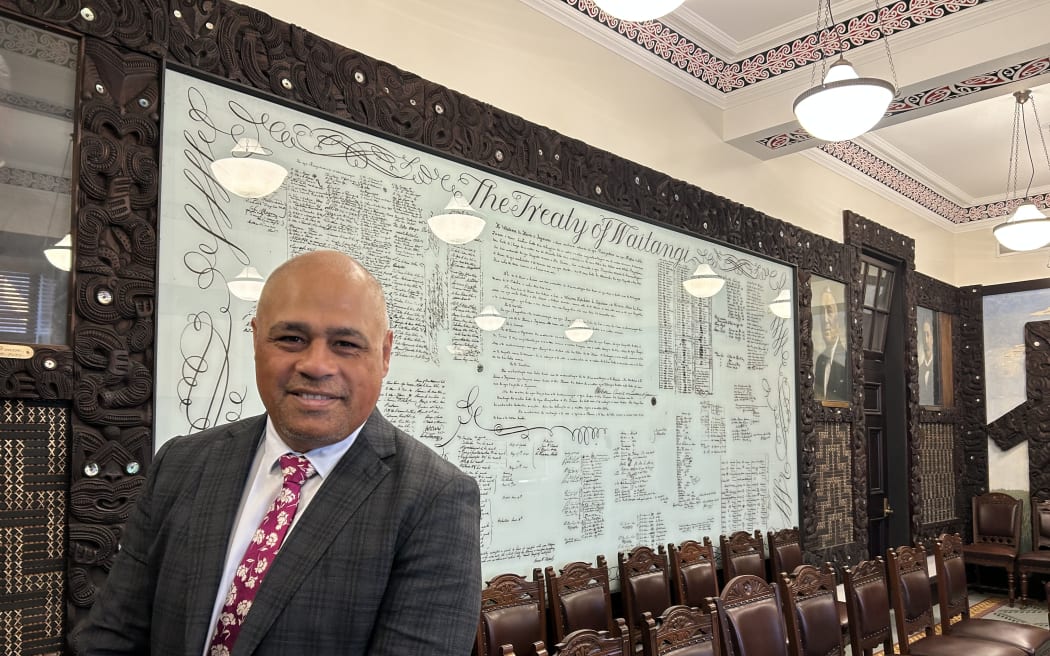
Peeni Henare stands in Matangireia at Parliament.
Photo: RNZ / Lillian Hanly
“But be under no illusion, the 2026 election is going to be a tough one.”
Asked whether the turmoil Te Pāti Māori faced last year was the reason Labour was in with a chance in the Māori seats this year, Henare said that was part of it.
He reflected on his success in 2014 being partly because the “tide was going out on Te Pāti Māori” because of their association with the National Party.
‘My time was done’ – Henare
Last year, Henare lost for a second time to Te Pāti Māori in a by-election for the Tāmaki Makaurau electorate seat.
He had been honest about how bruising the loss was, and there were questions about whether he would run for the seat again.
He said there were ongoing conversations about how he was feeling and his career, and ultimately the party asked him to consider it all.
“There comes a time where you should call your time on your career and allow others to push the kaupapa forward.
“I decided my time was done.”
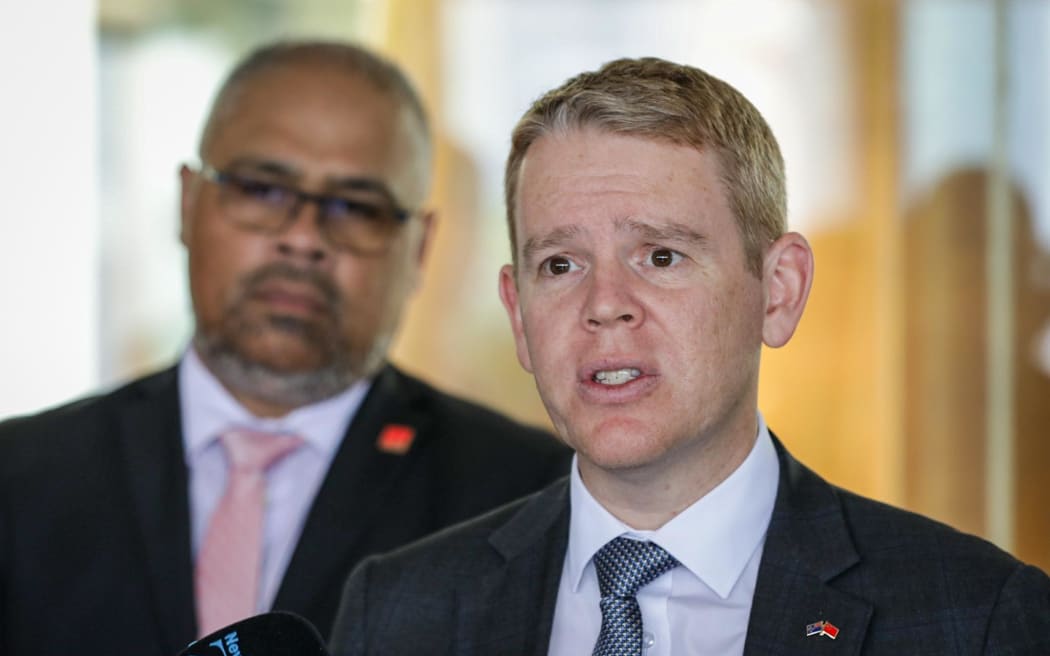
Chris Hipkins (R) and Peeni Henare, pictured in 2023.
Photo: RNZ / Nate McKinnon
He described personal reasons, such as his family, for the decisions, but also that no one’s time in politics was infinite.
Hipkins was asked by RNZ on Tuesday this week whether he had any regrets that Henare was leaving. He said he was “very fond of Peeni”.
“I’m always sad to see any of my colleagues go, and I’ll be sad to see him go.”
Asked if the Labour leadership told Henare there was not a place for him, Hipkins maintained what he had said all along, that it was “Peeni’s decision”.
What’s next?
He had his eyes set on putting his experience, knowledge, connections and talent to work for his iwi, Ngāpuhi.
“Continuing to progress the kaupapa of my people and the wellbeing and interests of my people – that’s a calling that’s always been there for me.”
That could potentially take the form of being a negotiator for the Ngāpuhi treaty settlement, “Without being presumptuous – I think there’s an opportunity.”
On whether the Treaty Negotiation Minister had approached him, Henare said there had been nothing official, “he knows my number, when I leave this place – feel free to give me a call”.
Minister Paul Goldsmith told RNZ he would “have a chat” with Henare.
“I’ve got big challenge to find a way through to a settlement with Ngāpuhi, and I’ve got good Crown negotiators, but there may be a role somewhere in there for Peeni, he’s a real leader.”
Sign up for Ngā Pitopito Kōrero, a daily newsletter curated by our editors and delivered straight to your inbox every weekday.