
Scientists have recorded the first electric whistle from Mars, a faint radio signal produced by a lightning-like atmospheric discharge.
The detection turns a long-standing possibility into a documented event, showing that Mars can generate electrical bursts that send radio waves into space.
First signal from Mars

A single radio trace captured high above Mars carried the unmistakable pattern of a descending electromagnetic whistle.
Analyzing that signal from NASA’s MAVEN spacecraft, atmospheric physicist Frantisek Nemec of Charles University showed that it matched the radio fingerprint expected from a lightning-generated burst.
The brief event lasted less than half a second yet displayed the same downward sweep in frequency seen in well-known whistler signals on Earth.
Because only rare regions of Mars allow such signals to travel upward without fading away, the observation raises a deeper question about how often these hidden discharges occur.
Physics of a radio whistle
When an electrical discharge erupts, it releases energy across many frequencies, including very low radio waves.
Those waves can stretch into a whistler, a radio tone that drops as frequencies spread out, if they climb through charged air.
Higher notes arrive first because they move faster through that thin charged gas, while lower ones lag behind.
By the time a spacecraft records the signal, a single burst has turned into the descending pattern scientists recognize.
Static charge on Mars
Dry dust can still make electricity on Mars, because grains charge each other through constant collisions.
Scientists call that the triboelectric effect, charge created when grains rub together, and Mars favors it.
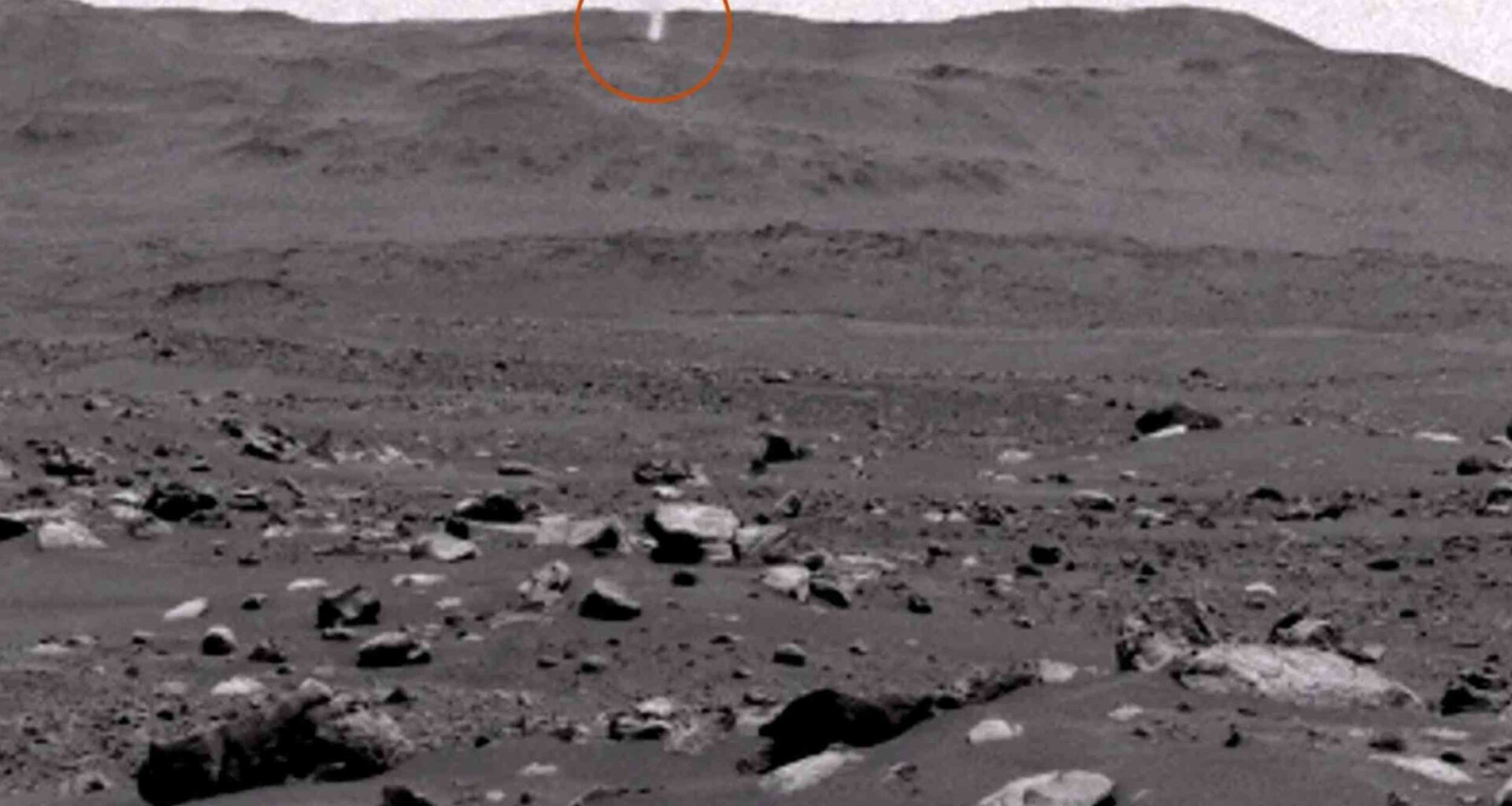
Across Mars, giant dust devils and planet-scale storms create ideal settings for charge to build.
That makes Martian lightning easier to accept, even without a bright flash ever appearing on camera.
Why Mars hides it
A missing global magnetic field complicates the picture, leaving only scattered crustal patches from an older planet.
Near those patches, the ionosphere, the electrically charged upper air, can guide radio energy upward instead of smothering it.
Sunlight usually compresses that layer too tightly, so the June 2015 event had to occur just after sunset there.
Without that darker, thinner route and a nearly vertical field line, the signal would have died before the MAVEN spacecraft could detect it.
One signal among thousands
The team searched 108,418 wave recordings and found only one convincing event, a hit rate that shows how narrow the window was.
Fewer than one percent of the snapshots came from places with the right magnetic geometry, and even fewer were on the night side.
Rarity, not weakness alone, may explain why Mars seemed quiet for so long and why more strikes likely escape notice.
Missing frequencies explained
Only the lower part of the burst survived, because higher frequencies faded out on the way up.
As the wave climbed through the plasma – a gas of free charged particles – collisions drained energy most strongly at higher frequencies.
That is why MAVEN saw frequencies only up to about 110 hertz, even though the original discharge was broader.
The missing upper half was not a contradiction, but part of the pattern that helped confirm the event.
True strength of the signal
At the spacecraft, the event looked modest, only about ten times stronger than the background noise.
After accounting for losses on the way up, the source itself would have rivaled a strong discharge on Earth.
That estimate matters because orbiters hear only what survives the trip, not the full force released below.
Even so, the team still could not pin down the source to much better than about 200 miles.
Evidence on the ground
By late 2025, Perseverance had already supplied a second line of evidence, hearing crackles from tiny discharges in dust events.
Those surface recordings captured 55 electrical events, usually during dust devils or dust storms around the rover.
Seen together, the rover and orbiter results point to a range of Martian electrical activity, from local sparks to stronger bursts.
That broader picture makes the new whistle easier to place, because it no longer stands alone.
Chemistry after the spark
Electrical discharges do more than make noise, because they can break apart simple gases and help build new molecules.
That possibility sits behind prebiotic chemistry, the chemical steps before living cells, which asks how simple ingredients could turn into larger ones.
The 1953 Miller experiment showed that electric discharges could produce amino acids from simple starting gases under lab conditions.
Mars is still far from proven habitable, but every verified spark adds one more process researchers must count.
What this changes
Across orbit and ground observations, Mars now looks less electrically quiet and more like a world where dust, air, and magnetism still interact.
Future missions with better wave coverage could show how often that happens, where it happens, and whether the chemistry matters.
The study is published in Science Advances.
—–
Like what you read? Subscribe to our newsletter for engaging articles, exclusive content, and the latest updates.
Check us out on EarthSnap, a free app brought to you by Eric Ralls and Earth.com.
—–