
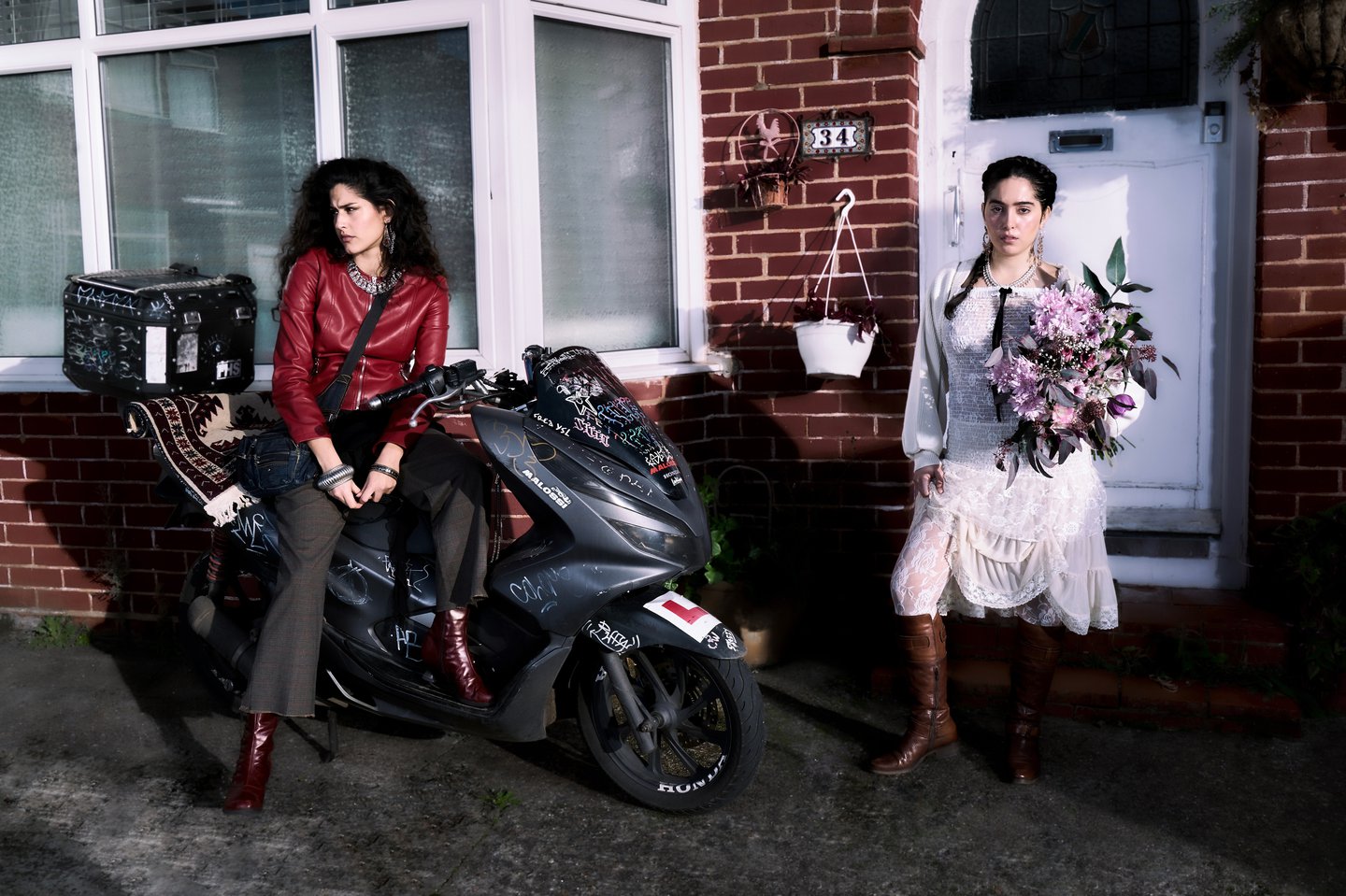
The London-based photographer Bea Dero uses her Sony A7 III to create high contrast, romantic glimpses of young lives. “This includes celebrating all who authentically embrace themselves,” says Bea, who creates unapologetic depictions of “natural ancestral features, self-expression and sexuality”. Conviviality is the glowing heart of Bea’s work.
Her projects A Night In and When Joy Emerges demonstrate this zest for togetherness. Friends fold over each other, sharing a cigarette. They share a kiss. They dance. These snapshots feel like candid memories of camaraderie, bound by shared cultural ties shown through draped fabrics and coin scarves. It’s through a mix of playful creative energy, strobe lights and edits in Photoshop and Lightroom that images become distinctly Bea. “I love capturing togetherness, joy, movement, dance, play, love — anything that gives release,” says Bea. “I see this all as a form of resistance.”
Bea’s work celebrates collective identity, as informed by her British-Iranian heritage. She depicts familiar details: “patterns, rugs, family, good food, traditions – any sense of home”, says the photographer. In The Moving Van Cost Too Much, a rug hold between two pairs of hands at a tube station is shown as a creature comfort, something that makes a house a home. It’s the hardest thing to carry when moving, and yet, the arduous journey is always worth it. Rice or Chips?, meanwhile, is a demonstration of blended belonging. A figure holds a bag of Kamran rice in a family portrait-style stance, shot in front of a fish and chip shop – the quintessential British staple.
Perseverance is key tenent for the photographer. She’s inspired by filmmaker Jafar Pahani, influenced by his “persistence and utter need to create and share, making it all happen on his own terms no matter the circumstance”. Bea spent years refusing to call herself a photographer, seeing her relationship with the camera as simply experimentation with image-making. But she embraced the label after slowly but surely falling in love with the medium: “I don’t think the title encapsulates my entire identity as an artist, but it now feels like a hugely essential part of my practice,” Bea ends.