
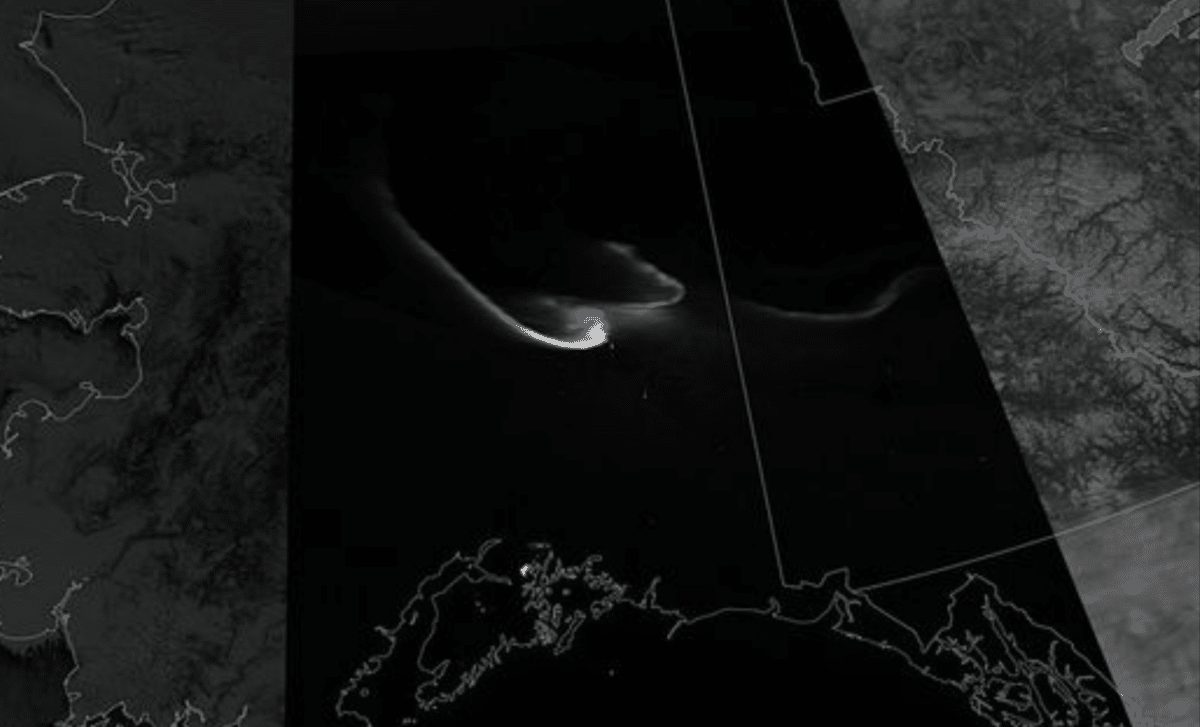
In the study of lunar eclipses, NASA’s research into the varying shades and hues of a total lunar eclipse provides fascinating insights into the impact of this astronomical event on Earth’s atmosphere and surface. A study conducted by NASA’s Earth Observatory captured a total lunar eclipse that occurred on March 3, 2026, revealing how the moon’s changing illumination affected regions on Earth, from city lights to auroras. By studying satellite images of the event, scientists were able to trace the nuances of moonlight during the eclipse and its effects on the environment below.
The Fascinating Science Behind Lunar Eclipses: How NASA’s Study Unveils New Insights
A lunar eclipse occurs when the Earth comes between the Sun and the Moon, casting its shadow on the lunar surface. During this event, the moon often takes on a red or orange hue, earning the popular nickname “Blood Moon.” The 2026 total lunar eclipse, observed across parts of the Americas, East Asia, Australia, and the Pacific, was an extraordinary opportunity to study this natural phenomenon. In addition to offering a spectacle for skywatchers, it also provided a valuable opportunity for researchers to use satellite technology to observe how the eclipse affected the environment on Earth.
NASA’s study used the VIIRS (Visible Infrared Imaging Radiometer Suite) onboard the NOAA-21 satellite to capture the effect of the eclipse on the Earth’s surface. By monitoring moonlight reflected onto the Earth during the eclipse, scientists were able to measure the change in brightness as the event unfolded. This technique allowed them to track the eclipse’s progression, highlighting the different phases and how they impacted regions on the planet. While skywatchers on the ground marveled at the visual effects of the eclipse, NASA’s satellite imagery painted a much broader picture of how such astronomical events ripple across the globe.
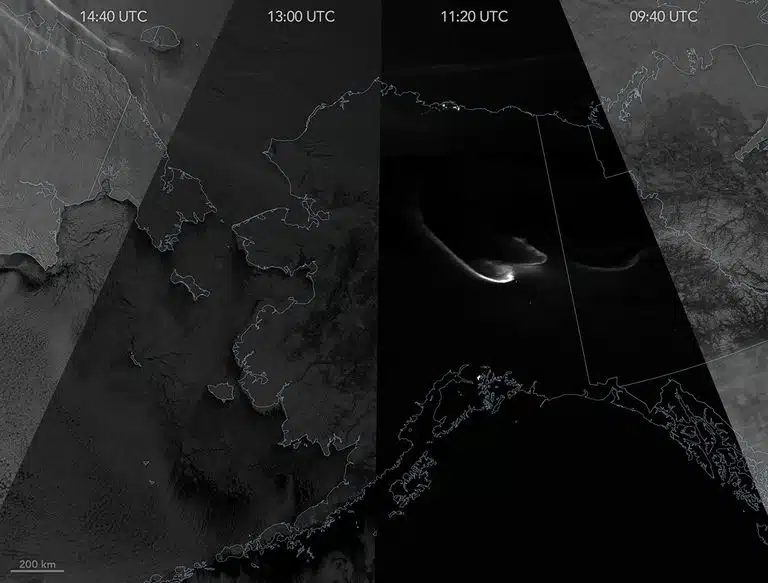 Shades of a Lunar Eclipse. Credit: NASA Earth Observatory
The Role of Satellites in Observing Lunar Eclipses
Satellites have become an invaluable tool for studying celestial events, including lunar eclipses. While astronomers use telescopes to capture the moon’s appearance, satellites like the NOAA-21’s VIIRS system enable scientists to study the lunar eclipse’s effects from a unique perspective. By detecting moonlight reflected onto Earth, these satellites can map out how the eclipse interacts with the atmosphere and the planet’s surface.
The VIIRS day-night band, which can detect a wide spectrum of light, allows scientists to observe not only the moon’s light but also other phenomena like auroras and artificial light. During the 2026 lunar eclipse, this technology helped researchers track how the amount of reflected moonlight changed as the eclipse transitioned from the partial phase to the total phase. This ability to map out varying intensities of moonlight is crucial for understanding the broader effects of lunar eclipses on Earth’s natural systems.
NASA’s Exploration of the 2026 Total Lunar Eclipse
On March 3, 2026, the world had a front-row seat to an exceptional total lunar eclipse. While the event was visible to millions, NASA took a unique approach by using satellites to observe how the eclipse affected Earth’s surface. The data collected revealed fascinating details about the dynamics of the eclipse, including how moonlight varied in different regions. For example, the northern part of the Arctic showed very little moonlight during the total phase of the eclipse, whereas the light from auroras and distant settlements like those in Alaska were still visible in the satellite images.
As the eclipse continued, the light intensity gradually increased during the partial phase, lighting up snow-covered landscapes in Alaska and the Bering Strait. The varying phases of the eclipse were also marked by a noticeable shift in brightness, allowing NASA’s research team to document the full range of effects from the initial dimming to the return of the full moon’s light.
Understanding the Impact of a Blood Moon on Earth’s Environment
The “Blood Moon,” a striking feature of total lunar eclipses, is caused by Earth’s atmosphere scattering sunlight, which then illuminates the moon in shades of red or orange. While this phenomenon is beautiful to observe, it also offers valuable insights into the Earth’s atmospheric conditions. NASA’s study of the March 2026 lunar eclipse focused on tracking the change in moonlight intensity during different phases of the eclipse, shedding light on how Earth’s atmosphere affects the amount of sunlight that reaches the lunar surface.
The varying shades of the moon are a result of this light scattering effect, which depends on the density of Earth’s atmosphere and its interaction with the Sun’s light. By studying the intensity of moonlight during eclipses, scientists can learn more about the Earth’s atmospheric composition and how it changes over time.
Why Total Lunar Eclipses Are a Unique Opportunity for Earth Observations
While lunar eclipses are a well-known astronomical event, they also provide a rare opportunity for scientists to conduct research on Earth’s atmosphere and surface. Unlike a solar eclipse, which is only visible in certain regions, a lunar eclipse is observable by anyone on the nighttime side of the planet. This makes it an ideal occasion for studying how light from the moon interacts with different geographical regions.
NASA’s observation of the March 2026 total lunar eclipse via satellite is a perfect example of how a global event can be used to better understand local environments. The satellite images captured varying levels of moonlight as the eclipse unfolded, offering insights into how atmospheric conditions and geography can affect the way we experience natural phenomena.
The Next Lunar Eclipse: What to Expect in 2028
The next opportunity to observe a total lunar eclipse will take place on December 31, 2028. This upcoming event promises to be a spectacular addition to the New Year’s Eve celebrations in parts of Europe, Africa, Asia, and Australia. For those who missed the 2026 eclipse, this will be another chance to witness the mesmerizing visual effects of a total lunar eclipse, including the possibility of a Blood Moon.
As the 2028 event approaches, scientists will undoubtedly be preparing to gather more data and insights from satellite observations, building on the findings of the 2026 eclipse. By analyzing these future eclipses, researchers hope to uncover even more about the relationship between the Earth’s atmosphere, the Moon, and the Sun.