
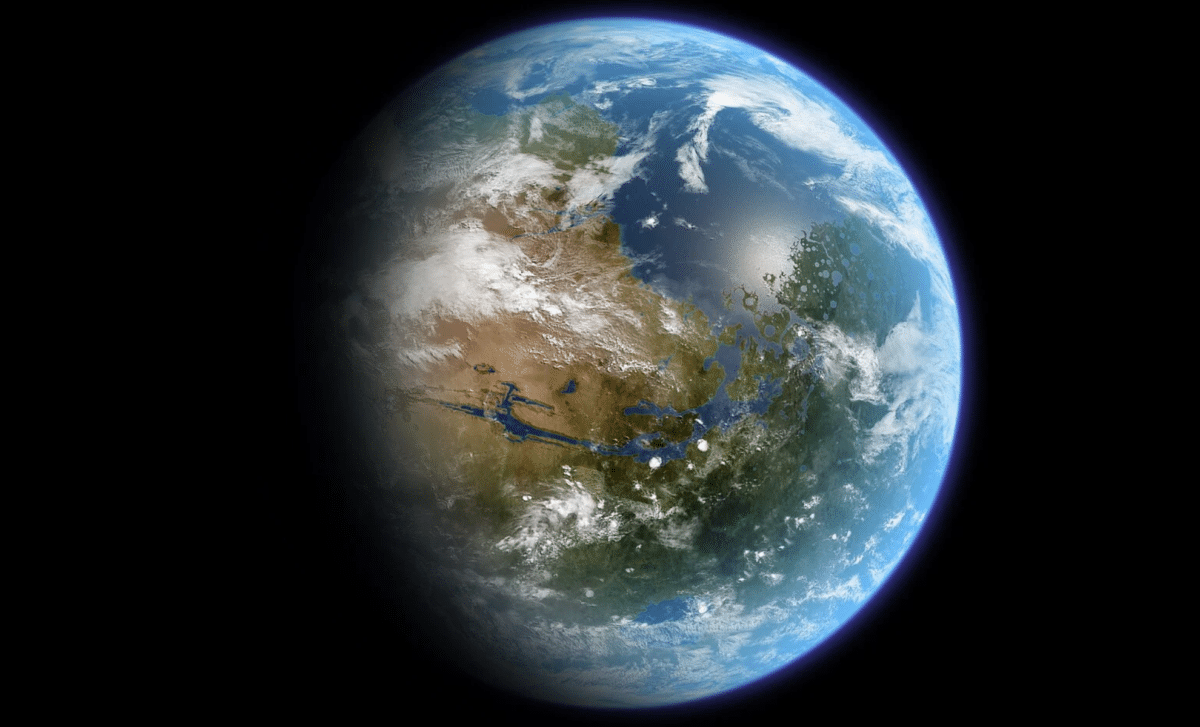
The concept of terraforming Mars has long captured the imagination of scientists, engineers, and space enthusiasts. The idea of transforming the Red Planet into a habitable environment is an alluring challenge, one that promises possibilities for humanity’s future expansion beyond Earth. However, according to a recent study available on arXiv by Dr. Slava Turyshev from NASA’s Jet Propulsion Laboratory, the task of terraforming Mars is far from feasible in the near future. The scale of the undertaking is immense, requiring unimaginable amounts of energy, gas, and resources, resources that are currently beyond our industrial capabilities.
The Dream of Terraforming Mars
Terraforming Mars is often presented as a potential solution to Earth’s overcrowding and environmental degradation. The basic idea is to alter the Martian environment to make it more hospitable for human life. Over the years, numerous ideas have emerged about how to change Mars’ atmosphere, temperature, and pressure to make it more Earth-like. However, these proposed methods have often been met with skepticism from the scientific community, and for good reason.
According to Universe Today, the concept of terraforming is not a new one. As early as the 1940s, scientists such as Carl Sagan began to explore the feasibility of altering a planet’s climate. In the case of Mars, the primary focus has been on increasing the atmospheric pressure, raising the temperature, and adding oxygen to make it breathable for humans. Yet, as Dr. Slava Turyshev points out in his study, available on arXiv, the sheer scale of these tasks is enough to render the concept almost impossible within any foreseeable timeframe.
The Five Milestones of Terraforming Mars
In the study, Dr. Turyshev outlines five potential “end states” that represent different stages of terraforming. These milestones range from the current state of Mars, which is inhospitable to humans, to a fully terraformed planet capable of supporting human life without significant life support systems.
The first milestone is Mars’ present state: extremely cold, with minimal atmospheric pressure. This condition is far from suitable for human life, and any potential habitation would require extensive life support systems. The second milestone involves raising the pressure on the Martian surface to just above the “triple point” of water, about 6.1 millibars. This would allow water to exist in all three phases (solid, liquid, and gas) and set the stage for future changes.
The third milestone would involve creating a “shirtsleeve greenhouse,” where large-scale farming could occur within greenhouses, protected from the planet’s harsh exterior conditions. The next goal would be a global pressure of 62.7 millibars, which would ensure that human blood does not boil at 37℃, the normal body temperature. The final stage would involve a breathable atmosphere composed primarily of nitrogen and oxygen at a pressure of 500 millibars, a climate capable of supporting human life without the need for spacesuits or life support systems.
The Enormous Scale of the Challenge
The study makes it clear that the scale of the project is enormous. For example, in order to increase the pressure by just 1 millibar, we would need to add almost 3.89×10¹⁵ kg of gas. This is roughly the mass of Mars’ moon, Deimos. To achieve a breathable atmosphere, the amount of gas required would increase to 10¹⁸ kg, equivalent to the mass of Janus, one of Saturn’s irregular moons. While such amounts of gas are theoretically available in the solar system, the logistics of gathering and transporting them to Mars are far beyond our current capabilities.
Temperature is another significant challenge. To make Mars warm enough to support stable water conditions, we would need to increase its average temperature by about 60℃. Some suggestions for achieving this include introducing shortwave-absorbing nanoparticles into the atmosphere or releasing large amounts of carbon dioxide. However, Dr. Turyshev’s calculations reveal that achieving this goal would require building 70 million square kilometers of mirrors to concentrate sunlight, a task that far exceeds our current industrial capacity.
Oxygen and Water: The Key Ingredients
One of the most critical components of terraforming is the production of oxygen. Dr. Turyshev notes that to create a breathable atmosphere, we would need to produce around 8.2×10¹⁷ kg of oxygen. The most straightforward method would be to extract oxygen from water through a process called electrolysis. However, this requires a substantial amount of water, approximately six cubic meters of water for every square meter of Mars’ surface.
The good news, according to the study, is that Mars already has significant amounts of water in the form of ice. About 20% of the known, accessible surface ice on Mars could provide enough water to produce the necessary oxygen for a breathable atmosphere. However, while the ice is there, extracting and utilizing it in the quantities needed for terraforming would still present immense technological challenges.
Energy: The Ultimate Bottleneck
Perhaps the most daunting hurdle for terraforming Mars is the sheer amount of energy required. According to Dr. Turyshev’s calculations, converting enough water into oxygen to create a breathable atmosphere would require a staggering 1.2×10²⁵ joules of energy. Even if this energy were spread out over a thousand years, it would still require a continuous power output of 380 terawatts—nearly 20 times the current global annual energy consumption.
Producing this amount of energy with today’s technology is simply impossible. Even future generations with advanced technology would likely struggle to generate the required energy. However, as Dr. Turyshev acknowledges, advancements in energy production or breakthroughs in new technologies could eventually make terraforming Mars possible, albeit far into the future.
The Realistic Approach: Paraterraforming
Given the immense challenges associated with full-scale terraforming, Dr. Turyshev suggests that a more achievable goal for the near future is “paraterraforming.” This involves creating compact, self-contained ecosystems, such as greenhouses, that can sustain human life on a smaller scale without altering the entire planet. These greenhouses would allow humans to live and farm on Mars without the need to radically change the Martian environment.
The concept of paraterraforming, which has been explored in science fiction works like Kim Stanley Robinson’s Mars Trilogy, presents a more realistic approach to Martian colonization. While it does not promise the transformation of Mars into an Earth-like world, it offers a feasible starting point for human habitation on the planet.