
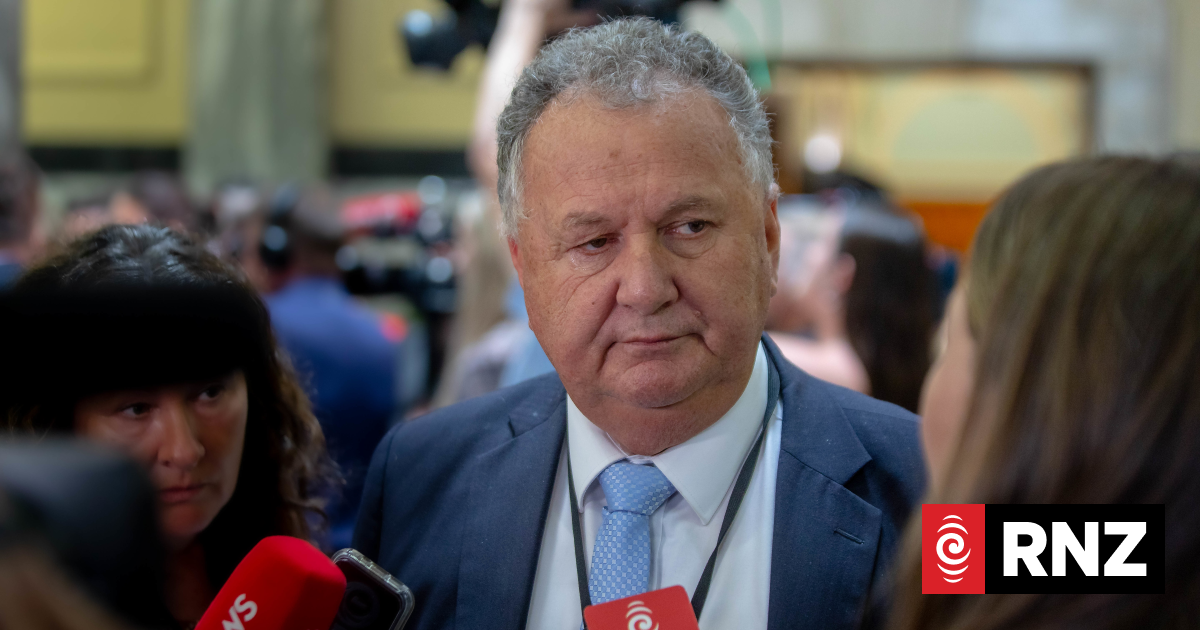
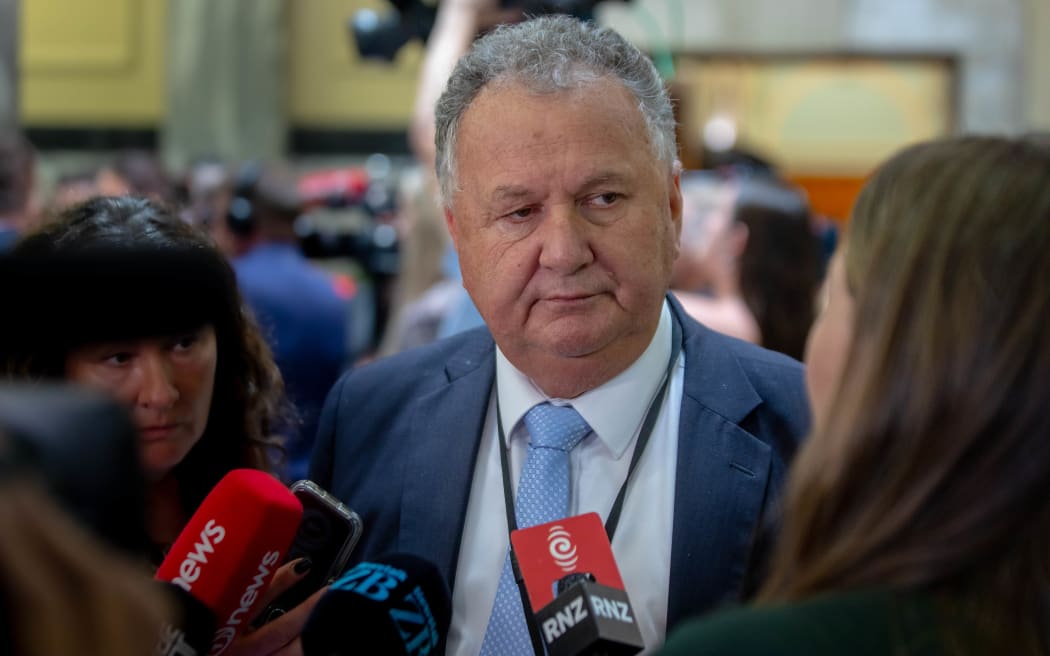
Photo: RNZ / Mark Papalii
New Zealand will have to release about six days worth of fuel as part of a decision by the International Energy Agency (IEA).
The IEA has agreed unanimously to release 400 million barrels of oil from its reserves to tackle soaring prices.
Senior ministers met on Wednesday night to pore over the country’s fuel stores and supply chains.
Associate Energy Minister Shane Jones says New Zealand is obliged to contribute to the IEA’s release, achieved by terminating tickets this country holds for its own stocks.
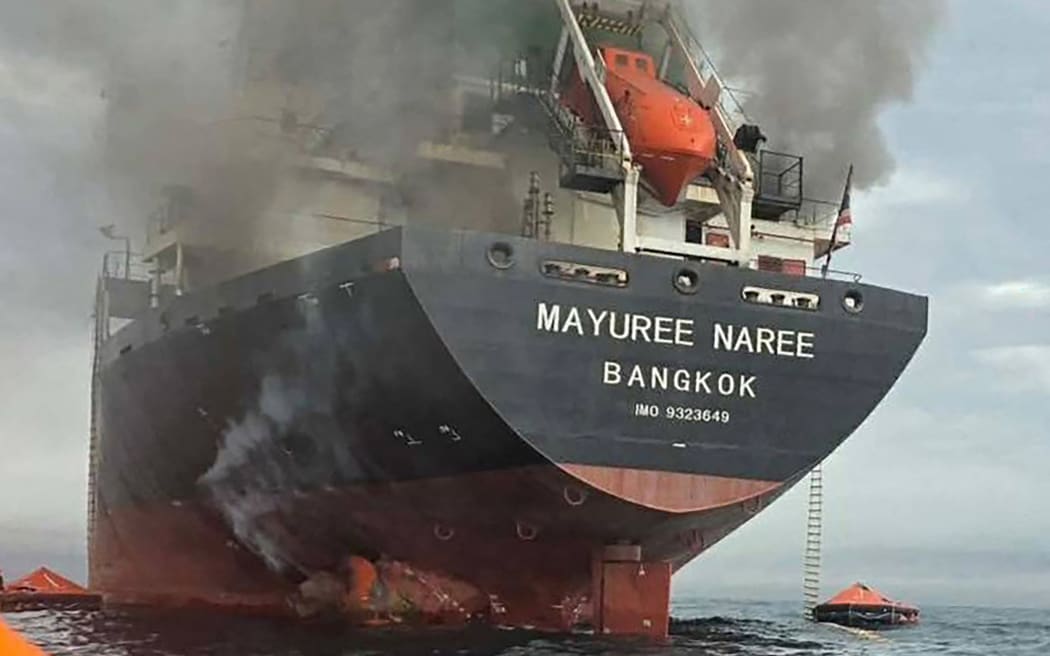
Smoke rising from the Thai bulk carrier ‘Mayuree Naree’ near the Strait of Hormuz.
Photo: ROYAL THAI NAVY / AFP
This handout photo taken on March 11, 2026 and released by the Royal Thai Navy shows smoke rising from the Thai bulk carrier Mayuree Naree near the Strait of Hormuz after an attack.
Jones said it was yet to be determined how New Zealand will release its stocks and ensure the impact here is minimised.
He told Morning Report New Zealand has oil entitlements in the US, UK and Japan.
“What it does is it entitles New Zealand to call upon a fraction of oil, but once this is released into the market it means the market can then purchase it.
“Some countries jumped early – Japan didn’t wait for this actual announcement, they’ve already made a proactive release. I think Germany has as well. But as you might imagine, Kiwis, we’re operating within a collective decision-making process.”
He said the Ministry of Foreign Affairs and Trade was in “regular consultation” with countries that export refined fuel to New Zealand over potential export controls they might enact to protect their own security of supply and reduce pricing volatility.
“Obviously, we’ll work closely with our counterparts in Australia so that we’ve got some heft in the event that things were to deteriorate markedly.
“But look, the reality is that there may very well be holding going on.”
Jones blamed the previous Labour government for allowing oil companies to give up storing fuel here in favour of a ‘just-in-time’ model relying on multiple import sources.
If the crisis dragged on, he said there were backup plans “under various pieces of legislation”.
“Perish the thought we can reprise what happened many years ago in terms of having rationing devices.”
Measures adopted during the fuel crises of the 1970s – with limited success – included lower speed limits, weekend bans on fuel purchasing and ‘carless’ days, according to the National Library website.
Attacks on shipping in Strait of Hormuz
Meanwhile, two vessels in the Strait of Hormuz have been attacked by Iran, the Islamic Revolutionary Guard Corps (IRGC) said in a statement, according to Iran’s semi-official Fars News Agency.
The Thai-flagged bulk carrier Mayuree Naree was fired upon after “disregarding warnings and insistently attempting to illegally pass through the Strait of Hormuz”, the IRGC said, according to Fars.
Another Liberian-flagged vessel, Express Rome, was also “struck by Iranian projectiles this morning after ignoring warnings from the IRGC Navy”, the armed forces said, Fars reported.
Data from analytics provider MarineTraffic showed both vessels were in the Strait of Hormuz earlier.
According to UK Maritime Trade Operations (UKMTO), there have been at least 13 attacks on vessels around the Persian Gulf, Strait of Hormuz and Gulf of Oman since the US-Israeli strikes on Iran, and Tehran’s retaliatory strikes, began on 28 February.
– RNZ/ CNN