
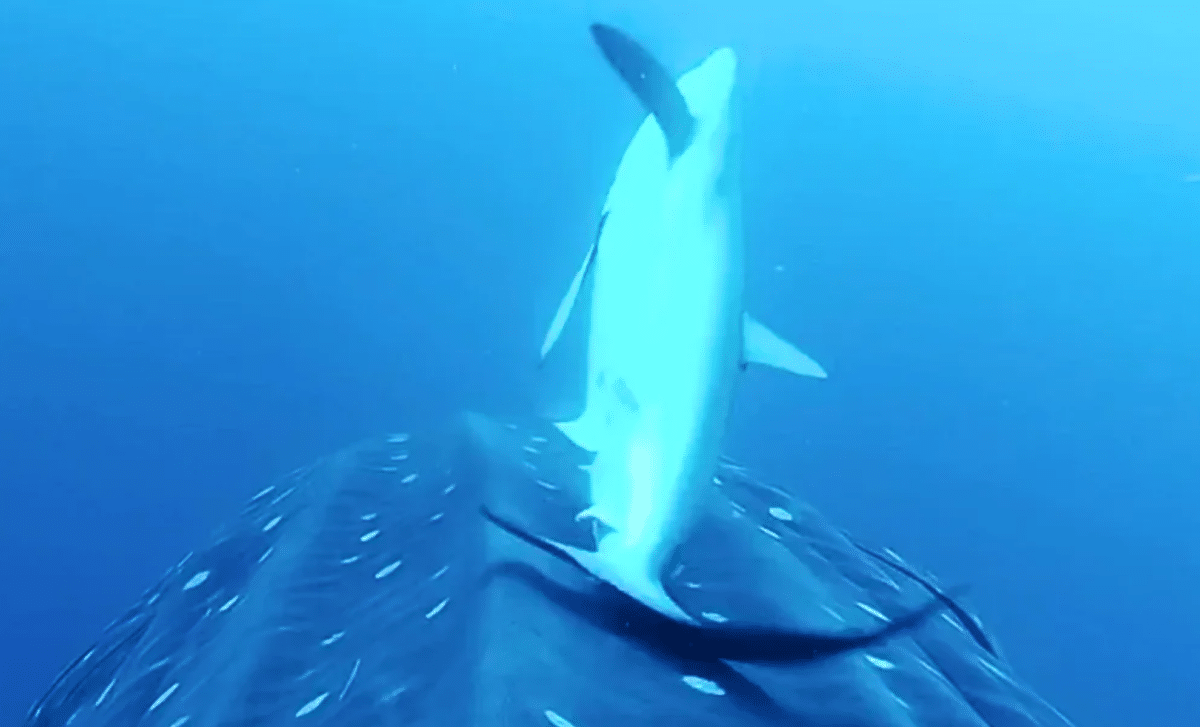
The Galápagos Islands, an unparalleled sanctuary for marine biodiversity, are home to the magnificent whale shark, the world’s largest fish. Recent findings from the Galápagos Whale Shark Project (GWSP) have brought to light an extraordinary discovery: a complete community of animals traveling alongside these ocean giants. This revelation has not only expanded our understanding of whale sharks but also highlighted the intricate web of marine life that thrives in their presence. The study captures how whale sharks, often seen as solitary giants, are in fact an essential part of a broader ecosystem, teeming with life.
The Unlikely Companions: Who Follows the Whale Shark?
When people think of whale sharks, the image of a solitary giant cruising through the deep blue often comes to mind. However, research by the Galápagos Whale Shark Project (GWSP) reveals an entirely different reality.
“Scientists studying whale sharks in the Galápagos documented an entire community traveling with them,” explains the GWSP.
This entourage includes remoras, jacks, tuna, and even sharks, all of which are frequently seen accompanying the whale shark on its long, slow journey through the ocean. These species seem to benefit from being near the whale shark in various ways, whether for protection, sustenance, or simply the sheer movement of the giant through the water.
One of the most fascinating aspects of this phenomenon is the behavior of the smaller sharks, which have been observed speeding towards the whale shark, rubbing against its tough skin. This interaction is believed to be a method for dislodging parasites that cling to their bodies. Other species, like the remoras, latch onto the whale shark’s body, hitching a free ride across the ocean. Such behaviors illustrate the diverse roles the whale shark plays in sustaining a variety of marine life.
“Some hitch a ride. Some hunt in [the whale shark’s] shadow. Some simply take advantage of the giant moving through the blue,” says the GWSP.
The Living Ecosystem: Whale Sharks as the Ocean’s Cornerstone
Beyond their role as companions to other animals, whale sharks themselves form a dynamic ecosystem. “A whale shark isn’t just a species. It’s a living ecosystem,” states the GWSP, highlighting how their presence supports a variety of marine life, from smaller fish to larger predators. These giant creatures offer more than just a habitat—they provide a moving ecosystem for countless species, all of which rely on the whale shark’s movements for survival.
The whale shark’s ability to filter feed from the ocean allows smaller fish to scavenge nearby, and its sheer size offers shelter to species that may otherwise be vulnerable to predators. The presence of the whale shark, therefore, creates a safe passage for these animals, offering a unique example of how one species can impact the broader ecosystem. This living network of organisms creates a complex and interconnected marine environment, underscoring the importance of protecting not just the whale sharks themselves but the entire web of life that depends on them.
The Importance of Protecting Whale Sharks and Their Ecosystem
The interconnectedness of life in the ocean is more apparent than ever through the study of whale sharks. As Jenny Green of the GWSP explains,
“Moments like this reveal how deeply connected life in the ocean truly is. When we protect species like whale sharks, we are safeguarding an entire ecosystem—and the countless unseen relationships that hold it together.”
This is a vital reminder that ocean conservation is not just about saving individual species, but about preserving the delicate balance of life that exists in these waters.
The study conducted by the GWSP illustrates how whale sharks act as a keystone species within their ecosystem. By protecting these majestic creatures, we are also helping to safeguard the numerous other species that rely on them. The connection between these species is profound, and their mutual survival is inextricably linked. Therefore, efforts to conserve whale sharks are, in essence, efforts to protect a whole host of marine life that thrives in their wake.
A Call for Conservation: Protecting the Ocean’s Giants
The study’s revelations about the whale shark’s entourage serve as a powerful reminder of the importance of ocean conservation. As we learn more about the critical role these animals play in the health of the ocean, it becomes increasingly clear that protecting species like whale sharks is essential to preserving the broader ecosystem. Conservation efforts aimed at protecting whale sharks, therefore, have a ripple effect, benefiting countless other species that share their habitat.
This interconnectedness highlights the need for global efforts to protect marine environments from the numerous threats they face, such as overfishing, pollution, and habitat destruction. By prioritizing the conservation of whale sharks and their entourage, we are taking vital steps toward safeguarding the health of the oceans and the diverse life forms that call it home.