
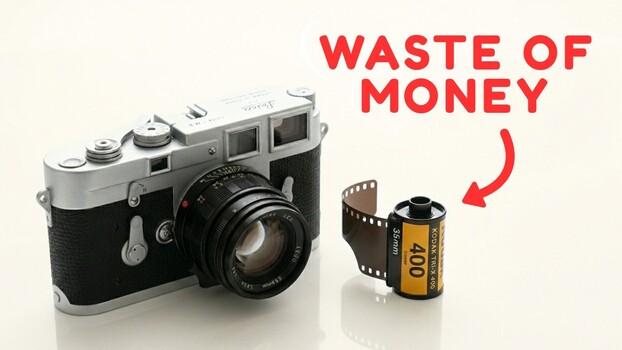
Film photography is expensive, slow, and often inconvenient, yet more people keep picking it up. You’ve likely wondered whether it’s nostalgia, trend chasing, or something digital simply can’t replace.
Coming to you from Tim Jamieson, this thoughtful video pushes back on the idea that film is outdated or “silly.” Jamieson references comments both skeptical of today’s analog revival. Their stance makes sense. If you built a career in the darkroom, you might not rush back to chemical trays and contact sheets after experiencing modern mirrorless cameras. Fast autofocus, clean high ISO files, immediate feedback. It’s hard to argue against convenience. Jamieson acknowledges that truth without hesitation, which gives the rest of his argument weight.
He doesn’t pretend film is superior. He shoots it exclusively right now, but he’s clear on the tradeoffs. Film is restrictive. It costs money every time you press the shutter. It’s unreliable compared to digital. You get less flexibility in tricky lighting and no instant review. If you’re on deadlines or juggling client expectations, that friction can feel unnecessary. Yet that same friction becomes the draw. Delayed feedback changes how you think. You meter carefully. You commit. You accept that you won’t know if you nailed it until days later.
That gap between pressing the shutter and seeing the image is central to Jamieson’s point. Digital trains you to react instantly. Film asks you to wait. In a world built on speed and constant screen time, that waiting alters your focus. You slow down. You choose frames with more intention. Jamieson argues that this process has taught him more about exposure than any digital camera ever did. Not because film is magical, but because it removes the safety net. Miss your exposure by a stop and you’ll feel it.
He also talks about the darkroom. Not in a romantic, over-the-top way, but with clear affection. Printing black-and-white images by hand, watching them appear in a tray, adjusting contrast with dodging and burning tools. It’s tactile and imperfect. There’s unpredictability in tone and texture that digital files rarely deliver straight out of camera. You can simulate grain and contrast curves in Lightroom, but that’s not the same as working under a safelight with developer on your fingers.
Still, he makes an important distinction. Film doesn’t make you better. It doesn’t make the photo inherently more valuable. A strong image can come from a phone, a DSLR, or a $10,000 body. Tools don’t define the work. Conviction does. The process has to fit how you see and think. If digital fits your rhythm, use it. If film sparks something, lean into it. The medium should move you toward the kind of images you care about making.
There’s nuance in how Jamieson frames the debate. This isn’t film versus digital. It’s about choosing a process that keeps you engaged. You don’t need permission to try film. You also don’t need to justify staying digital. What you might need, though, is a reminder that inconvenience isn’t always a flaw. Sometimes it sharpens your attention in ways speed never will. Check out the video above for the full rundown from Jamieson.