
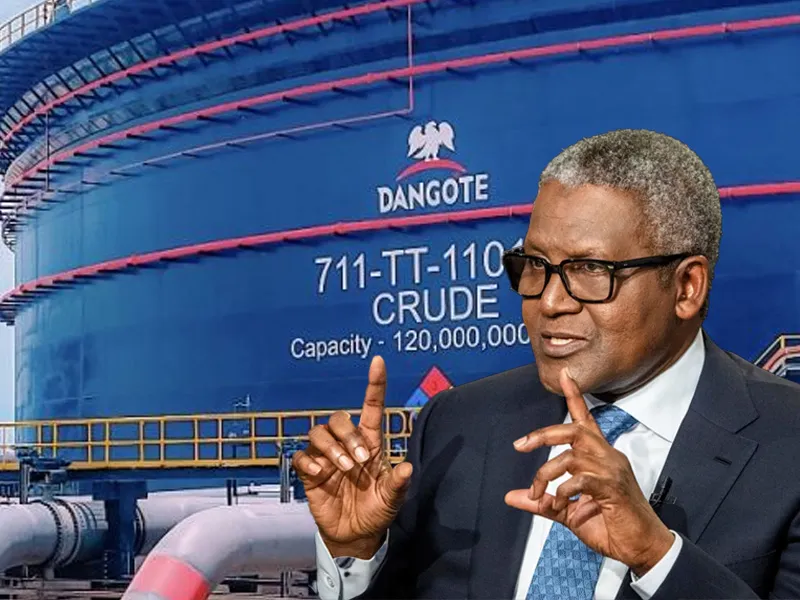
Nigeria’s fuel supply structure is undergoing a major shift as the now supplies about 92 percent of the country’s petrol, prompting the Federal Government to pause imports while oil marketers increasingly support the refinery supplying 100 percent of Nigeria’s domestic demand.
The development signals one of the most significant transformations in Nigeria’s downstream petroleum sector in decades, potentially ending the country’s long-standing reliance on imported petrol.
Recent data from the (NMDPRA) shows that domestic supply reached approximately 36.5 million litres of petrol per day, while imported fuel dropped to around three million litres daily. Combined, Nigeria currently receives roughly 39.5 million litres of petrol daily, with the vast majority now coming from the Dangote refinery.
For decades, Nigeria depended heavily on imported refined petroleum products despite being Africa’s largest oil producer. However, the ramp-up of operations at the Lagos-based refinery has significantly increased domestic refining capacity, drastically reducing the need for imports.
Federal Government Pauses Petrol Imports
With local refining now dominating supply, the Federal Government has effectively paused the issuance of new petrol import licences, signaling growing confidence in domestic refining capacity.
Industry sources say the Dangote refinery is currently producing around 50 million litres of petrol daily, making it the largest single contributor to Nigeria’s domestic fuel supply.
The shift marks a dramatic reversal from just a few years ago, when Nigeria imported most of the petrol consumed across the country due to the poor performance of state-owned refineries.
Oil Marketers Reverse Earlier Opposition
In another major development, petroleum marketers who previously raised concerns about potential monopoly risks have now expressed support for the refinery supplying 100 percent of the Nigerian market.
The (PETROAN) said expanding the refinery’s supply role could help stabilize fuel availability and protect the country from global supply disruptions.
According to PETROAN President , Nigeria stands to benefit from relying on domestic refining rather than volatile international fuel markets.
He noted that global oil supply challenges and rising crude prices have made petrol imports more expensive and less reliable, prompting marketers to reconsider their earlier stance.
Nigeria’s Fuel Market Undergoing Major Transition
Energy analysts say Nigeria’s petrol market — estimated at about 70 million litres per day — is worth more than ₦14 trillion annually, making it one of the largest segments of the country’s energy economy.
With the Dangote refinery now dominating supply, industry observers believe the development could significantly reduce foreign exchange pressure caused by petrol imports while improving fuel availability across the country.
However, some analysts have also warned that relying too heavily on a single refinery could pose risks if operational disruptions occur. They suggest Nigeria should continue encouraging other private refinery projects to strengthen competition and improve long-term energy security.
Located in the Lekki Free Trade Zone in Lagos, the has a refining capacity of 650,000 barrels of crude oil per day, making it the largest single-train refinery in the world.
Its rapid expansion has already begun reshaping Nigeria’s energy landscape, reducing dependence on imports and positioning the country closer to fuel self-sufficiency.
For businesses and households alike, the shift toward domestic refining could play a critical role in stabilizing fuel supply and reducing the long-term economic impact of global oil market volatility.