
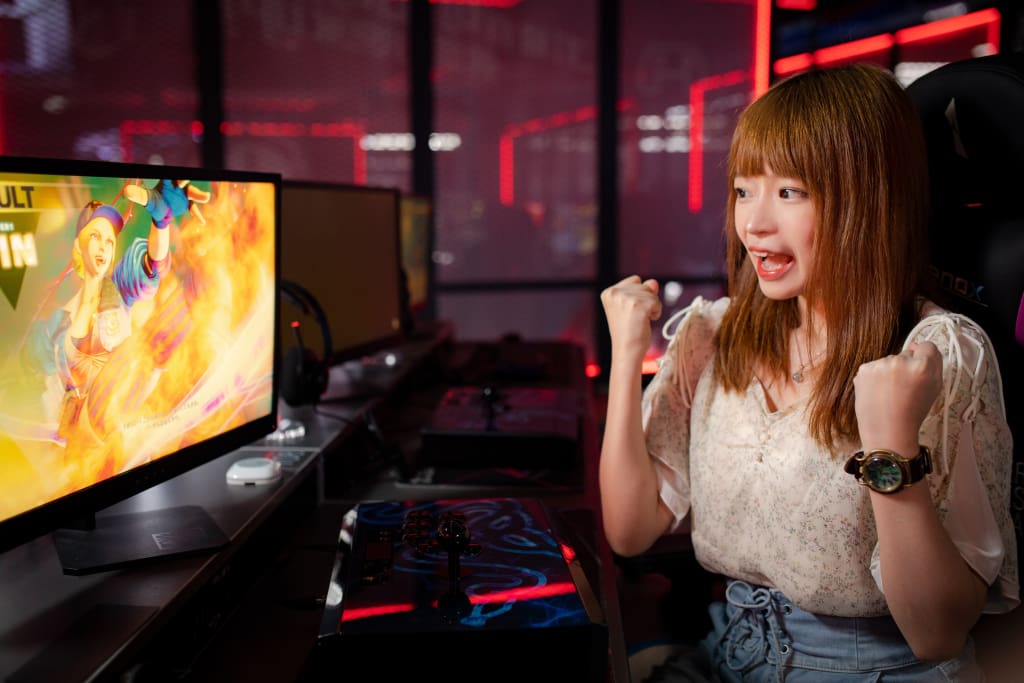
On International Women’s Day 2026, Niko Partners, as a certified woman-owned business, would like to commemorate how women shift industries, cultures, and economies. In this article, we will explore Asia’s women-oriented games market to understand how developers and publishers could leverage this increasingly powerful demographic. Indeed, we predict that women will make over 40% of the games market in Asia and MENA-3 (Egypt, KSA, UAE).
Women are no longer merely a niche demographic in Asia. They are active players, creators, and community organizers who are influential in shaping how video games are designed, played, and marketed. However, this is not a monolithic demographic. Their engagement with games vary across markets, with differences based on factors including infrastructure, gaming culture, and preferred platforms.
Mature markets such as China, Japan, and South Korea have developed robust gaming ecosystems, including through internet cafes, console markets, and strong mobile gaming sectors. Video game markets in these countries have strong fan communities, with women gamers not only engaging with the game itself, but also on streaming platforms, esports events, and character fandom, all of which typically translates to higher spending.
By contrast, Southeast Asia and India represents an emerging but rapidly expanding market. While female players in Southeast Asia make up roughly 43% of all gamers in the region, the growth trajectory is driven primarily by mobile gaming and affordable internet data. A similar pattern exists in India, where women comprise 40% of its player population, up from 22% in 2020. Social and multiplayer games are highly popular in both regions as it becomes part of daily life.
Despite differences in trajectory, the overall women-oriented games market is rising across Asia, with noticeable shifts across the continent’s games industry. One of the clearest signs of the industry responding to women gamers is the rapid growth of otome games. Papergames’ Love and Deepspace (LADS) generated $82 million in revenue in December 2025, an approximate 2.7x increase from November million, and a 2x increase over other major gacha games such as Genshin Impact, which generated $40 million. Another Papergames title, Mr. Love: Queen’s Choice, has over 4 million daily active users and has generated more than $14 million in revenue. These games’ success have led to offerings by other major developers, including Tencent’s Light and Night, NetEase’s For All Time, and miHoYo’s Tears of Themis. Along with Mr. Love: Queen’s Choice, these four titles are popularly known as the ‘four great national otome games’ in China.
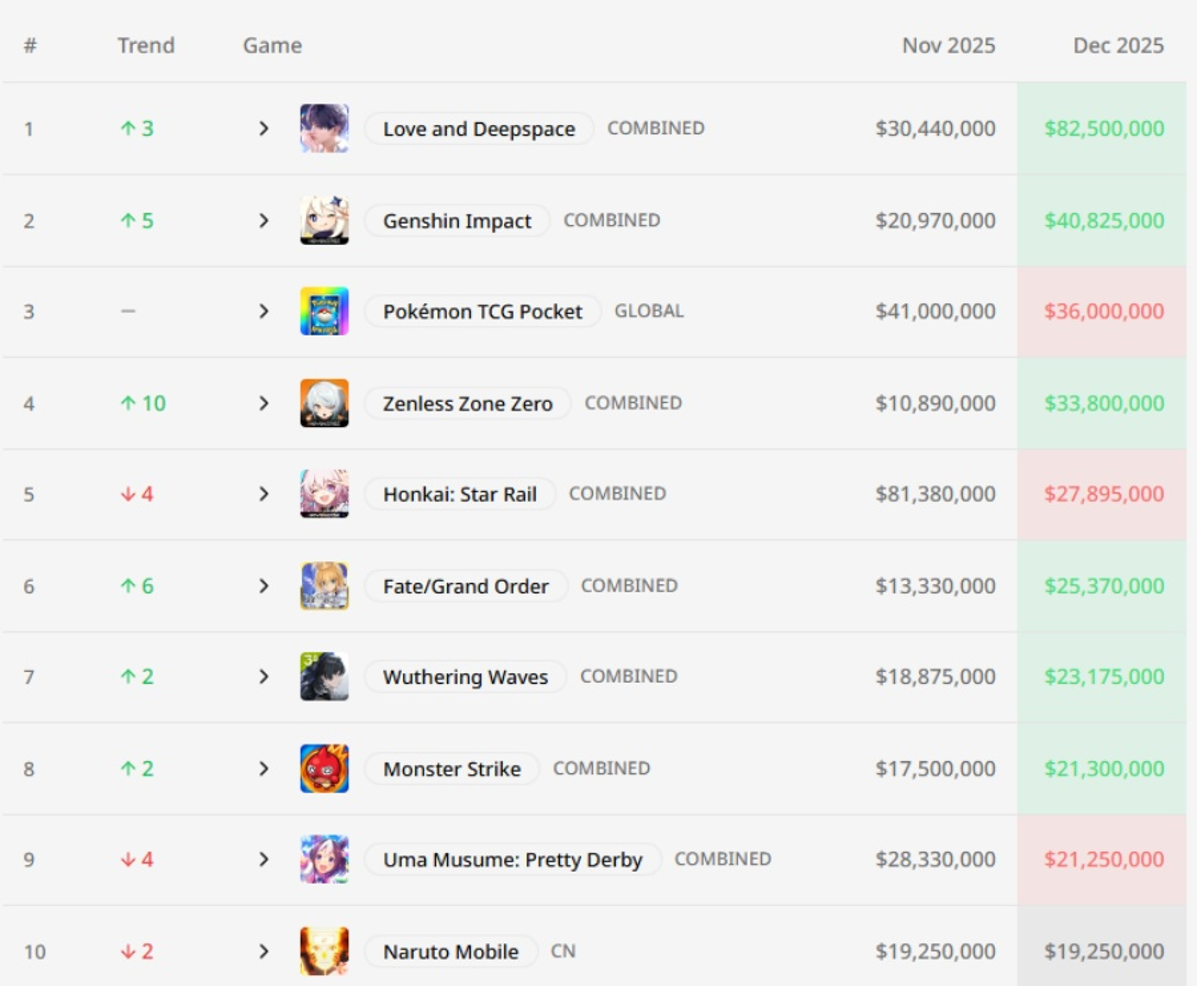
Top Gacha Games Revenue 2025
These games have succeeded as they have combined emotional immersion with monetization strategies that include story chapters, outfits, special interactions with characters, and event systems. Women players can enjoy visual-novel storytelling with high-production graphics, voice acting, and collectible character systems. Players are willing to spend more money on such games given the high levels of satisfaction they derive from them. We note that the psychological lure of gacha mechanics also play a role in these titles’ appeal.
Otome games also cultivate fandom culture where women players create art, discuss story developments, and celebrate favorite characters across social media platforms. This allows publishers to maintain high engagement levels and long-term popularity, tying into their aims of expanding their portfolio of evergreen games.
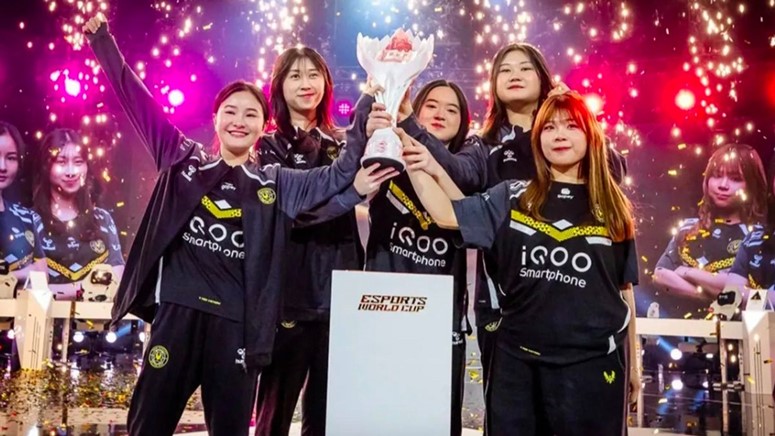
Source: Team Vitality was crowned champion at won the Esports World Cup MLBB Women’s Invitational
While women drive the success of dating simulation (otome) games, they are also deeply engaged in competitive games, including in genres such as MOBAs, battle royale, and shooters. MOBA titles such as Mobile Legends: Bang Bang (MLBB) are popular among women gamers and dominating the female esports scene across Southeast Asia.
Women players are also increasingly visible in gaming communities as professional players, streamers, influencers, and content creators. Last year, Indonesia witnessed the women roster of Team Vitality winning the Esports World Cup MLBB Women’s Invitational. Their dominance has enabled them to be one of the top women esports teams, with over 1.8 million hours watched and nearly 500,000 million peak viewers. Their presence has helped normalize female participation in competitive gaming spaces that historically lacked such representation.
Several variables should factor into developers efforts to maintain long-term women player retention in Asia. First, prioritizing accessibility through mobile gaming has enabled new players to begin gaming and create compatibility with their daily lives. Narrative-based games that cultivates character attachment and emotional immersion are powerful engagement drivers for women gamers. Character customization and virtual worlds allow this cohort to express creativity and explore new identities within digital environments.
Moreover, women-oriented monetization and marketing strategies are also important. Live-service models built around in-app purchases and ongoing content updates strengthens women gamers participation in the game. Character-centric monetization through marketing campaigns, trailers, and merchandise often translates into higher player loyalty.
As women gamers prefer higher levels of customization, collectible items, and exclusive cosmetics encourage their engagement and repeat spending. Lastly, social media marketing leveraging from popular influencers and livestreamers are also key to market games to women gamers.
The trajectory is apparent. Women are altering games markets across Asia, not only as consumers, but also as cultural actors and creators. Their preferences are shaping new genres, their communities are driving participation, and their voices are pushing the industry toward more inclusive storytelling.
As a certified Woman-owned Business, Niko Partners recognize the achievements and influence of female gamers is important not only for representation, but also for understanding the industry’s future. In many respects, the story of gaming in Asia today is also one of women stepping up, changing the rules of the game and redefining what gaming culture may be. Contact us if you want to understand the best strategies for reaching and representing women gamers via our reports and custom research capabilities.
Related Articles