
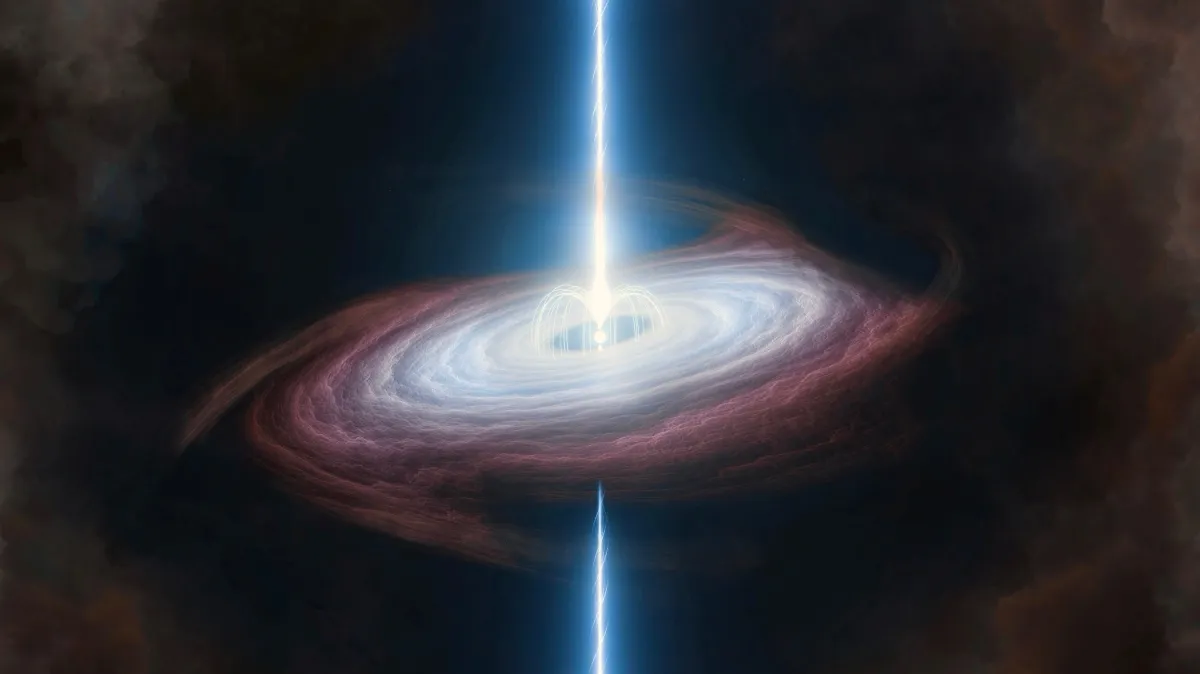
Astronomers have for the first time witnessed the birth of one of the universe’s most extreme objects: a magnetar packing the mass of about 500,000 Earths into a sphere barely 12 miles across.
The discovery has provided the clearest evidence yet that these bizarre objects power some of the brightest explosions in the universe, while also showing how they literally twist the fabric of space-time, in accordance with Einstein’s general theory of relativity.
When a large star reaches the end of its life, its core collapses under its own gravity. The outer layers explode outward in a supernova while the centre is crushed into an ultra-dense remnant, where a single teaspoon of material would weigh many billions of tons. Occasionally, that remnant is born spinning extraordinarily fast and threaded with a magnetic field trillions of times stronger than Earth’s. Astronomers call such an object a magnetar.
The study, published in Nature, involved observations of a superluminous supernova, a blast from a dying star that shines at least ten times brighter than an ordinary supernova. The research supports the idea that they are caused by a newly formed magnetar spinning deep within the debris of a supernova explosion and pouring energy into it.
“What’s really exciting is that this is definitive evidence for a magnetar forming as the result of a superluminous supernova core collapse,” said Alex Filippenko, a professor of astronomy at the University of California, Berkeley and a co-author of the study.
His team observed a superluminous supernova called SN 2024afav, discovered in December 2024 about a billion light-years from Earth.
Normally, the light from a supernova fades smoothly after reaching peak brightness. But SN 2024afav behaved differently: its light flickered, producing a series of brightening pulses.
The researchers believe the explanation lies in what happened to some of the debris thrown out by the explosion. Rather than escaping into space, this material fell back toward the newborn magnetar, forming a swirling disk of gas around it.
According to Einstein’s theory of general relativity, a massive, spinning object does not just sit in space; it actually drags the fabric of space-time around with it. This is called the Lense-Thirring effect. Because the debris formed a disk that was not aligned with the magnetar’s equator, this “frame-dragging” forced the disk to “precess” or wobble.
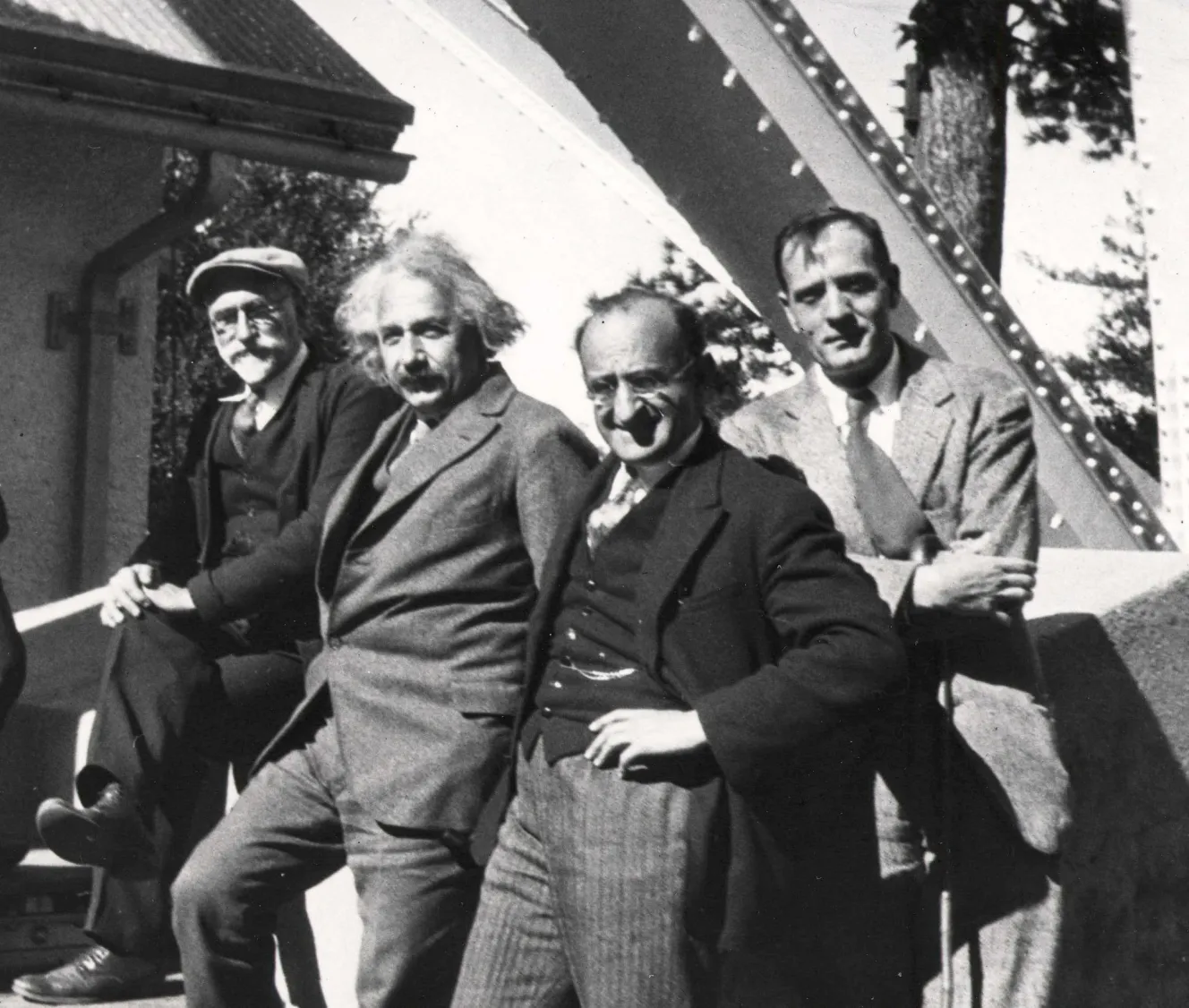 From left to right: the astronomer Ferdinand Ellerman and the physicists Albert Einstein, Walther Mayer and Edwin Hubble at Mount Wilson ObservatoryReuters
As it wobbled, the disk periodically blocked and reflected radiation pouring out from the magnetar. Seen from Earth, this produced the strange oscillations in the supernova’s fading light.
Filippenko said: “To see a clear effect of Einstein’s general theory of relativity is always exciting, but seeing it for the first time in a supernova is especially rewarding.”
Joseph Farah of UC Santa Barbara, also a co-author of the study, added: “This is the most exciting thing I have ever had the privilege to be a part of. This is the science I dreamed of as a kid. It’s the universe telling us out loud and in our face that we don’t fully understand it yet, and challenging us to explain it.”