
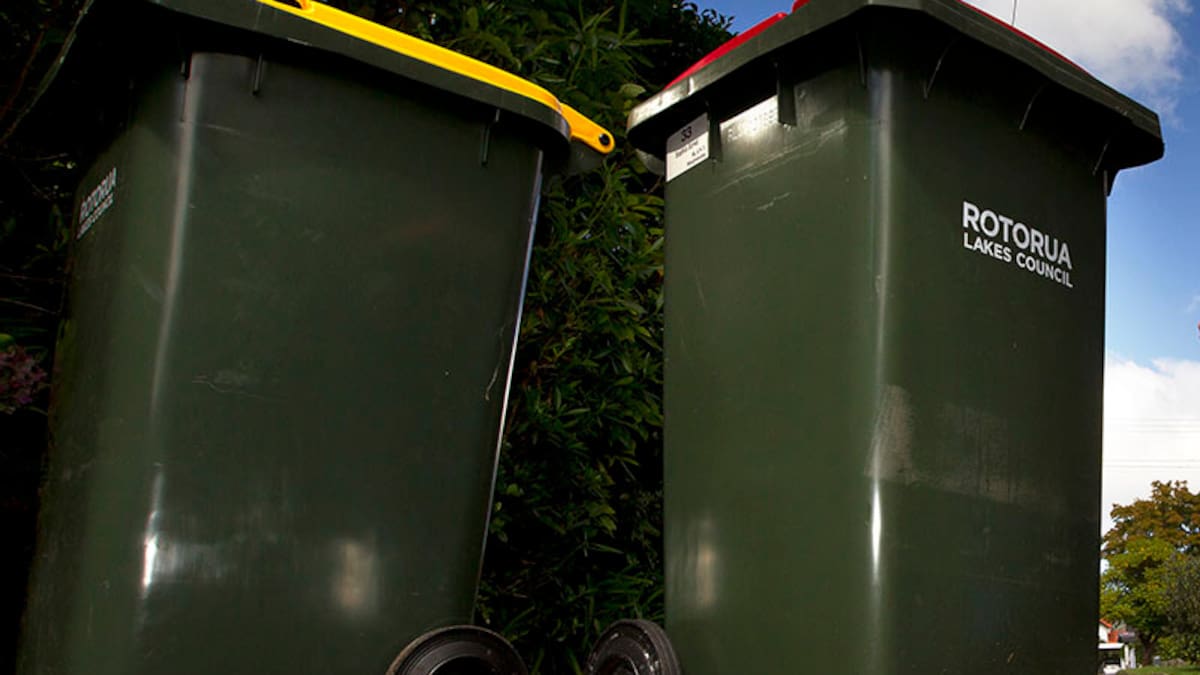
The shift to less frequent general waste collection has not been universally welcomed, particularly by larger households.
An online petition opposing the change has gathered nearly 4000 signatures since it was launched in late February. It calls on the council to reconsider the proposal and “engage in dialogue” with the community.
The petition’s unnamed creator, who Local Democracy Reporting attempted to contact for comment, said they live in a six-person household with pets.
They said fortnightly rubbish collection was “simply not practical” and could lead to “overflowing bins, a need to find costly alternatives, and potential health risks”.
The change has also received criticism on social media, with some Facebook commenters labelling the switch “disastrous” and “ridiculous”.
Rotorua Mayor Tania Tapsell joined the online discourse this week, posting on Facebook that Rotorua’s landfill closed in 2017 and rubbish was currently transferred to Tirohia landfill.
A compactor working at the tip face at Rotorua Landfill in 2014. The landfill closed in 2017. Photo / Stephen Parker
“Households will still receive the same overall level of service, the waste is just split between two bins, meaning there should be less need for weekly red bin collections,” she wrote.
Mark Mountfort lives in a five-person household, including two young children. He said the family’s red rubbish bin is full by the end of each week.
Because they already composted their food scraps and disposed of garden waste separately, he said the introduction of a green organic waste bin was unlikely to significantly reduce the amount of general rubbish they produced.
“That’s terrible” was his first thought when his partner told him about the impending change, he said.
“We do not want nappies in the hot sun for two weeks.”
He said the issue was not helped by product packaging being largely unrecyclable.
Smart Environmental will operate the new collection service under a nine-year contract. Photo / Stephen Parker
“Some people can live quite minimal,” he said. “But you can’t dictate what people should buy and what packaging it comes in.”
He said he would like a “complete 180” from the council but believed it was unlikely. Failing that, he would like people to be upgraded to a free, bigger bin, to avoid waste spilling over or having to pay for extra waste collection.
The council’s infrastructure and assets manager Stavros Michael told Local Democracy Reporting in a written statement that food and garden waste made up “more than half of household waste.
“Reducing organic waste to landfill, increasing recycling, and cutting overall waste will benefit Rotorua and help manage future cost pressures linked to government levies and the rising cost and scarcity of landfill space,” Michael said.
Michael said the introduction of a weekly green bin collection will increase the overall capacity of weekly garbage collection and help divert 6000 tonnes of waste from landfill yearly. It would also support the council’s carbon emission targets.
Rotorua considered the success of similar waste collection models, such as the one in Tauranga, in its decision making. Photo / George Novak
He said the council recognised some households may produce more rubbish, particularly those with young children or medical needs.
Tailoring collection frequency to individual households, however, was “not practical”.
“Households will be able to add, for a fee, extra bins if they need more capacity, just as they can now.”
Tauranga City Council introduced a similar system in 2021 and later reported about a 50% reduction in household waste going to landfill. Michael said other council models had also been reviewed in the process of shaping Rotorua’s new system.
“Many other councils already use fortnightly rubbish collection to keep costs down without reducing overall waste removal capacity, and they have not reported significant increases in illegal dumping.”
The new green bins will sit alongside the existing red rubbish bin, 240-litre recycling bin and glass crate.
The collection service will be run by Smart Environmental under a nine-year contract and is expected to add about $24.71 a year to each household’s rates.
Organic waste will be sent to the Ecogas facility in Reporoa, where it will be processed into energy, biogas and fertiliser.
Mathew Nash is a Local Democracy Reporting journalist based at the Rotorua Daily Post. He has previously written for SunLive, been a regular contributor to RNZ and was a football reporter in the UK for eight years.
– LDR is local body journalism co-funded by RNZ and NZ On Air.