
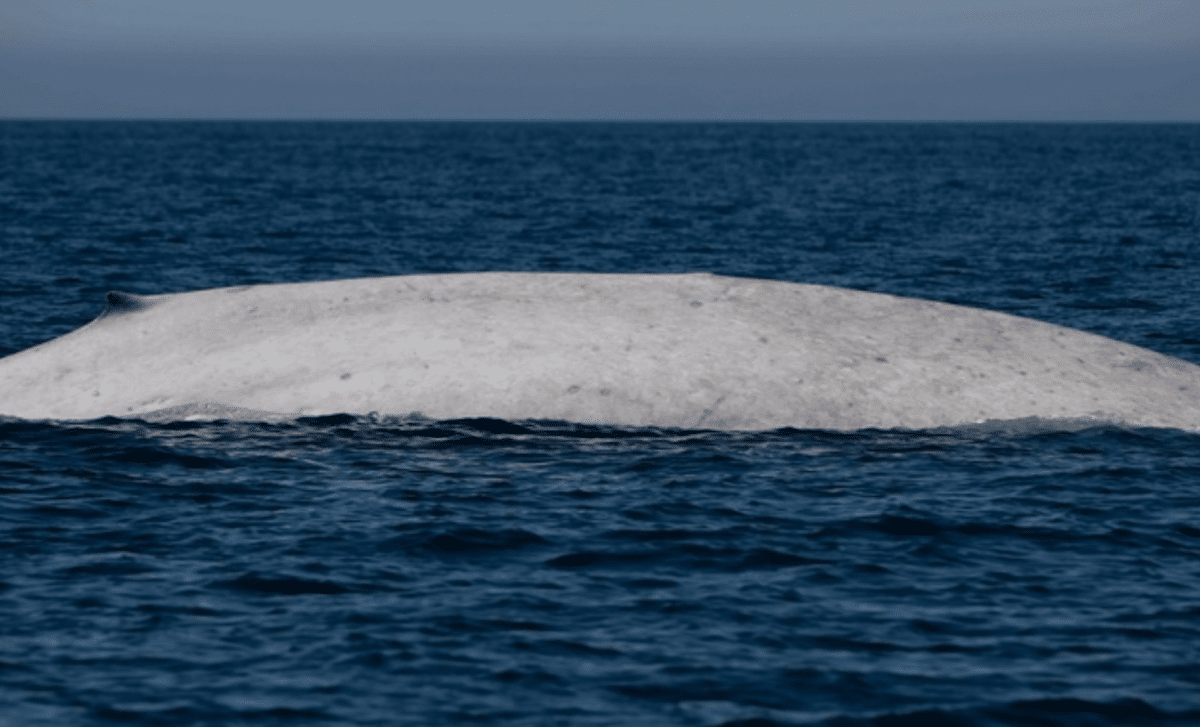
A rare and unprecedented event unfolded in Loreto Bay National Park, located off the Baja Californian coast, as a stunning albino blue whale was spotted swimming in its waters. The sighting, which was announced by the National Commission for Natural Protected Areas (CONANP), has sparked excitement within the marine biology community. This event not only marks an extraordinary moment in the world of marine life but also highlights the importance of marine conservation in preserving such rare species. As whale watching season continues, this remarkable discovery adds another layer of awe to the diverse wildlife that thrives along Mexico’s coast.
Understanding Albinism in Blue Whales
Albinism, a genetic condition that leads to a lack of pigmentation, is a rare occurrence in many species, including marine mammals like the blue whale. In the case of this recently sighted albino blue whale, the absence of melanin gave the whale a unique, pale appearance, making it stand out against the typical blue or grey tones of its species.
“In mammals, albinism occurs when an individual inherits one or more mutated genes from both parents that interfere with the body’s production of melanin, the main pigment that determines the color of skin, fur, and eyes,” the outlet wrote.
Blue whales, the largest animals on the planet, are typically known for their majestic size and distinctive blue-gray coloration, which allows them to blend in with the ocean depths. However, the sighting of an albino version of this species is a rare phenomenon, as albinism in large marine mammals is extremely uncommon. The pale whale’s appearance could be linked to genetic mutations that cause the body to produce little or no melanin. Despite the rarity of albino animals, they offer scientists unique opportunities to study the impacts of genetic conditions on survival, behavior, and overall health.
A rare albino blue whale was recently spotted off the coast of Loreto, Mexico, in Loreto Bay National Park, confirmed in March 2026. pic.twitter.com/qaESGvEcd6
— Oceaiii🐋🐬 (@oceaiii) March 11, 2026
The Significance of the Sighting in Loreto Bay
Loreto Bay National Park, already known for its vibrant marine life and diverse ecosystems, has become the center of attention due to this remarkable discovery. This pristine region in the Sea of Cortez is home to a variety of whale species, including humpbacks and gray whales, which migrate annually to its warm waters. The sighting of the albino blue whale, however, takes this season to new heights, offering a once-in-a-lifetime opportunity to observe an animal that few have seen in their lifetime. According to the National Commission for Natural Protected Areas (CONANP), this rare encounter is an important milestone in marine biology, as it provides valuable insights into the genetics of these magnificent creatures.
The region’s importance as a sanctuary for marine life cannot be overstated. With an emphasis on conservation, the national park has been a beacon for researchers studying whale behavior, migratory patterns, and the ecological balance of the Sea of Cortez. The presence of this albino blue whale further reinforces the need for continuous conservation efforts, as preserving these rare species is essential for maintaining biodiversity and the health of marine ecosystems.
Implications for Marine Conservation and Research
The discovery of an albino blue whale in Loreto is more than just a curious sighting, it holds substantial implications for marine conservation and research. Marine biologists and conservationists are particularly interested in how the condition of albinism affects the survival rates and behavior of marine species. Since albinism is often associated with impaired vision and other health issues in animals, this whale could face challenges that other blue whales may not.
The National Commission for Natural Protected Areas emphasizes the importance of monitoring this whale’s health and tracking its behavior over time. Albinism can make individuals more vulnerable to predators due to their inability to blend in with their surroundings. In the open ocean, a lack of camouflage could potentially expose the whale to greater risks, making it crucial for researchers to closely follow its movements. Additionally, studying this whale could provide insight into the genetic variations that contribute to the development of albinism in marine mammals.
By carefully monitoring the whale’s condition, scientists hope to gather information that could help protect other marine species affected by similar genetic mutations. The study of this rare whale could contribute to a broader understanding of marine biodiversity and genetics, potentially influencing conservation strategies worldwide.