
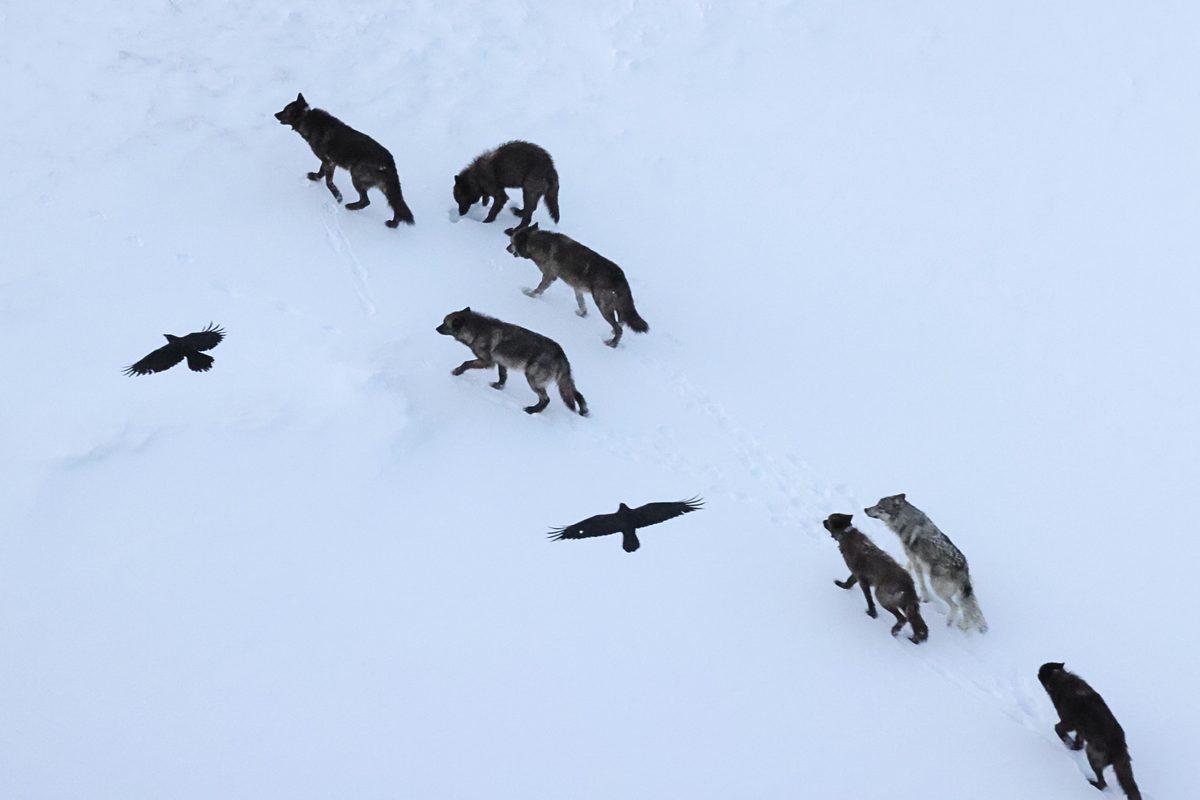
In Yellowstone National Park in the USA, ravens are strongly associated with wolf kills. For many years, it had been assumed they followed the region’s top predators in order to be the first scavengers to benefit at the end of a successful hunt.
But nobody knew for sure, so a team that included scientists from a number of European and American universities attached tiny GPS trackers to 69 individual ravens and compared their movements with those of wolves that were already collared with similar devices.
But the ravens weren’t doing what they had expected. Instead, they were visiting different locations where wolf kills were common, such as flat valley bottoms. Lead researcher Matthias Loretto compares their strategy to like going round a number of supermarkets in the search for a particular item of food.
He says it was already known that ravens remember reliable sources of food such as landfills, but this study shows they can do more than that.
“A single kill is unpredictable but over time, some parts of the landscape are more productive than others – and ravens appear to use that pattern to their advantage,” Loretto continues.
“At first, we were puzzled,” says Loretto, before realising that ravens do not usually follow wolves but instead visit sites where wolf kills are common. This footage shows the birds interacting with wolves and feeding on a carcass. Credit: Bob Landis/Ravens in Yellowstone
It’s still not completely clear how ravens decide to visit a particular area. One raven, Loretto explains, had spent a week at a large landfill site before flying 155km to an area where wolves regularly make their kills.
“We do not understand what makes them stay or leave – perhaps social factors such as integration into a local group,” he says. “And then why it suddenly decided to go looking for a wolf kill – maybe [the need for] higher quality food.”
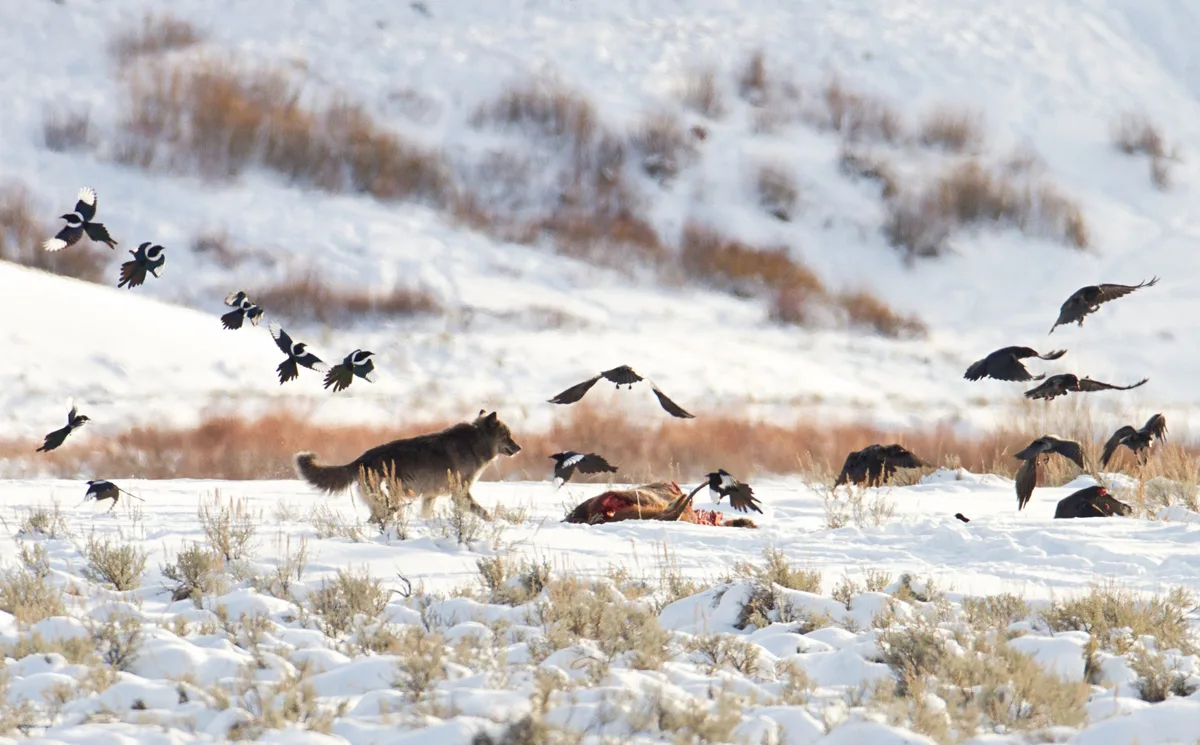 A wolf chases magpies and ravens from an elk carcass near Soda Butte in Yellowstone. Credit: Jim Peaco/NPS
Once in an area where they know wolves make kills, then they will listen out for them howling or even other vocal scavengers. Non-breeding ravens have a particular call they make when they can see food that they cannot yet access because it is being monopolised by wolves or larger birds such as golden eagles.
Ravens have been the subject of numerous studies showing their intelligence and problem-solving abilities. They are highly social birds that can remember who’s who within a particular group and can strategically intervene in conflicts in support of allies. This latest study, published in Science, provides further proof of their sophisticated, adaptable brains.
Footage shows researchers tracking and observing ravens in Yellowstone. Credit: Martin Schilt/Crows – Nature is Watching Us
Top image: ravens flying over wolves. Credit: Daniel Stahler
More wildlife stories from around the world