
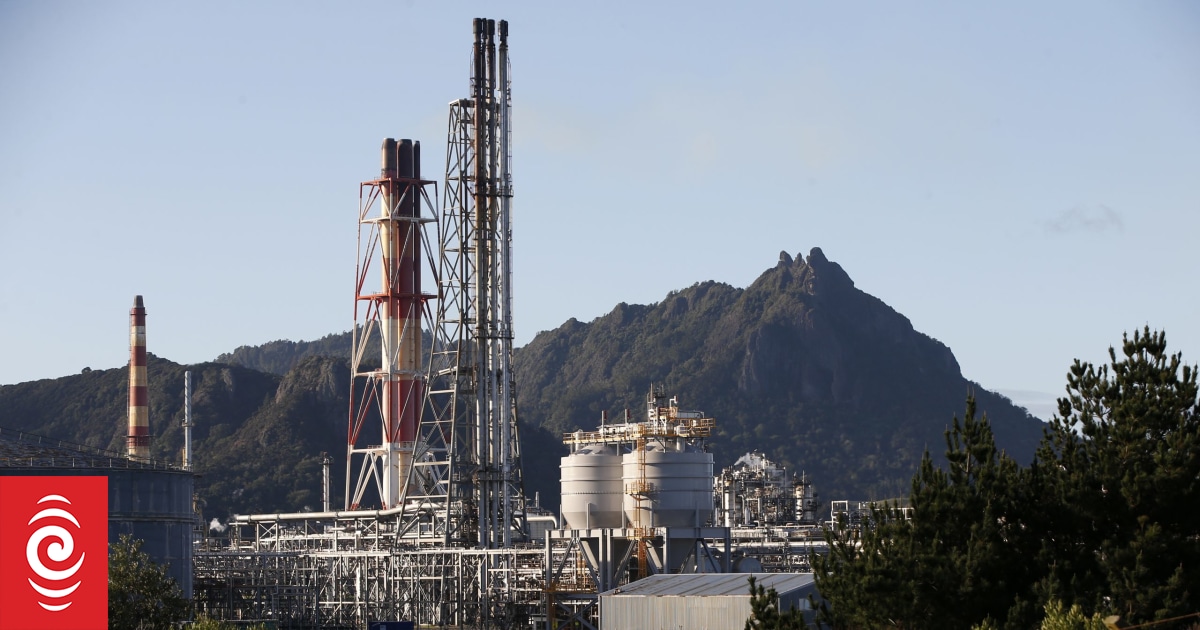
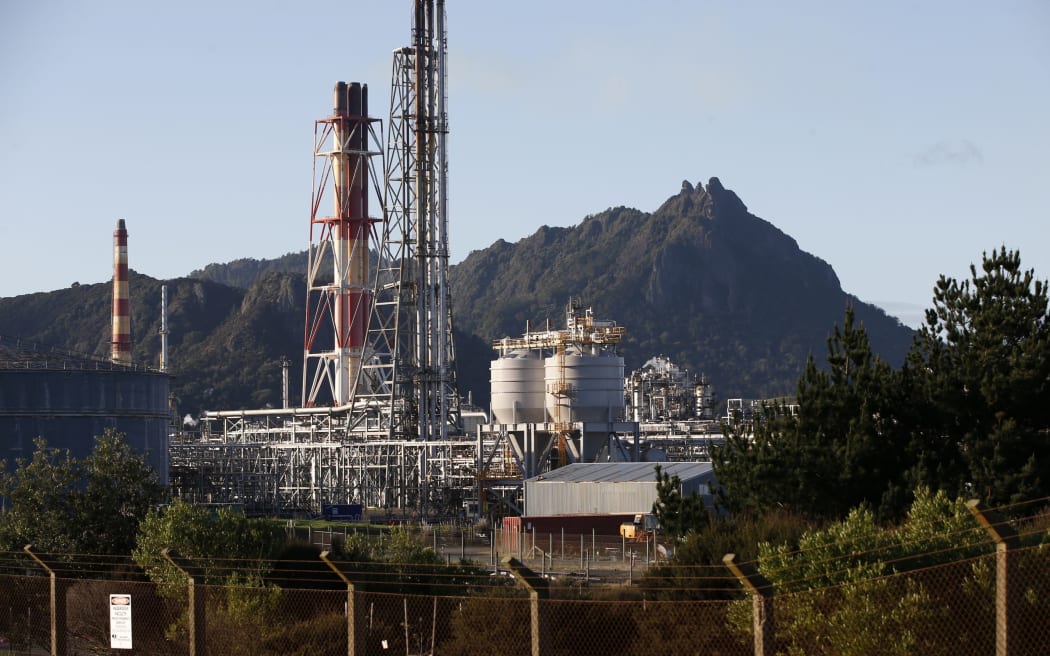
The Marsden Point refinery
Photo: LDR / Northern Advocate / Michael Cunningham
A former refinery manager at Marsden Point says the country has aligned itself with “MAGA US states” in its pursuit of fossil fuels and rejection of renewable energy sources.
David Keat told Morning Report the hydrocarbons supply chain was particularly vulnerable to geopolitical upheaval, and New Zealand was the last cab off the rank.
“We know that something could blow up in the South China Sea, who knows what [US President] Donald Trump might do next and so on,” he said.
“So those risks come along fairly regularly. When I used to run things… we used to expect something once a decade, you can never predict it.”
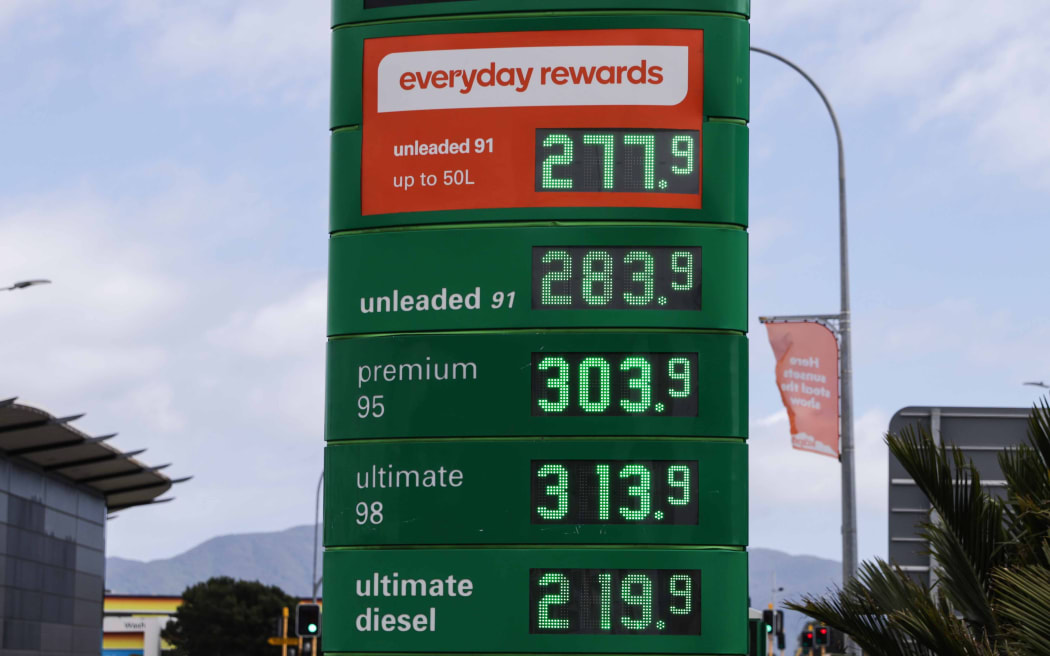
Photo: RNZ / Samuel Rillstone
He said the country needed to be insulated against such global energy shocks.
Brent crude oil was currently trading at just under $US100 (NZ$170) a barrel, leading to sharp price rises at the country’s pumps.
“If I was running New Zealand we should use this as the impetus to move us to energy self-sufficiency.”
Keat said that had two components – 100 percent renewable electricity generation and slowly electrifying the transport fleet.
“Most other countries in the world outside MAGA US states and New Zealand are doing that now, at pace. For some reason, New Zealand’s going down the 1980s path.”
For example, he said South Australia was on track to hit its target of 100 percent renewable electricity generation by 2027.
“As a result their electricity prices have reduced by about 30 percent. Of course we’re looking to go the other way with LNG.”
The Middle East conflict pushing up prices at the pump has sparked bickering between Coalition partners over the refinery’s closure.
Keat said the shut down was a commercial decision based on the company’s bottom-line and not in the interest of New Zealand.
“I would argue if you had your eye on the strategic value of that asset, [it] definitely shouldn’t have been allowed to sell.”
He said the refinery’s closure slashed the country’s options from several sources of crude oil that could be refined, to just a couple of already-refined options.
Keat maintained the current global energy shock should be viewed as a strategic gift by the government.
During debate over the refinery closure this week New Zealand First MP Shane Jones said Labour was at fault because it was wrong to allow the oil refinery to close. Labour’s leader Chris Hipkins said Jones was being dishonest.
Jones reiterated his views while talking to Midday Report on Friday, also blaming Swedish environmental and social justice advocate Greta Thunberg for “polluting many of the parties of the left wing of New Zealand’s Parliament”.
“We could also increase and double the capacity of fuel storage at Marsden Point, which has up to 650, 700 million litres’ worth of storage capacity. But when the Labour Party closed down the refinery, we lost that option.”
The closure of Marsden Point as a refinery in April 2022 was a business decision, made by its private owners, Hipkins said.
ACT Party leader David Seymour was also at odds with his coalition colleague. He said the cost of refining oil at Marsden Point was more expensive than elsewhere, and the decision to close was a business one.
Keeping the refinery open would have meant hiking fuel tax, with little to no improvement in security of supply, he said.
It came after government ministers met on Wednesday night to discuss the country’s fuel security as the ongoing war in Iran puts pressure on supply.
Currently the country has about 52 days worth of fuel supply either in country or en route.
Jones played down concerns of rationing.
“We’re following the advice that we’re receiving from the oil companies, the importers and the refinery. And they’re yet to alert us to any problems. At this stage, we haven’t been alerted to any supply issues,” he told Midday Report.
“Whether or not some of the individual garages are struggling, I really can’t comment on that, but that could be down to their own logistics plan.”
He said there were no indications oil suppliers were planning to divert ships elsewhere, and the pandemic had given officials practise in how to deal with crises.
“The bureaucracies had practice at that type of activity, rationing services. It was called Covid… But look, we’re not at that stage yet. You should imagine that the bureaucracy has had some practice in this regard. However, I don’t want anyone listening to your show doubting whether or not we have enough fuel or not – within the statutory range, and we have 50 days.”
Sign up for Ngā Pitopito Kōrero, a daily newsletter curated by our editors and delivered straight to your inbox every weekday.