
Updated March 12, 2026, 7:05 p.m. ET
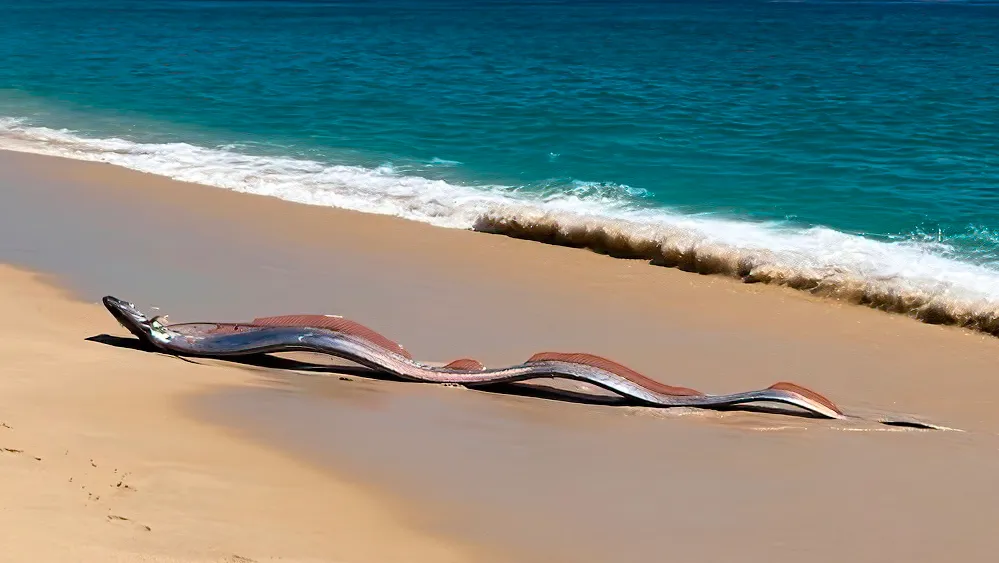
When two serpent-like oarfish washed ashore alive last week in Cabo San Lucas, Mexico, there was more excitement than fear.
The deep-sea creatures were long and slender, with crimson-colored fins. But the fish were in distress and posed no threat. (See footage below.)
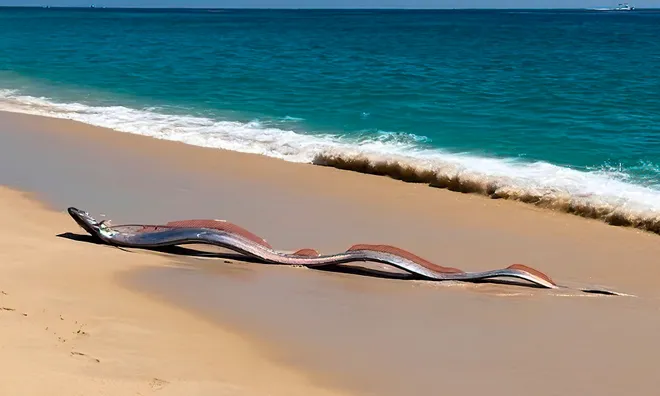
The oarfish, discovered by Monica and Katie Pittenger, were shoved back into the sea in an admirable rescue effort.
While that could have been the end of the story, the phrase “doomsday fish” appeared in several headlines regarding the encounter.
ALSO: Surreal footage shows giant whale shark along Costa Rica shoreline
This struck a nerve in Cabo San Lucas because the Los Cabos region, at Baja California’s tip, was still trying to alleviate concerns about travel in the aftermath of cartel-related violence that erupted Feb. 22 on the Mexican mainland.
That unrest, sparked by the Mexican army’s killing of a major cartel leader, did not reach Cabo San Lucas. But headlines about the unrest, primarily in Puerto Vallarta, impacted all of Mexico just weeks before spring break.
On Monday, The Cabo Sun posted a story that began, in part: “The recent sighting of two oarfish washing up on the coast of Baja California Sur has gone viral internationally, and with it, the ancient legends that dub this species the dreaded ‘Doomsday Fish’ have resurfaced.”
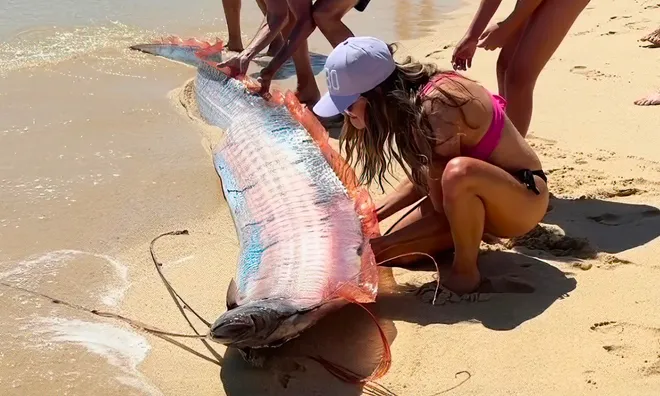
Oarfish are sometimes referred to as “doomsday fish” because, according to Japanese folklore, strandings warn of impending earthquakes and tsunamis. But such legend is not backed by science.
The Cabo Sun described the “viral beach rescue,” touched on the “doomsday fish” mythology, and explained to prospective tourists “why there is absolutely no reason to cancel your trip.”
Oarfish strandings occur sporadically in certain locations around the world, including the state of Baja California Sur, and typically involve dead or ailing specimens.