
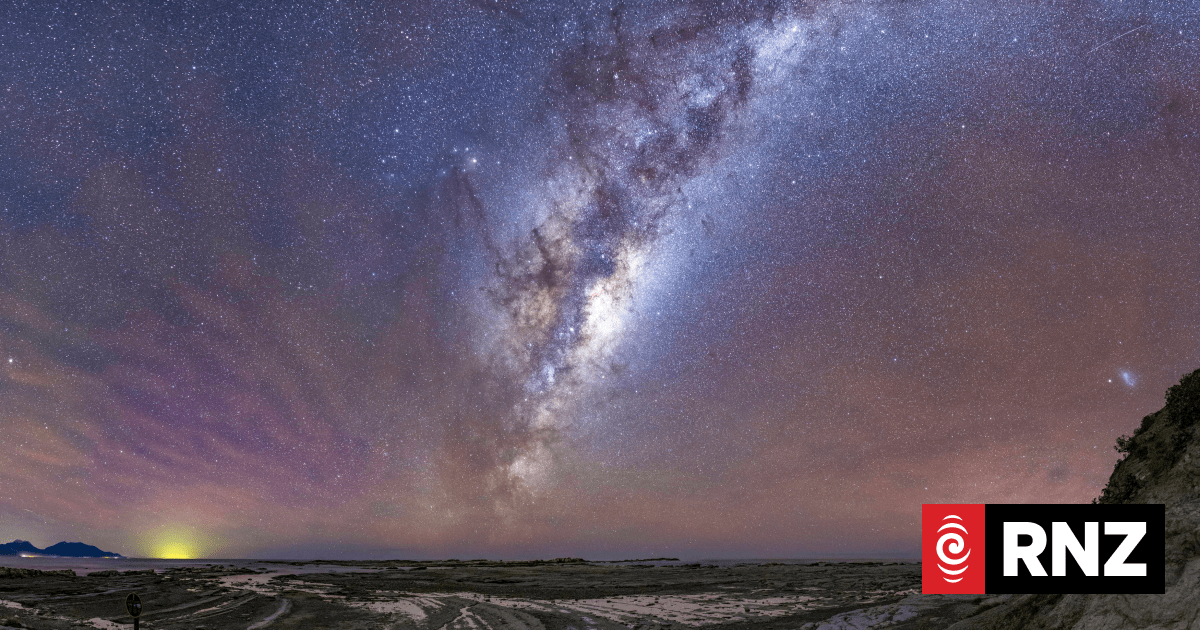
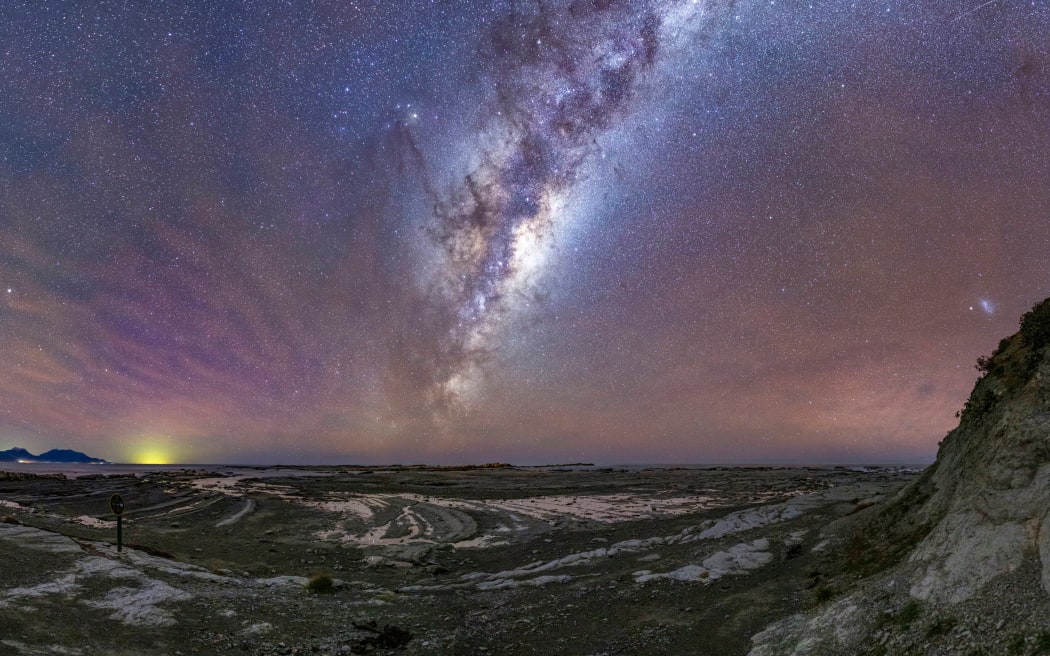
The centre of the Milky Way Galaxy over Kaikōura. International dark sky sanctuary status is providing economic benefits.
Photo: LDR / SUPPLIED
Kaikōura’s mayor says he felt like ”a kid in a candy shop” when he first viewed the night sky through a telescope.
Mayor Craig Mackle recalled the experience at an astronomy open night at Kaikōura’s Fyffe House, during a presentation from the Kaikōura Dark Sky Trust.

Photo:
The trust provided an update at a council workshop on Wednesday, 18 months on from obtaining international dark sky sanctuary status.
”I felt like a kid in a candy shop going to an open night at Fyffe House with all those telescopes to look through,” Mackle said
”I saw the rings of Saturn and I thought ‘wow’.
The dark sky status for the Kaikōura district was achieved in September 2024 on the back of the council adopting new lighting rules in the Kaikōura District Plan, which came into effect in December 2024.
Kaikōura Dark Sky Trust trustee Dr Larry Field said the sanctuary status applied to 98 percent of the district, but excluded the town and surrounding area.
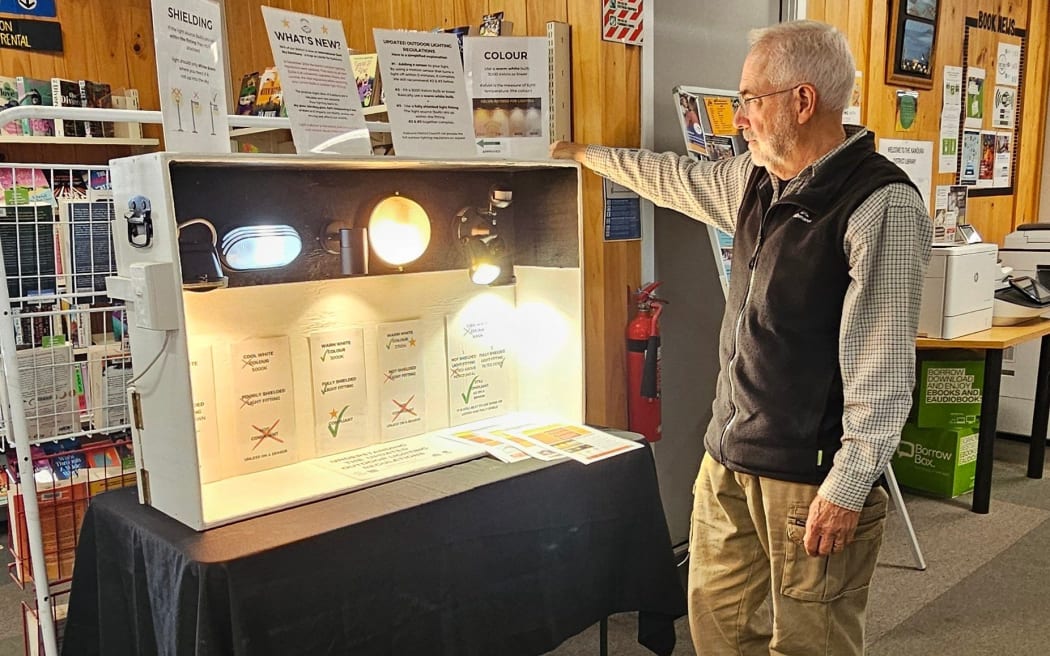
Dr Larry Field views a display of good and bad lighting.
Photo: Kaikōura Star / LDR
The trust was hoping to make a second bid to Dark Sky International to obtain dark sky community status for the remaining 2 percent.
”The Kaikōura township and surrounding area couldn’t be included in the sanctuary due to the light pollution, but we are continuing to work on improving the lighting,” Field said.
”Can you imagine in three generations, with lighting pollution increasing 10 percent a year, what it’s going to look like without lighting rules?
”We have a very enlightened council here and other districts are now trying to follow our example.”
He said the council has a role to play through advocacy and it was ”leading by example” by replacing lighting with dark sky compliant lights.
The trust is continuing to monitor the night sky with regular readings to ensure it meets the requirements of dark sky status and is available for advice on dark sky friendly lighting, Field said.
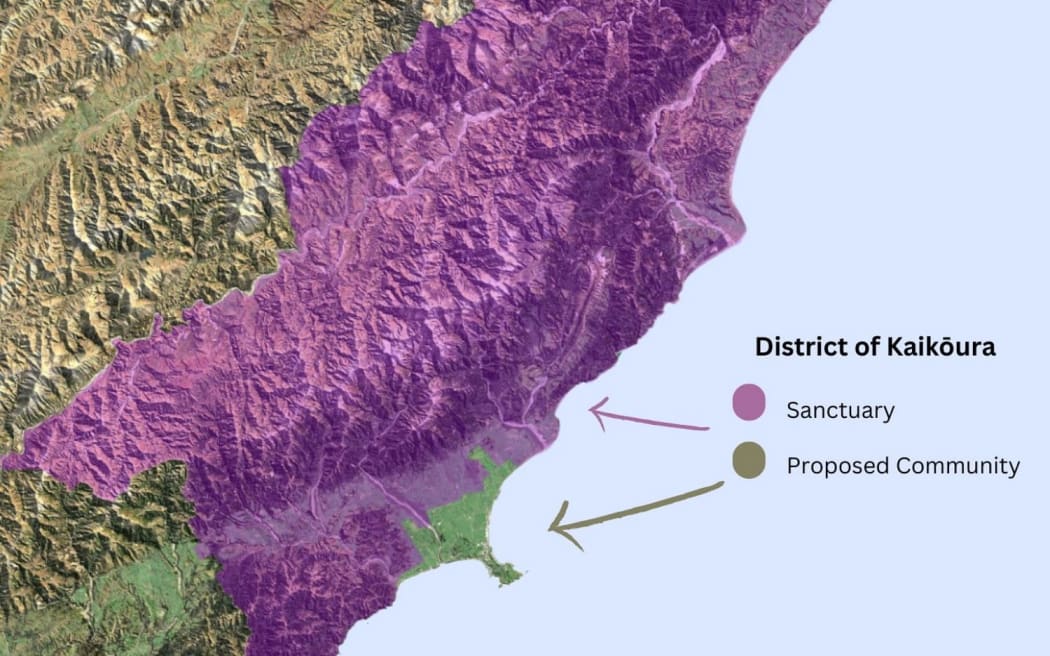
A map showing the boundary of the Kaikōura international dark sky sanctuary and the proposed Kaikōura dark sky community.
Photo: Kaikōura Dark Sky Trust / LDR
Progress has been made to reduce light pollution in the town, with Waka Kotahi NZ Transport Agency completing its lighting upgrades on Beach Road (State Highway 1) with ”warm LED colour” lights.
But there was still a lot of work to do to educate local businesses on the benefits of night sky-friendly lighting, he said.
”Warm lights” with up to 3000K were preferred over ”cold white lights” (4000K-plus).
White lights contained more blue light that is harmful to nocturnal animals, which are not used to it, and can be detrimental to human health, he said.
The original motivation behind Kaikōura’s dark sky status was to protect the iconic Hutton’s shearwater birds, which can get disoriented by artificial light and crash land in the town.
If artificial light was left to shine into the ocean, it could interfere with sea creatures and ecosystems by disrupting the natural light and habitat, Field said.
The dark sky sanctuary status is already providing economic benefits to the district, with stargazing tours, astrophotography and ”a Matariki train” from Christchurch.
Council chief executive Will Doughty said finding sources of dark sky friendly lighting which was affordable can be challenged, but Mitre 10 has been supportive.
LDR is local body journalism co-funded by RNZ and NZ On Air.