
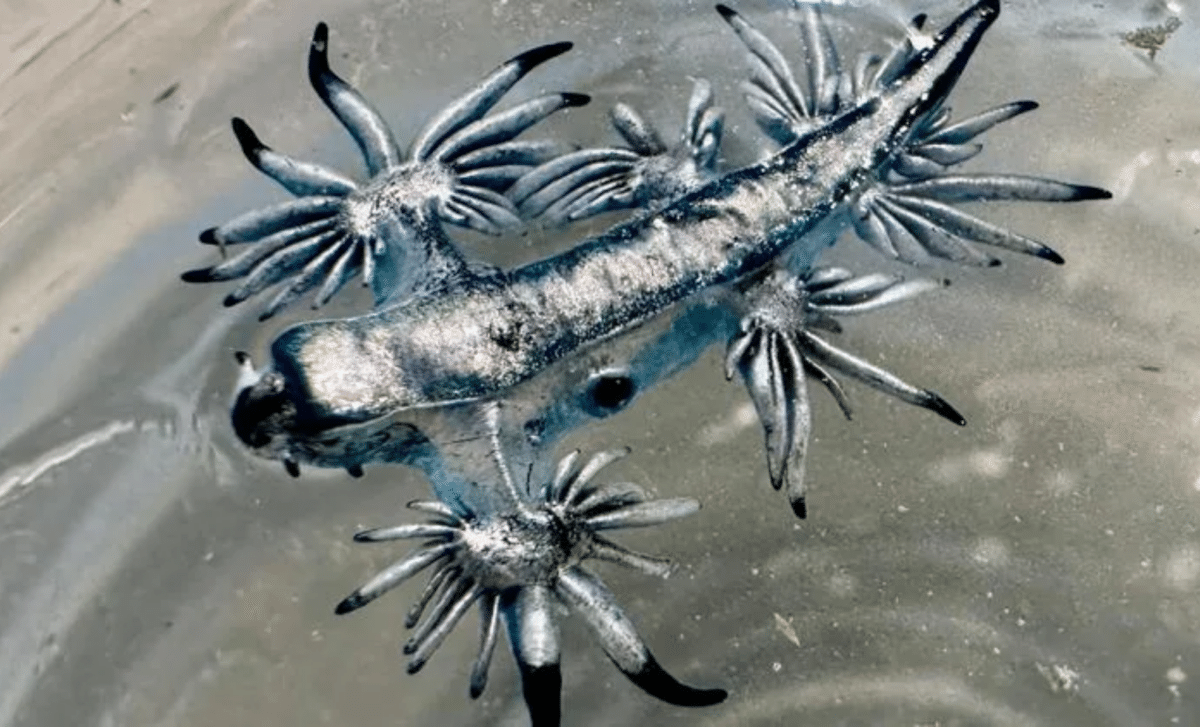
Texas beaches are currently experiencing an unusual and potentially hazardous phenomenon as blue dragons, strikingly beautiful yet venomous sea creatures, wash up along the coast. These tiny marine slugs, known for their vivid blue appearance, are capturing attention but also posing a significant risk to beachgoers. As experts warn of their painful sting, the sudden influx of these creatures highlights a rare and concerning environmental occurrence. With the blue dragons arriving in large numbers, the importance of staying informed and safe along Texas shores has never been greater.
The Danger Behind the Beauty
Blue dragons, scientifically known as Glaucus atlanticus, are small, colorful creatures that measure only 1 to 3 centimeters in length. Their bright blue hue and unique appearance may make them seem harmless, but these marine slugs come with a potent sting. The Harte Research Institute, based in Corpus Christi, Texas, has warned beachgoers about the potential dangers of these creatures after spotting a group of them washed up along the shores of North Padre Island and Mustang Island.
Although the blue dragons appear to be gentle, their sting is anything but. These creatures feed on the Portuguese man-o-war, a venomous jellyfish, and store its stinging cells within their bodies. This concentration of venom makes their sting extremely painful, even after they have been washed ashore by strong winds or currents. The presence of these creatures along the Texas coastline has prompted officials to advise beachgoers to keep their distance.
“If you see one, take a photo, but look and don’t touch,” the institute said in its post. “The ocean is amazing, but sometimes the most beautiful creatures come with a sting.”
The Blue Wave: A Group of Ocean Drifters
Blue dragons are not the only marine life being pushed onto Texas beaches by strong onshore winds. Other ocean-drifting creatures, such as the Portuguese man-o-war, blue buttons, and purple sea snails, have also been seen along the shore. Oceanographers refer to this group of species as the “Blue Wave.” These creatures are known for their ability to float along the surface of the water, carried by currents and winds.
The blue dragons are particularly notable among the Blue Wave, as their distinct appearance makes them more recognizable. The arrival of these creatures on Texas beaches is not unusual, especially during certain times of the year when weather patterns push ocean life toward the shore. However, the combination of the blue dragons’ venomous sting and their abundance on the beaches has drawn attention to the potential hazards they present to unsuspecting beachgoers.
Researchers from the Harte Research Institute have been closely monitoring these occurrences, noting that the blue dragons can still sting even after washing up on the shore. As such, it’s important to avoid contact with any of these creatures, whether they are in the water or on the beach. Beachgoers are urged to admire these creatures from a safe distance and report any sightings to local authorities if necessary.