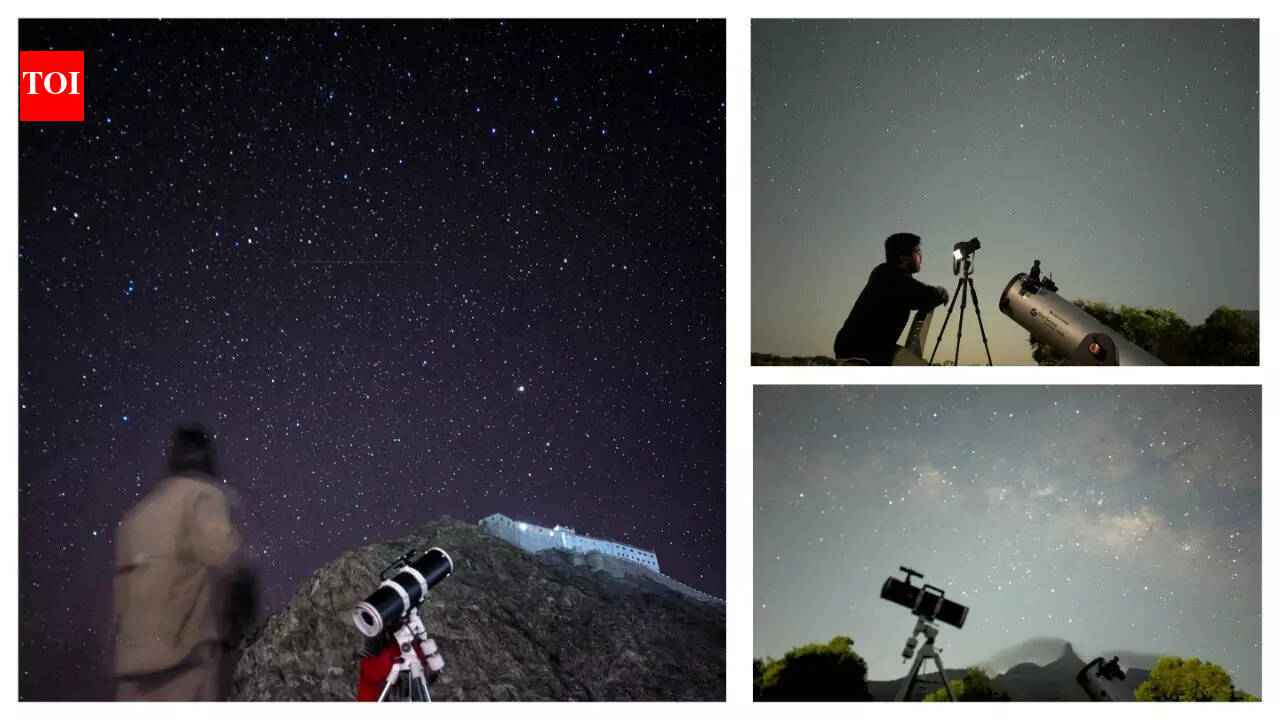
 Mumbaikars are escaping city light pollution for organized stargazing events on the outskirts. Destinations like Bhandardara and Malshej offer clear skies, allowing participants to explore planets, galaxies, and the Milky Way through powerful telescopes. This trend blends science and adventure, providing a unique connection to the cosmos. On most nights in Mumbai, the sky is reduced to a hazy canvas of city lights and towering buildings. But increasingly, Mumbaikars are discovering that just a few hours away from the city, the night sky opens up into a breathtaking spectacle. From families and young professionals to curious children, many are now travelling to the outskirts of the city for organised stargazing events; a trend that blends science, adventure and quiet wonder. Across destinations like Bhandardara, Junnar and Malshej, groups gather late into the night, lying on open fields and peering through telescopes, discovering a sky that many city dwellers have rarely seen before.
 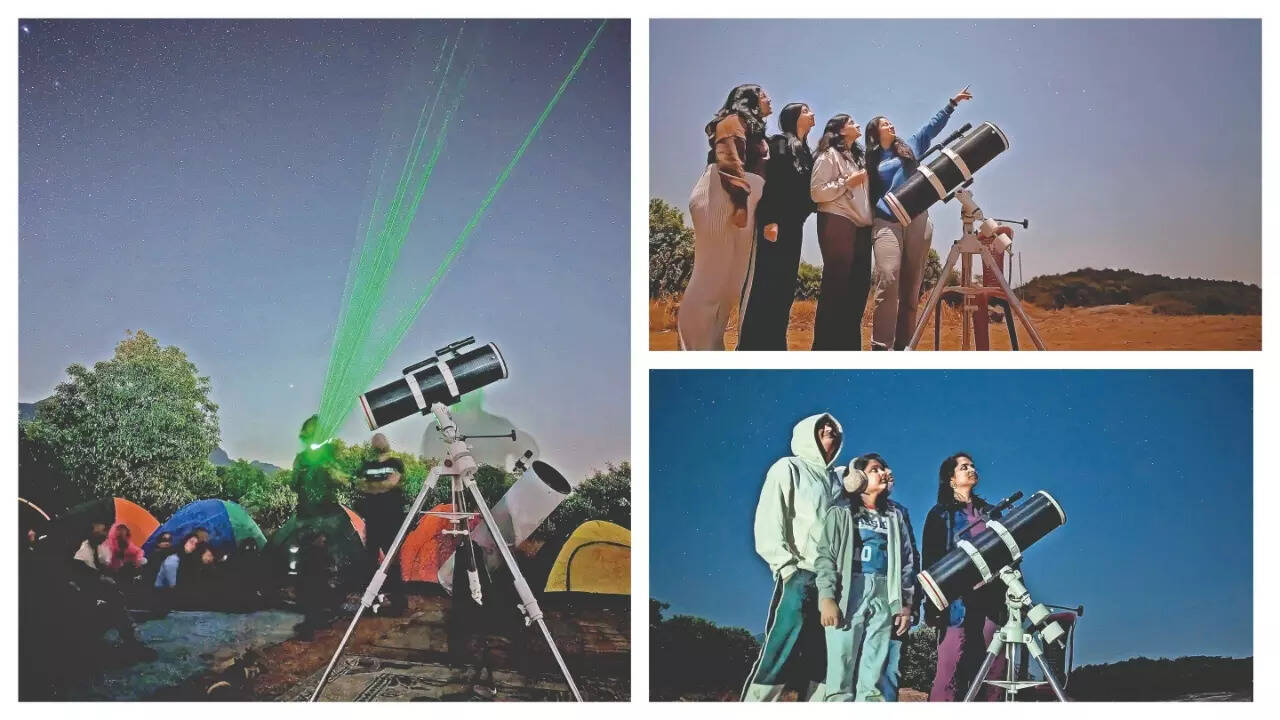 Looking up: what stargazing really means Stargazing may sound simple – looking at stars – but organisers say the experience goes far beyond that. Astrophysicist Gaurav Bhoir from Bhandup explains that these events are designed to introduce people to astronomy in an accessible way. “Stargazing literally means looking up at the stars, which itself is an intriguing feeling, but we take not one but many steps further where we dive deep into astronomy, explaining different celestial objects in a simple and fun way,” he says. Participants first learn about planets, constellations and galaxies before viewing them through high-powered telescopes. “Post that we show them the different objects through our powerful telescopes,” Gaurav adds. Escaping the city lights The biggest challenge for stargazing within Mumbai is light pollution. The glow from streetlights, buildings and traffic obscures much of the night sky. “That is why many organisers hold events far from the city,” Gaurav explains. “Mumbai being a mega city gives out lots of light and other kinds of pollution which are not ideal for stargazing. There are certain places far from highways or towns around Bhandardara, and also in Junnar and Malshej, which are ideal for it.” These locations offer darker skies, allowing participants to spot distant galaxies, star clusters and planets with clarity. From hobby to shared experience For some organisers, stargazing began as a personal passion before turning into a way to connect others with the cosmos. Kapil J, a Mumbai-based organiser, says his fascination with astronomy began in school. Today, he hosts curated stargazing experiences outside the city. “I have been into astronomy since school and am now trying to introduce it to others,” he says. “So far, I have hosted over 3,000 explorers from Mumbai in small groups to watch the stars in the outskirts of the city. We also have some of the most powerful telescopes.” A sky many have never seen For most participants, the biggest draw is seeing a sky full of stars – something many urban residents rarely experience. “One of the most common reasons people join is that, being from cities, they have never seen a sky full of stars or the Milky Way galaxy with their naked eyes,” Gaurav says. “Second is the break from usual outings like treks and camping and experiencing something new.” Moments of awe For those who attend, the experience often becomes unforgettable. Ashwini Gode, a jewellery designer from Airoli who recently attended a stargazing excursion, recalls the quiet magic of the night. “Watching the starlit sky lying on the ground and seeing Saturn’s rings and the Andromeda galaxy through the telescope was incredible,” she says. Sometimes the experience sparks curiosity beyond the event itself. “The biggest challenge I had was not during the event but after it,” she laughs. “My son, who is 11 now, wants a telescope. It’s a great thing and we will probably get it during his summer vacations.” The journey for a clearer sky While the long drive out of Mumbai may seem like a hurdle, many say it is part of the experience. Anna Singh from Pali Hill, currently on a sabbatical, says the distance was the only real challenge – but also a reminder of what city life costs. “I loved the entire experience and it wasn’t tough at all,” she says. “If I had to choose one challenge, it would be the distance. But that’s what stargazing is about. It has to be far. We had to travel so far just to get a clear sky.” She adds thoughtfully, “City life comes at the cost of a hazy sky, and in a way we are all responsible for that.” Top 10 stargazing spots near Mumbai« Bhandardara: One of the darkest skies near Mumbai, perfect for spotting the Milky Way and distant galaxies.« Naneghat: This historic mountain pass offers wide horizons and excellent views of meteor showers.« Malshej Ghat: Away from city lights, the Sahyadri cliffs make for a dramatic stargazing backdrop.« Vaitarna Lake: A quiet lakeside setting popular with astrophotographers and astronomy groups.« Mahuli Village (Asangaon): A favourite spot for organised astronomy camps thanks to its clear skies.« Dehene Village: A peaceful Sahyadri village emerging as a hotspot for astro-tourism.« Pawna Lake: Lakeside camping combined with star-filled skies makes it ideal for beginners.« Sandhan Valley: Remote terrain and minimal light pollution create excellent night-sky viewing conditions.« Rajmachi: Trek to this hilltop fort area and be rewarded with sweeping views of the night sky.« Kaas Plateau (Satara): A little farther from Mumbai, but its high altitude and dark skies make it exceptional for stargazing.Things to keep in mind before a stargazing tripBE READY FOR A LATE NIGHTMost celestial objects are best seen after midnight, so stargazing events usually run late into the night or early morning.DRESS FOR THE OUTDOORS Even if Mumbai is warm, nights in the hills or near lakes can get chilly. Carry a light jacket, comfortable shoes and a mat or blanket to lie down on.AVOID BRIGHT LIGHTSFlashlights and phone screens can affect night vision. Use dim lights or red filters so your eyes adjust better to the dark sky.CHECK THE MOON PHASEA full moon can brighten the sky and reduce the visibility of stars and galaxies. New moon nights are usually the best for stargazing.BE PATIENT AND CURIOUS
Stargazing is not just about looking through a telescope. Spend time identifying constellations, listening to astronomy guides and simply enjoying the vast night sky.