
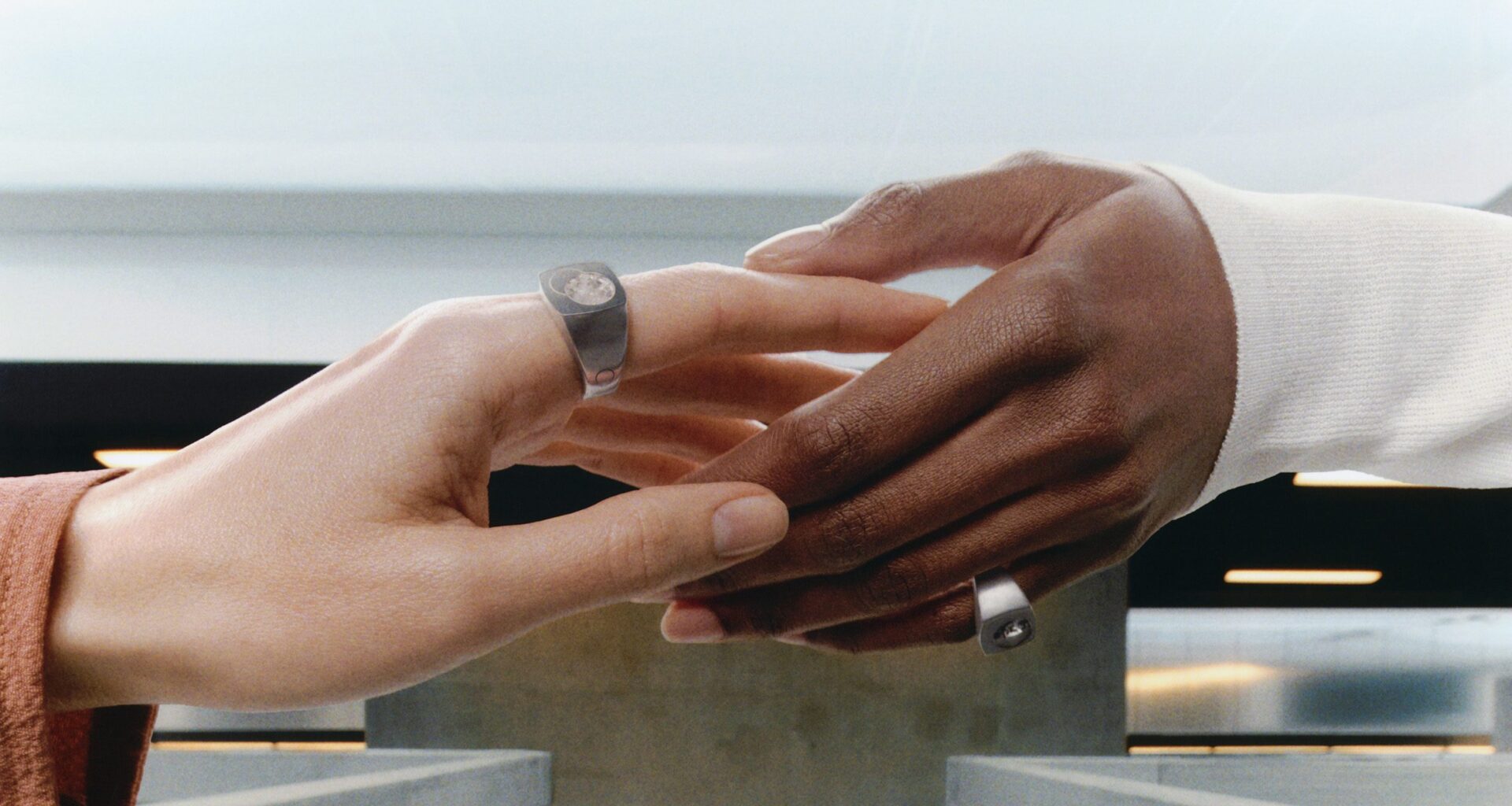
As an antidote to deepfake scams, design studios Modem and Retinaa have devised a concept for a ring that people can use to prove they are human and not an AI-generated clone.
The Quartz ring builds on the act of a handshake, requiring two people to bring their rings together in order to establish an encrypted bond, which can prove their identity when they later interact online or over the phone.
Devised by Dutch studio Modem and Swiss studio Retinaa, the project imagines how identity verification could work in the contemporary age, where artificial intelligence allows scammers to impersonate virtually anyone by creating deepfake clones of their voice or face.
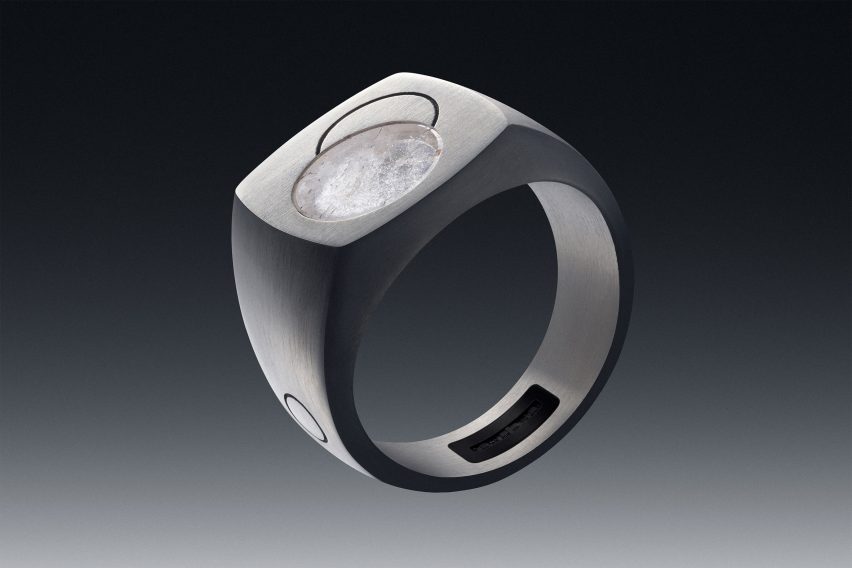 The Quartz ring is a concept for identity verification. Photo by Robin Bucher
The concept relies on a suite of modern technologies, including finger-vein biometrics to identify the user, near-field communication (NFC) to forge a connection between rings, and cryptography to later confirm both parties’ identities during remote interactions.
These technologies are layered on top of the everyday act of shaking hands – one of our oldest trust rituals, often thought to have originated as a way for strangers to demonstrate that they held no weapon.
Quartz is aimed primarily at businesses, which increasingly have to evade deepfake attacks like the one that afflicted global engineering firm Arup in 2024, when an employee was led to wrongly transfer £19 million following a video call with simulated voices and images of senior management.
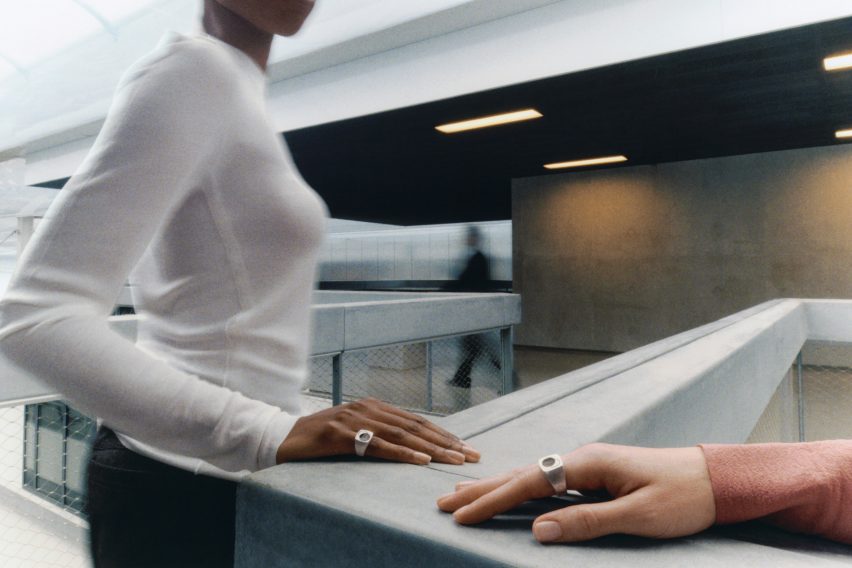 The ring’s security protocol starts with an in-person meeting. Photo by Matthew Tammaro
It could also be used among families and close friends to protect against fraudulent emergency calls generated using voice cloning software, which works with as little as a three-second snippet of sample audio, obtained from sources such as social media.
Modem design and research director Scott Kooken told Dezeen that Quartz was a “a rigorous blueprint” for a modern security solution that others can “pressure-test or build from”.
Its technologies all exist today, but they would need to be miniaturised and power-optimised to fit into a wearable like Quartz.
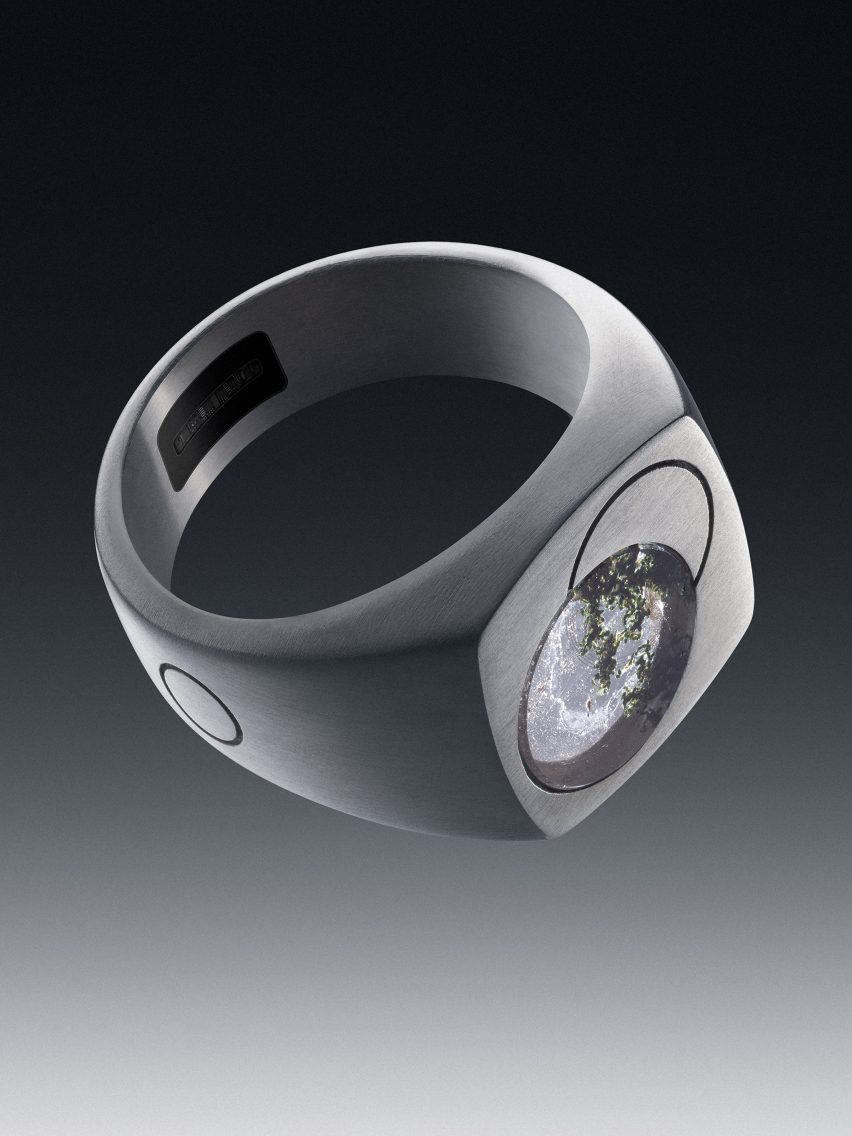 The technologies include a finger-vein scanner for biometric identification. Photo by Robin Bucher
“The project started with a simple question: in a world where everything can be faked, how do you establish trust?” said Kooken. “We wanted to design a verification system from first principles, one that puts physical presence back at the centre.”
He said the choice to focus on a ring as the form factor was both practical and symbolic, allowing biometric security technologies to work seamlessly while building on an existing object of significance.
“The signet ring is one of the oldest authentication devices in human history,” said Kooken. “That history felt like the right lineage, and it carries an emotional weight that matters for something so personal.”
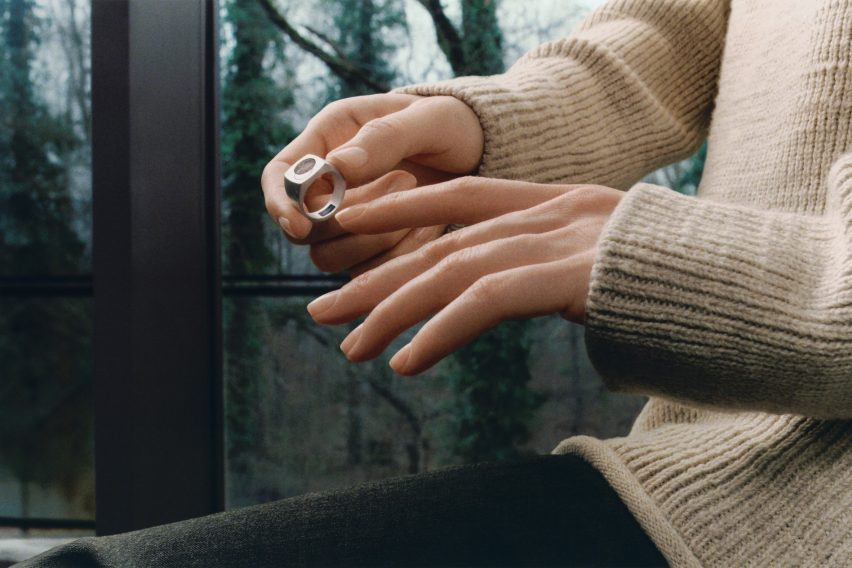 Signet rings are a reference for the design. Photo by Matthew Tammaro
“Practically, it’s always on your body, it’s harder to lose, and it sits right on the skin, which was essential for the biometric side of the protocol,” he added.
In Modem and Retinaa’s vision, biometric pairing begins when the user places the ring on their chosen finger, triggering a near-infrared scanner to make a cryptographic template by scanning blood flow through the fine veins inside the user’s finger.

Eight actually interesting uses of AI from 2025
This template is stored on the device in a Secure Element – a tamper-resistant chip similar to those used for features like Face ID and Optic ID on consumer devices. No biometric data ever leaves the ring.
A Swiss quartz stone is embedded in each ring, its distinctive features doubling as a kind of unique fingerprint for authentication, which is recorded onto a blockchain-based digital certificate as a protection against forgery.
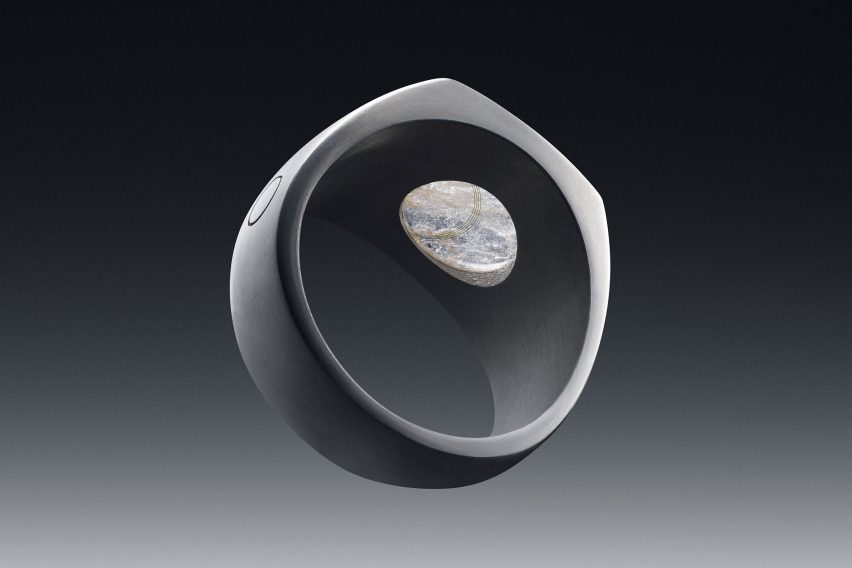 The quartz stone doubles as a unique identifier. Photo by Robin Bucher
When it comes to the handshake, the time-honoured ritual is given a high-tech upgrade, as it triggers the creation of what is known in cryptography as a “shared secret” – a key known only to the two devices.
A physical button on the ring must be pressed to initiate pairing, preventing unauthorised access or any attacks on the NFC chips that enable the encrypted data exchange.
Later, the users can prove their identities to each other by opening up an online verification gateway. This uses a cryptographic method called a zero-knowledge proof to confirm that the user on the other end of the connection holds the other paired ring.
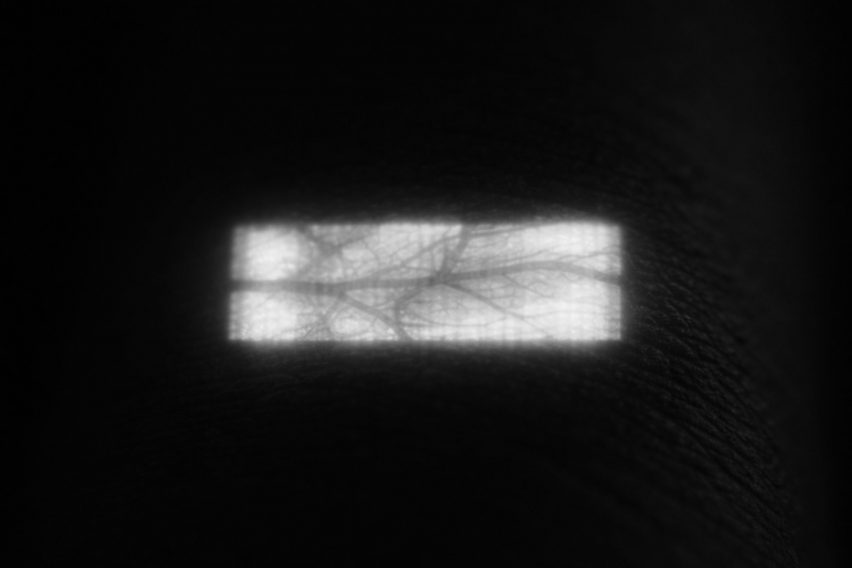 The pattern of veins in the finger provides biometric identification. Image by Retinaa
While the finger-vein scanner prevents an imposter from using the ring, there is also a “liveness check” via pulse sensor to thwart any attempts at spoofing with a non-living arm.
Modem is a design and innovation office whose recent work has included an AI chair created together with Google DeepMind and Ross Lovegrove and the open-source Dream Recorder device for reflecting on subconscious thoughts.
Retinaa also focuses on technology and is known for its expertise in security. Its work includes the design of the new Swiss passport.
Project Credits
Vision, research, creative direction: Modem and Retinaa
Writing, research: Philip Maughan
Jewellery design: Alicia Rosselet
Ring casting: Arnaud Zill
Mineral prospecting + gem cutting: Charles Centhuit
Still Life Photography: Robin Bucher
Photoshoot production: CURRENT Production
Post production: Purple Martin
Visual identity & illustrations: Retinaa