
The average pay for orchard tasks during the 2025/26 season was around $25.70 an hour, but rates went up to almost $50 an hour, Murphy said.
An unskilled worker in a packhouse earned an average pay rate of $25.63, while a skilled worker earned $28.54.
Kiwifruit is New Zealand’s largest horticultural export, contributing around $3 billion to the regions where it was grown in 2024/25, Murphy said.
Tauranga alone saw a $320 million return last year.
More than 220 million trays of kiwifruit were forecast for the industry’s 2026 crop, exceeding last year’s count of almost 217 million trays.
New Zealand Kiwifruit Growers Inc head of communications and strategic projects Mike Murphy.
Each tray holds about 30 kiwifruit, meaning almost 51 billion pieces of fruit would be harvested.
Severe weather across the North Island affected a small number of growers, but would not have a significant impact on this year’s production.
Cowley said kiwifruit was the central pillar of the Bay of Plenty’s economy.
“The record harvest is a massive confidence boost for Bay of Plenty businesses.”
EastPack chief executive Hamish Simson said the post-harvest service provider was deep in advertising for recruitment.
Chief executive of EastPack Hamish Simson. Photo / Stuart Whitaker
“We’ve had a really good returnee rate from people who seasonally worked with us before.”
He said EastPack filled about 4000 seasonal jobs and was progressively bringing on staff in the next few weeks.
“Vacancies are filling pretty quickly.”
Last season, EastPack packed about 54 million trays.
Simson said yields looked reasonably healthy and weather conditions had been favourable this year.
“That’s not to say all our orchards are unaffected. There are some that have been affected by slips and landslides. But overall, orchards are set up to be pretty resilient.”
He expected packing volumes to drop off around June.
But since EastPack could store fruit and pack later, packing would continue until August.
International trade developments like US tariffs would not interfere with this year’s harvest, he said.
Simson said New Zealand had established brands, a great brand reputation, good market access, and a lot of volume to sell, creating a generally positive scenario.
The average pay rate for kiwifruit pickers was $25.63. Photo / Zespri
Te Puke-based packhouse Trevelyan’s employed around 1300 people across its Bay of Plenty operations, its marketing and communications manager Sacha Koster said.
Roles covered the full post-harvest operation, including grading, packing, stacking, quality control, cleaning, forklift driving, laboratory work, and supervisory roles.
The largest number of opportunities were typically in grading and packing, as those roles supported the highest volume of fruit moving through Trevelyan facilities.
Seeka chief executive Michael Franks said the packhouse and coolstore employed around 3000 staff.
“We have seen positive numbers of people signing up for our shifts across all of our facilities.”
There were waitlists for roles in some cases, Franks said.
Ministry for Social Development regional commissioner Jacob Davies said kiwifruit work was actively promoted as a pathway into employment where people could quickly connect with job opportunities and begin earning income.
“If anyone who is looking for work thinks that kiwifruit and the wider horticulture industry might be suitable for them, we absolutely encourage them to come and see us.”
The ministry had been actively promoting kiwifruit harvest employment opportunities to its clients since December 2025 through its “We’re painting our region green – let’s get Kiwis into kiwifruit” campaign.
The campaign included events, service centre seminars, emails, referrals, and collaboration with employer-led recruitment activities.
More than 110 clients attended a December 2025 event in Katikati, Davies said, and further seminars were planned.
Davies said there were job opportunities for people unable to do physical work, such as operating forklifts and administrative roles.
New growers go for gold
He said orchards reinvested profits for future growth, which flowed straight into rural contractors, professional services, and local innovators.
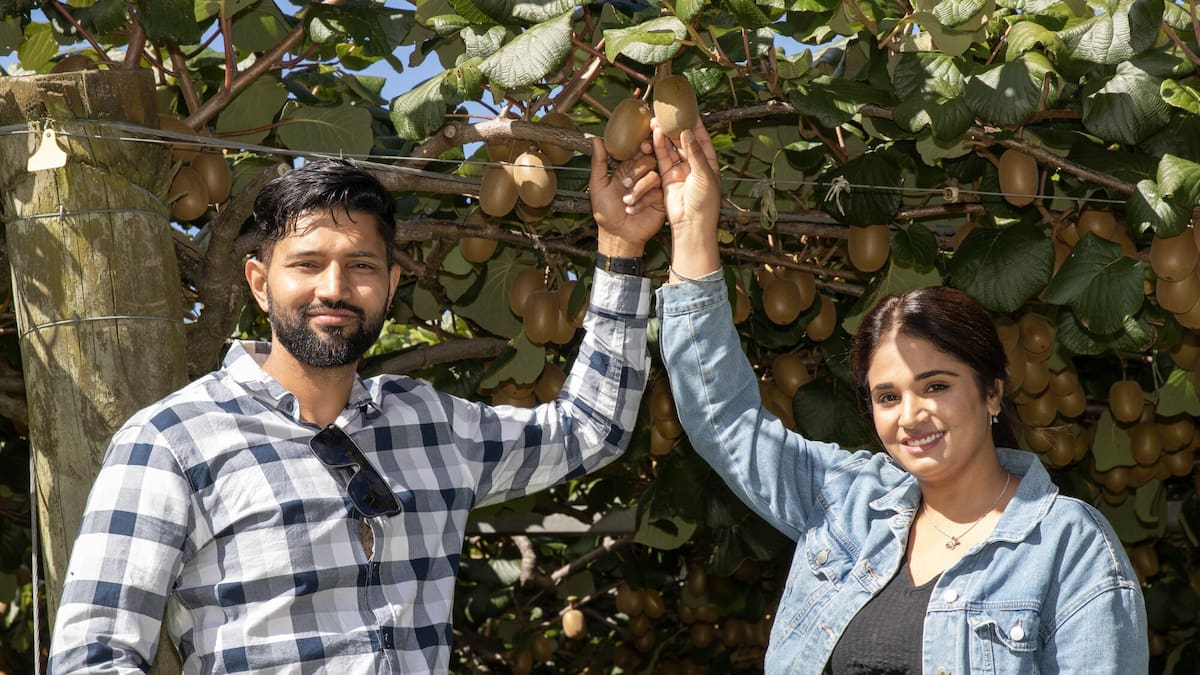
Pongakawa gold kiwifruit growers Shaihnaz Kaur and Ajminder Singh bought their orchard in January and were excited for their first kiwifruit harvest.
The married couple grew up working in kiwifruit orchards.
Pongakawa kiwifruit growers Shaihnaz Kaur worked in kiwifruit orchards during their youth. Photo / Kelly O’Hara
Holidays and weekends were spent picking, pruning, grading, packing – “basically everything”.
Kaur said they expected picking for their orchard to begin at the end of March or the first week of April, then conclude about April 15.
The quality of their crop looked good, and they were expecting a crop count of about 19,500 pieces of kiwifruit.
Bijou Johnson is a multimedia journalist based in the Bay of Plenty. A passionate writer and reader, she grew up in Tauranga and developed a love for journalism while exploring various disciplines at university. She holds a Bachelor of Arts in Classical Studies from Massey University.