
A striking set of impact experiments has strengthened the case that tiny life could hitchhike between worlds inside rocks blasted off a planet. In a Johns Hopkins University study funded by NASA and published in PNAS Nexus, researchers showed that a famously hardy microbe can survive shock pressures comparable to those that eject meteorites into space, renewing scientific debate over lithopanspermia — the interplanetary spread of life sealed in stone.
A Brutal Test of Impact Ejection on Hardy Microbes
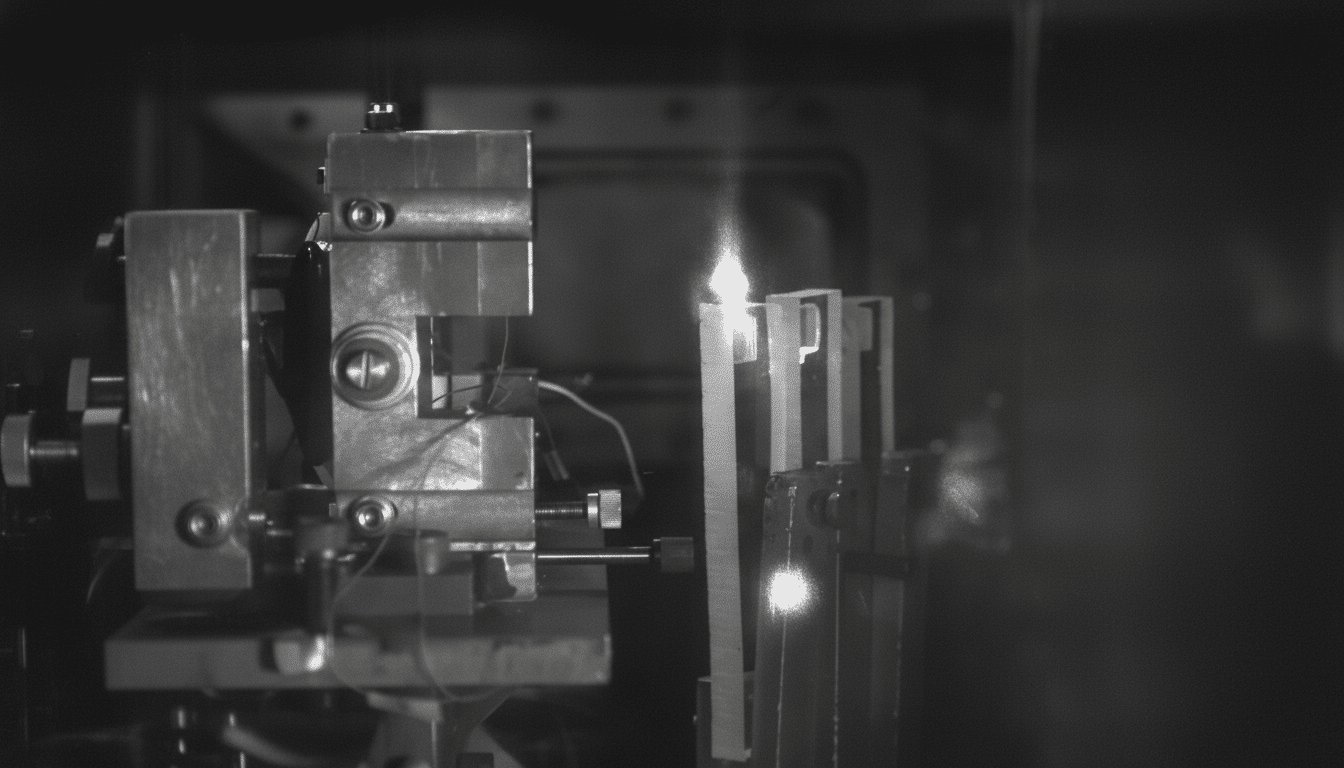
Using a room-sized gas gun, mechanical engineering researcher Lily Zhao drove a steel plate into a meticulously prepared layer of the bacterium Deinococcus radiodurans at up to 2.4 gigapascals — roughly 24,000 times Earth’s sea-level pressure. That range sits squarely in the regime modeled for lightly shocked rocks launched from a planetary surface by an asteroid strike.
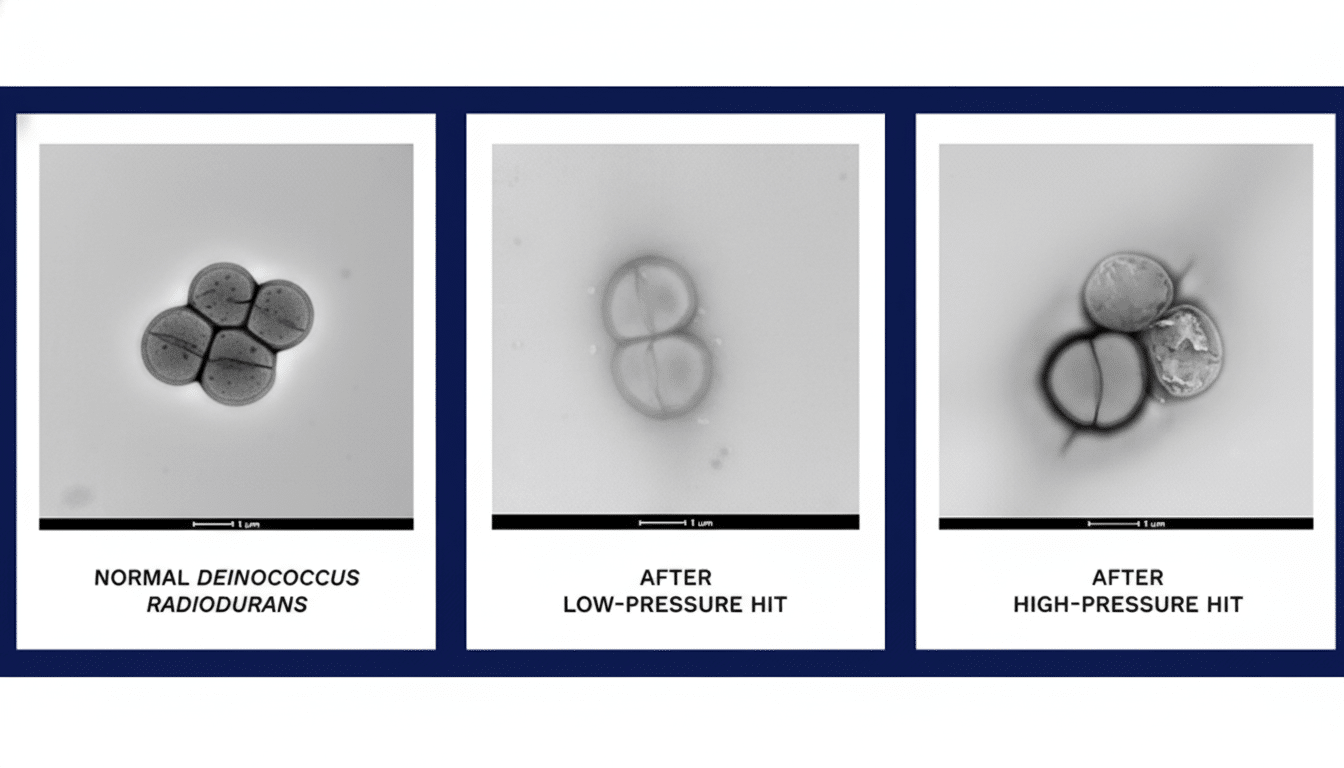
Instead of devastation, the team saw impressive resilience. Even at the highest pressures the hardware could withstand, survival hovered around 60%. Cells were injured, but many rapidly shifted into repair mode, restoring damaged DNA and proteins within hours. Modeling and microscopy suggested the most dangerous moment wasn’t peak compression but the rapid pressure release, which can tear at cellular envelopes as materials rebound and water changes volume under extreme conditions.
Microbiologist Jocelyne DiRuggiero selected D. radiodurans for its well-documented resistance to radiation, desiccation, and cold — traits directly relevant to deep space. The experimental design, overseen by impact physicist K. T. Ramesh, controlled for a longstanding problem in earlier studies: uncertainty over the exact pressures experienced by survivors. By creating a uniform, ultra-flat bacterial layer between steel plates, the team could quantify the shock history of the cells that lived.
Why This Matters for Life Between Worlds
Lithopanspermia requires an unlikely but not impossible chain: violent launch from a host world, years to eons adrift in space, and a fiery but survivable landing elsewhere. The first step — ejection — is among the most perilous. Demonstrating robust survival under ejection-level shock removes a major objection to the hypothesis.
We already know rocks can make the trip. Scientists have identified at least 400 meteorites on Earth that originated on Mars, based on trapped gases and chemistry consistent with Martian crust. Orbital dynamics studies indicate typical transfers can take thousands to millions of years, with rare “fast lanes” that deliver ejecta in under a decade. Nestled millimeters to centimeters beneath a rock’s surface, microbes would be shielded from much of space radiation and thermal extremes.
Crucially, independent space exposure experiments back the idea that some microbes can handle the vacuum, cold, and radiation of space when properly sheltered. JAXA’s Tanpopo mission found that aggregated Deinococcus cells in micrometer-thick clumps could survive multiple years on the exterior of the International Space Station, and ESA’s EXPOSE platforms reported survival of microbial communities and lichens after 18 months outside the station. The new shock results complement these findings by addressing the violent starting gun of any interplanetary journey.
Implications for Planetary Protection Policies
The study lands squarely in ongoing planetary protection debates. NASA and other agencies, guided by the COSPAR planetary protection policy, already impose strict cleanliness standards to prevent forward contamination — seeding other worlds with Earth life — and to preserve the integrity of life-detection missions. Yet even with rigorous sterilization, a fraction of resilient microorganisms can persist.
If microbes can survive an asteroid-class shock, some could also endure the lesser jolts of spacecraft launch or surface impacts. That makes bodies like Mars and its moon Phobos particularly sensitive. Ramesh, who contributed to a National Academies exploration of these risks, argues the new data support treating Phobos with greater caution, especially as sample-return missions such as JAXA’s MMX target the Martian moons.
The findings also hint at where to search for extant life. Fresh impact craters fracture rock and can create transient pathways for water and nutrients. Far from being sterilized, some craters on Mars or the icy moons might be refuges — or at least promising sampling sites — for hardy microbes.
What Comes Next for Testing Life’s Space Survival
Shock tolerance alone doesn’t prove life routinely migrates between planets. Future work will aim to stack stressors: shock plus heating, vibration, vacuum, and radiation, ideally with microbes embedded in real rock to mimic natural shielding. Dynamic compression experiments that push beyond 2.4 gigapascals, along with reentry simulations that reproduce brief surface scorching but cooler rock interiors, will help close remaining gaps.
For now, the Hopkins team’s result shifts priors. A scenario once dismissed as vanishingly unlikely looks more plausible. As Ramesh put it, the physics and biology are converging on a simple message: under the right conditions, even tiny life can endure stupendous violence — and, perhaps, ride a rock from one world to another.