
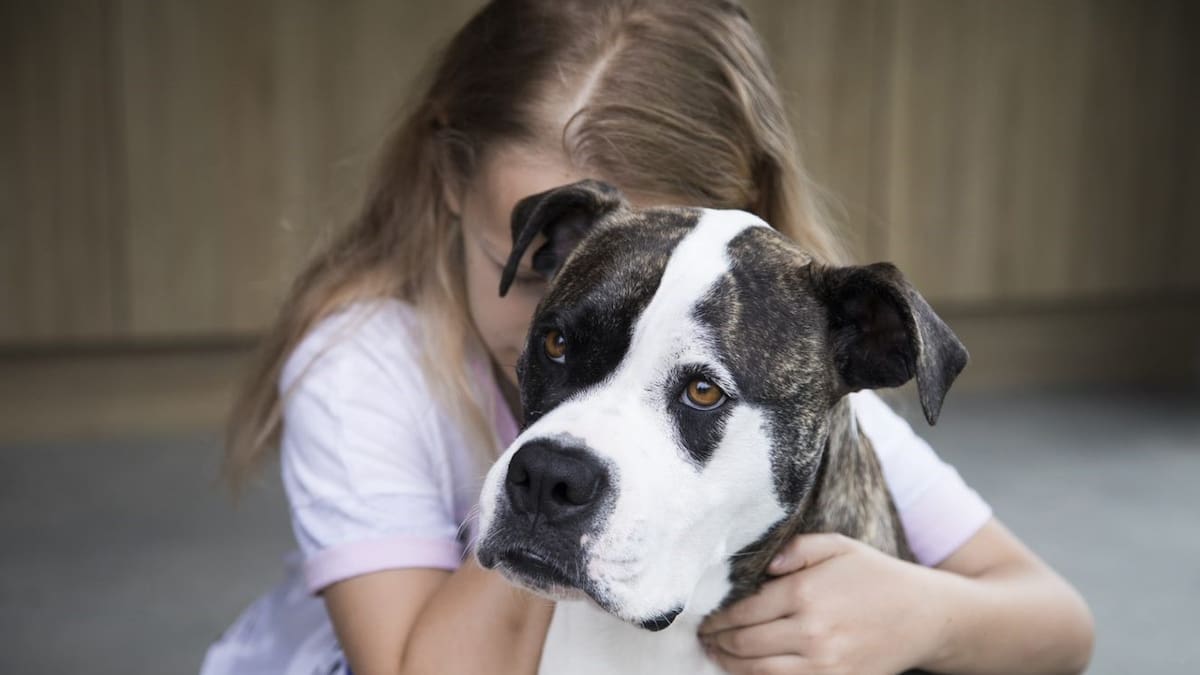
Alice spent 100 days living in her car with her teenage son and dog after leaving her violent partner.
The trio initially moved in with Alice’s mother, but when she went into care they could no longer stay in her state house.
Alice had nowhere else to go. She packed up her little family’s belongings into her small car and, for the next three months, that was the only home they knew.
At night Alice and her son, who is over 180cm tall, squeezed into the cramped back seat with their beloved dog.
Leaving him was not an option. Alice said they had lost everything and they were not going to lose their dog too.
Eventually, Alice was connected with Pet Refuge. By 8pm the dog was safe and sound in the charity’s animal facility and Alice and her son had real beds.
The pair stayed in transitional housing for four months while refuge staff cared for their dog.
Alice said knowing their dog was happy and safe allowed her to focus on rebuilding a life for her and her son.
When Alice found a dog-friendly house, she said the dog was “overjoyed to be reunited with his family”.
“I lost my home, my belongings and my sense of safety – but I never had to lose my dog,” she said.
“By stepping in when I needed it most, Pet Refuge didn’t just give my dog shelter. They gave me the chance to begin again with my whole family.”
More than half of victims delay leaving for beloved pets
Alice is one of hundreds of people helped by Pet Refuge since it opened four years ago.
And as domestic violence increases in New Zealand, hundreds more will need the charity in future weeks, months and years.
Pet Refuge founder and CEO Dame Julie Chapman said concern for pet safety remained a significant barrier for families trying to leave violence, and 2026 is shaping up to be another year of rising demand.
“This isn’t about people being reluctant to leave their pets behind. It’s about what happens to those pets if they do,” she said.
Pet Refuge founder Dame Julie Chapman. Photo / Kathryn Nobbs
“Research shows more than half of victims have delayed leaving violent situations because they were afraid for their pet’s safety. This is something we see constantly – families often won’t leave until they know their pet has somewhere safe to go.”
Since opening less than five years ago, Pet Refuge has provided more than 74,290 safe bed nights for pets while their families are in refuge or emergency housing.
This week the charity reached the milestone of supporting more than 500 families, and over 875 pets, to escape violence and reach safety.
On average, pets stay in Pet Refuge’s purpose-built shelter for about four months.
Shelter overwhelmed – but Kiwis can help
Chapman said the shelter was “currently full to overflowing”.
“We are about to have to have a waitlist again. We are getting more emergency referrals from police and women’s refuges, and we really need the public to get behind us so we can make more space available at our offsite boarding partners,” she said.
“We are also calling for landlords to get in touch with us if they are willing to give our clients with pets a chance, using the new pet bond legislation that’s available to them.
“This will help women find safe places to live with their pets, which will free up space for us to help more people.”
Chapman said pets being harmed in family violence situations is more common than many people realise, and providing safety for pets can be critical to helping families leave sooner.
“Over the past year we have seen some serious instances of violence against pets, and it is clear why victims won’t leave their pets behind with their abuser – it puts their lives in danger,” she said.
“We know pets can be the reason someone stays, but they can also be the reason someone is able to leave.
“Providing safety for pets can be a critical intervention point that allows families to leave before violence escalates further.”
Dame Julie Chapman says Pet Refuge’s shelter is “currently full to overflowing”. Photo / Alex Burton
Speaking before the charity’s March appeal, Chapman said helping 500 families in less than five years was “significant” and showed how many people face choosing between their own safety and their pet’s.
“For those families, having somewhere safe for their pet can make all the difference,” she said.
“Demand is continuing to grow, and 2026 is already tracking in the same direction.
“Without public support, we can’t help every family that needs us.”
Abused dog ‘more than a pet’
Other women spoke out about their experience with Pet Refuge after leaving homes rife with violence and abuse.
June got her dog when he was 6 months old and said he soon became “much more than a pet”.
“He became my protector and constant companion,” she said.
“He looked after me and I looked after him. Until I couldn’t anymore.”
June’s abuser was her son. Over time the violence he inflicted escalated to the point that her life and her dog’s were at risk.
She said her son targeted the dog repeatedly.
When her son attacked, the dog would put himself between June and the violent man.
“And he paid the price for it,” she said.
“He was kicked repeatedly and had wood and rocks thrown at him. On one awful occasion, he was hit on the head with a cooking pot – hard.”
Pet Refuge helps people escape domestic violence by taking on their pets until they can find a new, safe home. Photo / Supplied
June said the abuse changed her dog. He became withdrawn, fearful and aggressive. He was “deeply wary of men”.
He never stopped trying to protect June.
As the situation worsened, June said she was living in “near-constant survival mode”.
She kept the dog in her bedroom, the only place she could keep them safe.
June said eventually the violence “spilled outside” the home. She had to leave and her dog was taken by the local council.
He spent 10 days there while she “scraped together the money to get him out”.
June went to Women’s Refuge and learned about Chapman’s charity.
She reached out and her dog was taken to safety. He’s now been there for nearly two months as she rebuilds her life.
Every week refuge staff send her an update with photos and seeing the dog “happy, secure, and surrounded by people who understand him” has made her journey easier.
She said the support of Pet Refuge had given her “space to stabilise” her life without “the crushing guilt or grief” of losing her dog.
“Getting him was the best decision of my life. I’m so excited to get him back and give him a big cuddle,” she said.
“I’m just so grateful for Pet Refuge, what a beautiful place to have in the world.
“They have been such a big part of my journey to come into a good place for myself. I’ve only been able to do that because I know that my dog is being cared for.”
Increasingly toxic psychological abuse
Josie’s cat and dog were her family. She didn’t have children and her pets were her world.
When the abuse started, it also affected the animals.
“For a long time, I didn’t recognise what I was living with as abuse. It was never physical, it was all psychological,” she said.
Her former partner was controlling and when he drank he became aggressive and angry.
Victims of domestic violence often delay leaving dangerous homes because they cannot take their beloved pets. Photo / 123rf
Josie said his behaviour became increasingly toxic over the years.
“We lived rurally and I became increasingly isolated. There were no close neighbours to hear when insults were screamed or plates were thrown,” she said.
“The stress affected all of us. I could see it in my pets, particularly in my cat. He became so stressed that he started pulling his fur out. That was incredibly hard to watch.”
Josie said she stayed in the home longer than she should have.
“Psychological abuse is slow. It creeps up on you, and you don’t always realise what’s happening while you’re in it,” she said.
“That’s what happened to me… I never expected to be in this position in my 50s, but abuse can happen at any age.”
Josie knew about Pet Refuge and had donated to the charity. She also knew there were sometimes waitlists for pets because of demand.
When she called the refuge and learnt there was space for her cat and dog she acted immediately.
“It turned something I had been thinking about into something I could actually do,” she said.
“Two days after that phone call, I waited until my ex had gone to work, bundled the cat and dog into the car and left.”
She said being separated from the animals was “incredibly hard”.
“After everything they had already been living with, I worried about how they were coping in an unfamiliar place and without me there.
“Knowing they were safe allowed me to focus on finding somewhere stable to live. After five weeks, I found a place, and they were able to come home.
“I don’t believe I would have left when I did without Pet Refuge. How could I have? When your pets are your children, leaving without them is impossible. Having somewhere safe for them is what made it possible for me to leave.”
Cats caught in ‘constant retaliation’
Annie was in a volatile relationship for seven years.
When she left with her children, police and court action followed and she said she was “facing constant retaliation” from her ex.
“It was a really stressful time, and I just needed space to begin the healing process and to be able put my energy into focusing on my children,” she said.
“But I was in the unusual position of caring for his much-loved cats, as at the time, he wasn’t in a position to take them.
Pet Refuge says many people in violent relationships face choosing between their own safety and their pet’s. Photo / File
“They were a constant source of stress. The cats themselves weren’t the problem… The problem was what they represented.”
Annie said for months her ex hounded her through lawyers about the cats. He wanted them back but had nowhere suitable to keep them.
Annie didn’t feel it was right to let them go.
“Police and other animal charities said they couldn’t get involved, and friends were too scared to help,” she said.
“I received relentless correspondence from my ex and his lawyer in a bid for immediate return of the cats, but I felt I didn’t have a safe or legal way to take them back.
“He wasn’t allowed to collect the cats from my property due to the complexities of no contact between us, and the damages he had previously caused. Every solution we came up with would have been a breach of the protection order.”
Annie had to relocate multiple times to keep herself safe from her ex and she was “at her wits end” about what to do with the pets.
“I reached out to Pet Refuge early one morning when I was completely overwhelmed,” she said.
“When the case worker called me back the next day, I cried… she was a beacon of light in an extremely dark period of my life.
“For the next few months, Pet Refuge carried the load with me. They knew how much stress I was under and they listened and reassured me when I needed it. They even sent cat food, which was an incredible help – it meant I didn’t have to sacrifice buying more food for my kids to pay for the pets of the man who caused so much hurt for us.”
Annie said her case worker eventually called and said she had found a solution.
A Pet Refuge worker found a solution for a victim’s difficult situation with her abusive ex’s cats. Photo / 123rf
A refuge staffer would come to where she was staying and collect the cats and deliver them to her ex’s lawyer.
“Everything was planned carefully and with my welfare in mind. I didn’t have to break any rules, I didn’t have to see my ex,” she said.
“When the cats left, I told my children that a special lady had come to take them back to their dad. At first, they were worried he had come to the house. But once they understood he hadn’t been in our home, he hadn’t collected them without saying hello to them, they were happy the cats had gone back to him.
“He loved those cats, and the kids thought having them home with him would make their daddy happy again.”
Annie said the cats going back to her ex was “a massive weight lifted”.
“There were no more relentless messages or insults via his instructions through lawyers, no more thinking about how on earth I was going to solve the situation of the cats without putting myself at risk,” she said.
“Pet Refuge stepped into a situation that no one else could or would touch and handled it all with care, dignity and compassion…. And I will forever be grateful to every person who helped facilitate the cats’ safe return.”
Charity Pet Refuge provides shelter for pets of those escaping family violence. Photo / Supplied
What is Pet Refuge?
Pet Refuge provides temporary shelter, transport, veterinary treatment and rehabilitation for pets across New Zealand affected by family violence while their families secure safe housing.
Pet Refuge’s March Appeal is now underway, raising funds to help meet the growing demand for the service.
To donate or become a regular giver, visit www.petrefuge.org.nz.
Anna Leask is a senior journalist who covers national crime and justice. She joined the Herald in 2008 and has worked as a journalist for 20 years with a particular focus on family and gender-based violence, child abuse, sexual violence, homicides, mental health and youth crime. She writes, hosts and produces the award-winning podcast A Moment In Crime, released monthly on nzherald.co.nz