
“This is the largest flock of kea I’ve seen at Aoraki or anywhere,” she said.
“Combined with increased sightings of kea around the park, it’s a positive sign that the local kea population is increasing.”
Weston said young kea often banded together in wandering flocks in late summer and autumn, but DoC didn’t know where they were coming from.
“We’re hoping this research will help answer that question.”
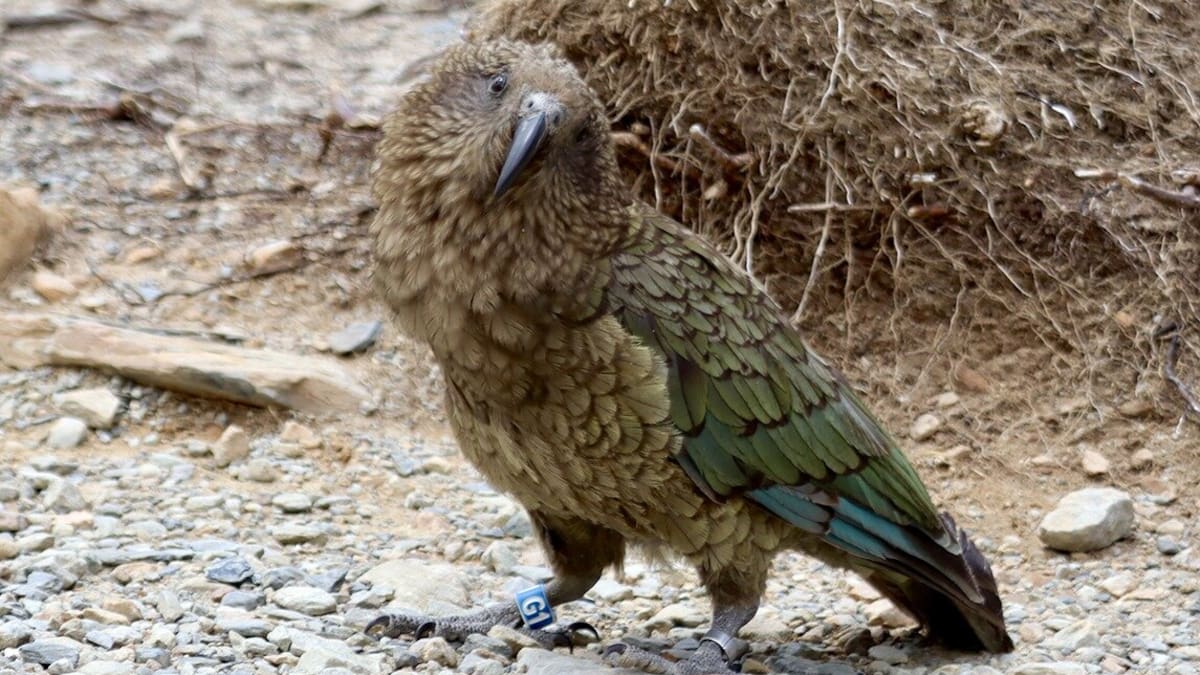
So far, 420 kea have been banded with the RFID (Radio Frequency Identification) tags over the past two summers as part of the trial.
There are 13 readers installed at huts and other sites within the adjacent Westland Tai Poutini and Aoraki Mount Cook national parks and nearby conservation areas.
More readers will be added, including New Zealand Alpine Club huts.
DoC said the use of RFID tags was a cost-effective way of monitoring kea.
The leg bands cost less than $1 each, and the data is passively gathered as kea land on the tag readers.
A kea flock at Red Tarns, Aoraki Mount Cook National Park. Photo / DoC, Andrew Simmons
The World Parrot Trust-supported trial addresses one of the priorities of a new joint recovery strategy by DoC, Te Rūnanga o Ngāi Tahu and the Kea Conservation Trust to develop new tools and approaches to monitor kea populations and their movements across the landscape.
While it’s known that kea fly large distances, an improved understanding of their movement patterns helps the design of effective predator control and other management measures.
Early trial results confirm young kea are travelling from lowland forests on the West Coast to alpine areas and across the Southern Alps/Kā Tiritiri o Te Moana.
For example, one young bird was tracked flying over 30km from its nest in lowland forest at Ōkārito to Chancellor Hut, perched above Fox Glacier/Te Moeka o Tuawe.
A kea sits on a reader at the Chancellor Hut toilet. Photo / DoC, Rose Lanman
“The Predator Free South Westland and Te Manahuna Aoraki Project predator eradication work underway in this area is benefiting kea and will give this flock of young birds a good chance of survival,” Weston said.
Predators such as stoats and feral cats are a big threat to kea, which nest and forage on the ground.
A kea at Red Tarns, Aoraki Mount Cook National Park. Photo / Department of Conservation
“As we see kea numbers increase in places like Aoraki, we ask people to help keep kea wild and safe,” she said.
“When you are out naturing, you can help by giving kea space, not feeding them and keeping your belongings secured so they don’t attract curious kea.”
Young kea, typically aged 1-4 years, form “teenage gangs” to socialise, play and learn to forage and navigate their environment.
There’s safety in numbers, with flocking also reducing the risk of predation.
When birds reach sexual maturity at 3-4 years old, they settle down to find a mate and establish territory.
– Department of Conservation