
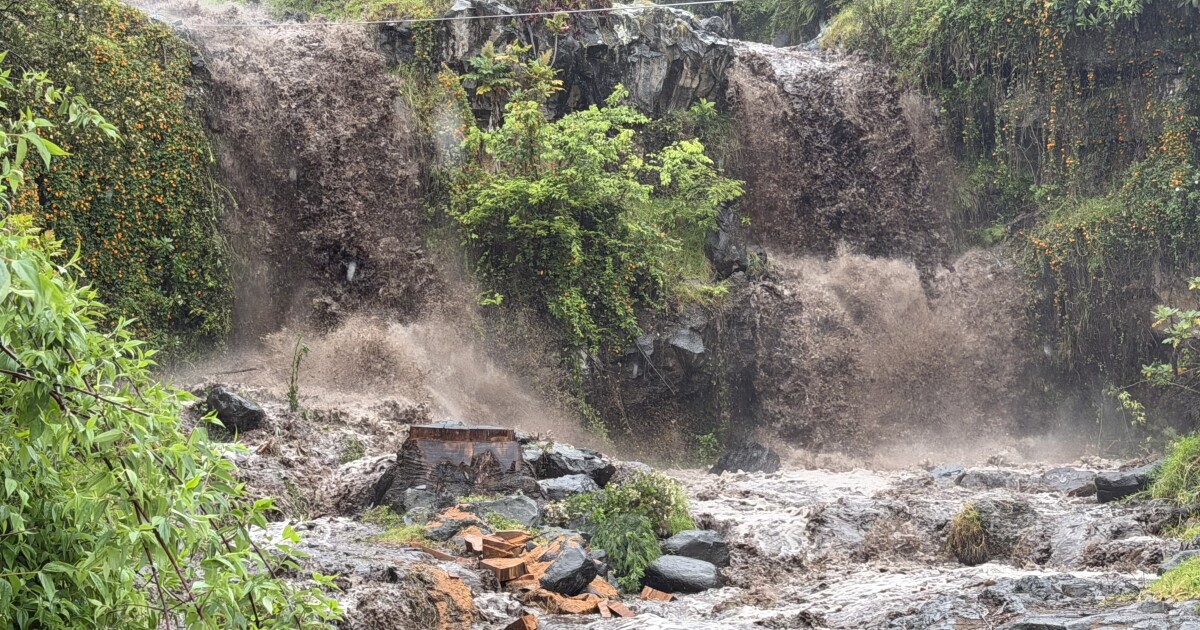
A powerful Kona storm continues to batter the islands on and off, bringing possible flooding, high winds, and thunderstorms through the weekend.
A flash flood warning for Maui, Moloka‘i, and parts of Hawaiʻi Island has been extended until 8 p.m. Saturday night.
The entire state is under a flood watch through Sunday night into Monday morning. Officials say additional rain on already saturated grounds could lead to sudden flooding. A winter storm warning is in place until 6 a.m. Monday for Hawaiʻi Island summits. (What does all the alert terminology mean?)
Crews with the Hawaiʻi Department of Transportation and contractors have been working to clear trees, rocks, and other debris from roadways on all islands. Some roadways are closed due to flooding or other weather-related conditions. Officials recommend staying put and to only travel if needed.
All Maui Bus services remain suspended until further notice due to hazardous road conditions from the storm.
The City and County of Honolulu’s Department of Environmental Services is asking residents to conserve water to help reduce strain on the wastewater system. Heavy rains are causing inflow and infiltration into the wastewater system, placing additional pressure on pump stations and treatment facilities. Conserving water during helps lower the risk of sewer system overflows.
The County of Maui Department of Water Supply also advises all residents and visitors to conserve water due to potential power and electronic system disruptions. Non-essential water use should be limited until weather conditions improve.
On Kaua‘i, nearly 286,000 gallons of wastewater spilled approximately between Friday night and Saturday morning. The spill at the Waimea Wastewater Treatment Plant was due to high flows from the heavy rains and high infiltration and inflow from the storm. Officials say future spills may occur until the storm passes.
Late Friday, emergency officials said that the Wahiawā Dam in Central Oʻahu was at risk of failing due to high water levels, but by early morning, water levels remained consistent. A prior evacuation notice for downstream residents in Haleʻiwa and Waialua was canceled.
The Otake Camp area in Waialua is no longer under an evacuation order. An emergency shelter will remain open at Waialua High.
Flooding threats remain possible due to saturated soil conditions and moderate continuous rainfall rates. Roads may be impassable due to standing water, landslides and fallen trees.
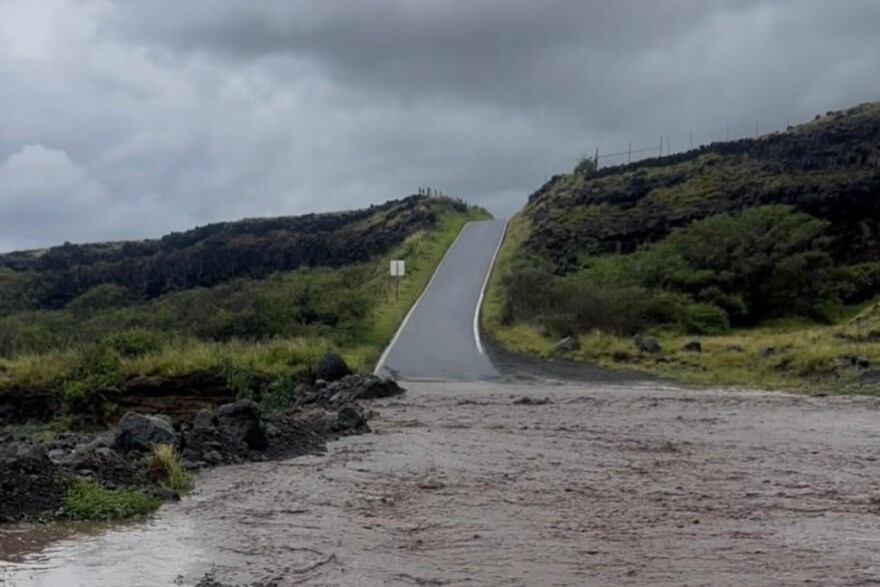
A photo provided by Maui County shows flooding from days of downpours in Hāna, Hawaiʻi, on Friday, March 13, 2026.
Officials advised postponing outdoor activities or travel until early next week when the storm begins to drift northward away from the islands.
The islands could experience winds of 25 to 40 mph with gusts up to 60 mph. Gusts on the summits of Maui and Hawaiʻi Island could reach up to 110 mph. A high wind warning for Maui and Hawaiʻi counties has been extended through 6 p.m. Sunday.
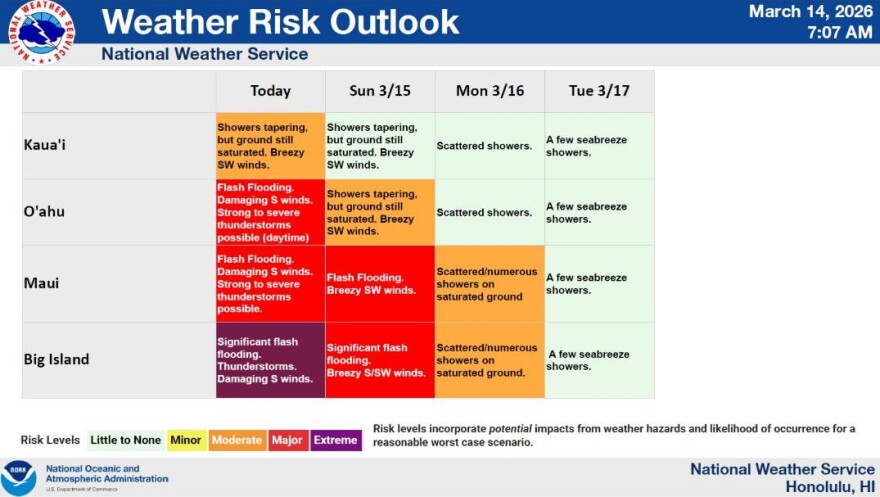
Hawaiʻi Emergency Management Agency
/
NOAA
Hawaiian Electric said that, as of Saturday afternoon, about 76,000 customers were without power on Oʻahu; 14,000 customers in parts of Maui County; and 25,000 customers on Hawaiʻi Island.
On Oʻahu, a majority of those without electricity are in the windward and east Honolulu areas due to storm-damaged high-voltage transmission lines that traverse the Koʻolau Mountain Range. A crew helicopter was cleared around 11 a.m. to inspect the damaged lines. Depending on the results, restoration could take anywhere from hours to days or even longer, HECO said.
Flooding, vegetation and other debris must be cleared in other remaining areas of Upcountry, Central, Hā‘iku, and East Maui for crews to access before damage assessments and potential repairs can begin when weather conditions are deemed safe
On the Big Island, the majority of the outages are in the Puna area. North and South Kona, North Kohala, and South Point are also experiencing outages.
Oʻahu, Hawaiʻi Island and Maui Nui residents can track Hawaiian Electric power outages here. Kauaʻi residents can track KIUC outages here.
Sign up for emergency alerts from your county:
Have low bandwidth? Read HPR articles on the text-only version of our website.
The state Department of Land and Natural Resources has closed state parks and properties. All camping permits through next week have been canceled, and none will be issued for the rest of this week.
The National Park Service closed Haleakalā National Park on Maui from sunset Thursday through at least sunrise on Sunday. “We will open the park as soon as it is safe to do so,” park Superintendent Natalie Gates said in a statement.
Parts of Hawaiʻi Volcanoes National Park are closed or will close, including the Maunaloa summit. Road access is already impacted near Kīlauea’s Halemaʻumaʻu Crater due to cleanup after the recent eruption. Check the park website for the latest.
The City and County of Honolulu’s Department of Emergency Management has an online form Oʻahu residents can fill out to self-report damage to their homes. The purpose of the form is to collect information that will help local officials understand the damage and impacts the storm had on the community. The City will also use this information to determine whether it can request assistance from federal programs.
The Hawaiʻi Department of Commerce and Consumer Affairs (DCCA) Insurance Division is reminding residents to review their insurance policies and to file claims quickly. Starting claims promptly helps ensure coverage is applied correctly and delays are avoided. It has a post disaster claims guide and a video on how to file an insurance claim for additional help.
On Kauaʻi, county officials said they’ve received multiple reports of price gouging. Hawaiʻi law prohibits price increases during a state of emergency, and anyone caught doing so may be fined up to $10,000.
“These protections are meant to ensure that families can still access necessities like food, water, fuel, and other important supplies when they need them most,” Alden Alayvilla, the communications officer for Kauaʻi County, said in a statement.
Maui and Honolulu counties have not received reports of similar activity. Reports can be made to the state DCCA. Officials recommend taking photos of the price or keeping the receipt.
Hawaiʻi Public Radio exists to serve all of Hawai’i, and it’s the people of Hawai’i who keep us independent and strong. Donate today. Mahalo for your support.