
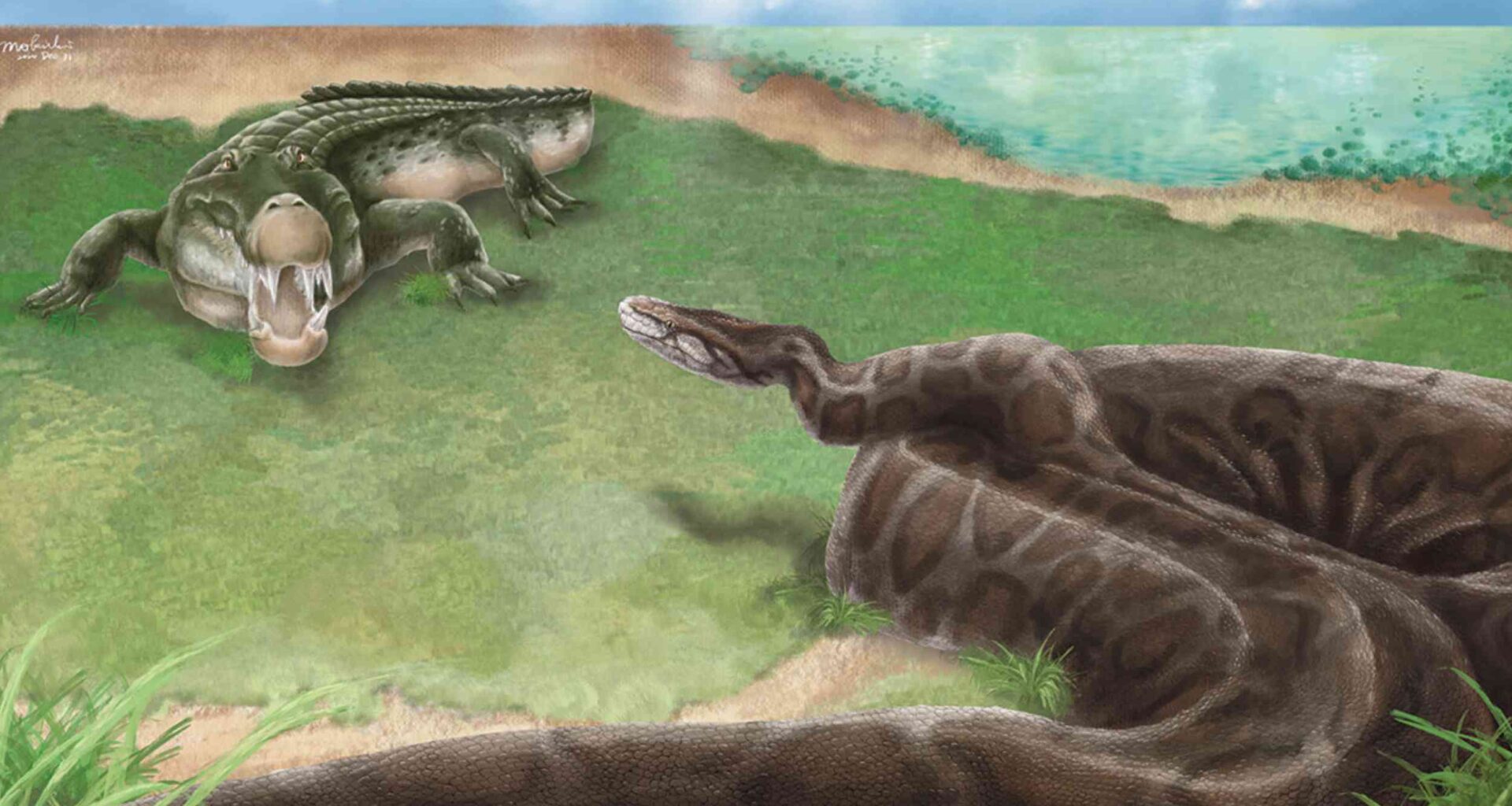
Scientists have identified the first fossil evidence that a giant python more than 13 feet long once lived on Taiwan.
The discovery reveals that the island once supported far larger predators than anything found there today.
Inside one bone

In fossil-bearing sediments near the city of Tainan in southwestern Taiwan, a single snake vertebra preserved evidence of that vanished reptile.
Examining the specimen, Cheng-Hsiu Tsai at National Taiwan University (NTU) and colleagues documented features showing the bone belonged to a python.
The fossil dates to the Pleistocene, when snakes of that lineage inhabited environments across much of Asia.
Because no python lives on Taiwan today, the find points to a deeper ecological history that the island’s modern wildlife no longer reflects.
When Taiwan changed
The bone came from the Chiting Formation in southwestern Taiwan, a deposit laid down roughly 800,000 to 400,000 years ago.
During that stretch of the Pleistocene, a geologic age marked by repeated ice ages, sea levels rose and fell around the island.
Those swings sometimes narrowed the water gap to mainland Asia, opening paths for animals that later disappeared from Taiwan.
A python on Taiwan no longer looks outlandish under those older conditions, even though none lives on the main island now.
A harder food web
Ancient Tainan held more than a big snake, and nearby layers also yielded a 23-foot crocodile named Toyotamaphimeia taiwanicus.
A separate jaw showed that a saber-toothed cat, likely Homotherium, hunted there as well during that time.
Mammoth remains from the same regional fossil record fill out the prey side of that world.
Put together, those animals point to a tougher ecosystem with bigger meals, stronger competition, and more danger at the top.
Reading the bone
Shape mattered as much as size, because python bones carry a stout frame unlike Taiwan’s longer, slimmer native snakes.
The team matched that build to known pythons and ruled out other big snakes by the fossil’s combined traits.
A size model then turned those measurements into a living animal, landing close to 13 feet in total length.
Without that step, the fossil would stay impressive but vague, and the discovery would lose much of its force.
An empty top spot
Modern Taiwan still has more than 50 snake species, yet none fills the role this vanished python once held.
Ecologists call those hunters apex predators, animals at the top of a food chain, because little preys on them.
“We propose that the niche of top predators in the modern ecosystem may have been vacant since the Pleistocene extinction,” wrote Tsai.
If that idea holds, the missing python matters not just as a lost species, but as a missing ecological job.
Today’s smaller reptiles
Taiwan’s biggest native snakes today usually stay below 10 feet, and crocodiles no longer live there at all.
That trimmed-down lineup leaves the island’s largest living reptiles in a much narrower size range than before.
“This fossil represents the largest and most unexpected fossil snake from Taiwan,” wrote Tsai describing the find.
The contrast works because Taiwan’s living reptiles look ordinary until one fossil reveals how much has been stripped away.
Why islands change
Island fossils often expose losses that living wildlife can no longer show, especially after big predators vanish for thousands of years.
A wider faunal turnover, the replacement of one animal community by another, can hide that damage behind ordinary-looking modern nature.
Tsai also worked on island extinctions more broadly, in research linking vanished giants to major ecological losses.
The python fits that broader pattern, because modern Taiwan can look complete while missing some of its oldest roles.
The bone’s journey
Before scientists studied it, the fossil sat in the hands of Li-Ren Hou, a longtime collector in Tainan.
Hou donated the specimen to Tsai’s NTU lab, where permanent curation turned a single find into usable evidence.
That path matters because fossils often lose scientific value when their origin, handling, or ownership stays murky.
Here, a clear chain of custody kept the story anchored to place, time, and a real research collection.
What comes next
Python fossils from the later part of the ice age are scarce worldwide, which makes a Taiwan specimen more than local news.
Comparable finds from that broad period are known from only a few places, including India and Eritrea in East Africa.
More bones from the same formation could show whether giant pythons were common residents, rare visitors, or something between.
That is why the fossil matters now: one snake has already changed the island’s history, and it may only be a start.
A different Taiwan
Seen across these fossils, ancient Taiwan supported larger hunters, heavier prey, and a food web that no longer survives.
That does not prove every ancient niche stayed empty forever, but it does show how much modern nature can hide.
The study is published in Historical Biology.
—–
Like what you read? Subscribe to our newsletter for engaging articles, exclusive content, and the latest updates.
Check us out on EarthSnap, a free app brought to you by Eric Ralls and Earth.com.
—–