
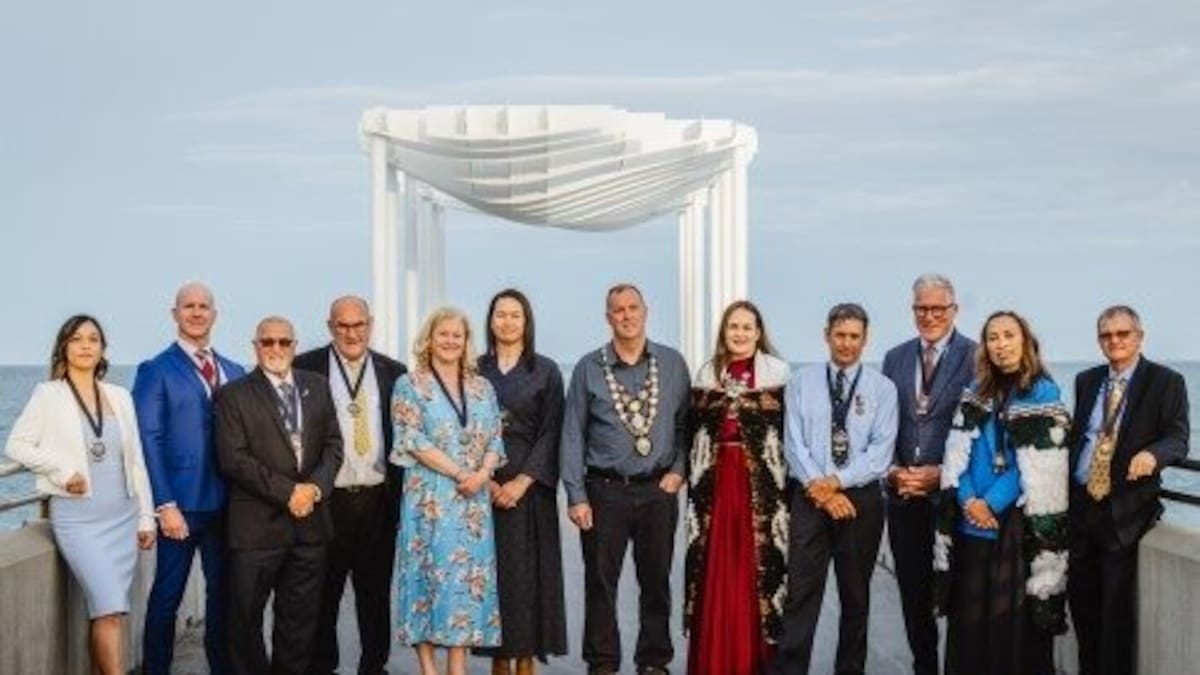
Roger Brownlie remains Mayor Richard McGrath’s deputy mayor until the Tuesday meeting’s vote, a council spokesperson has confirmed.
Central Hawke’s Bay councillors are at the other end of the pay scale. They had a 7.06% pay increase of $2853, taking their pay to $43,245, still the lowest in the region.
Wairoa councillors saw their wages increase by 11.58% ($6678), to $64,324, while in Hastings, councillors’ wages rose by 13.24% ($7,974) to $68,210.
The Remuneration Authority said Hawke’s Bay Regional Council councillors’ pay increased by $1339 (2.04%), bringing their pay to $67,000. However, several councillors are paid more as they have additional responsibilities.
The Taxpayers’ Union estimated the rise for the regional council could be as high as 9.6%.
Brad Olsen, chief executive and principal economist at Infometrics, said the latest household inflation rate for New Zealand was 3.1% per annum for the December 2025 quarter.
“Another relevant measure, the change in annual hourly earnings, showed a 3.3% per annum increase in the December 2025 quarter, and the labour cost index rose 2.2% per annum for public sector roles.”
He said last year the Government had substantially raised fees for directors of Government boards and authorities, citing the relativities with private sector board remuneration and the workload of governance.
“The Remuneration Commission notes that ‘the bottom of the councillor pay scale is anchored by a proportion of the annual average wage’, and remuneration is scaled up from there depending on a range of factors, including workload, population of the area, total operating expenditure and total asset value of the council, and the socio-economic deprivation index,” Olsen said.
Remuneration Authority (RA) chairman Geoff Summers said it undertook a full review of all local government elected members’ remuneration after each local government election.
In this case, that was October 2025.
“The new rates, with some exceptions, are payable back to the day after the election result for that council was declared, when the person is formally elected,” Summers said.
He said some roles were paid from different dates when elected members were appointed to roles with additional responsibilities, such as deputy mayor or chair of a council committee.
The region’s leaders
Mayors’ remuneration is set outside the pool, also by the Remuneration Authority.
Wairoa Mayor Craig Little’s increase was 11.58% ($14,053), putting him on $135,360 a year.
“Increases are totally out of our hands. Remuneration is rates funded,” Little said.
Central Hawke’s Bay mayor Will Foley saw an increase of 9.48% ($11,720), taking his salary for the year to $135,405.
Foley said the council knew ratepayers were doing it tough.
“As a Council, we are focused on managing costs wherever we can,” he said.
“Elected member pay is independently set by the Remuneration Authority, which is the fairest way to ensure people from all financial backgrounds can represent their community.”
Hastings’ mayor Wendy Schollum’s increase was 8.46% ($14,122), which puts her on $181,032.
Schollum said the council understood that any rise in elected members’ remuneration at a time when many households were feeling real pressure from the cost of living and rate increases was hard to understand.
“It’s important to clarify that elected members cannot opt out of the authority’s determinations.
“Our focus remains on delivering the services and infrastructure our community relies on, managing costs carefully, and making decisions that support long-term resilience and affordability, making sure that residents get the best value for money out of their councillors.”
Napier mayor Richard McGrath’s increase was 7.35% ($11,735), taking him to $171,317.
A spokesperson for Napier City Council said Napier had one fewer councillor since its representation review last year, which meant each councillor received more of the remuneration pool.
HBRC chairwoman Sophie Siers’ increase was, according to the Remuneration Authority, the lowest of the leaders, rising 1.79% or $2754 to $156,423.
The Taxpayers’ Union disputed this, saying the HBRC chair’s rise could be as high as 5.66%.
A spokesperson for HBRC said the councils’ only discretion was how the remuneration pool is split among them.
Total remuneration received by each elected councillor is disclosed every year in the council’s annual report.
LDR is local body journalism co-funded by RNZ and NZ On Air.