
“So the first thing I’m doing tomorrow is finding out from my officials why is the media reporting that Gull are feeding a sense of frenzy.”
Associate Minister for Energy Shane Jones. Photo / Mark Mitchell
Gull told NZME it has been in “direct contact with Minister Jones” this afternoon to confirm Gull is “working closely with MBIE and has good fuel stocks at its Tauranga terminal”.
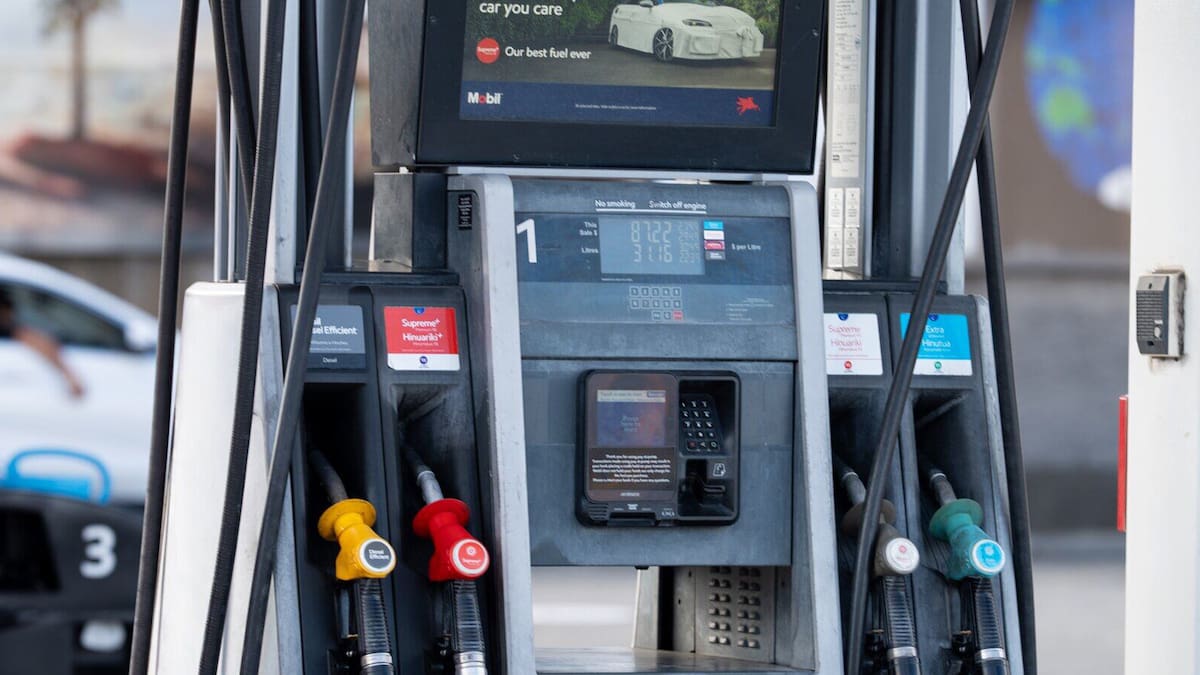
Some Gull stations have run out of fuel for the second time in three days. Gull told RNZ that customers have continued to “flock to our stations in search of fair fuel prices”.
“Some of our logistics providers are struggling to meet the current 15%-plus increase in demand.”
The Gull spokesperson told NZME: “Minister Jones was also advised that Gull is currently working as fast as practical with Gull’s logistics’ providers to get fuel to sites that have run dry due to increased demand.”
Meanwhile, the Herald spoke to workers at six Supercheap Autos from across Auckland, who all said they were sold out of fuel cans.
Westpac chief economist Kelly Eckhold told Beveridge that half of New Zealand’s fuel reserves “is sitting there in tanks in the country and the other half is close enough that you can probably count it as being here”.
“The challenge is that it’s all reliant on us receiving a steady supply of new boats coming every week.”
Willis told the Herald: “If international supplies are disrupted, the Government has a range of options open to ensure those who most need fuel continue to have access to it, but we are not yet at the point where additional action is required.”
Finance Minister Nicola Willi. Photo / Mark Mitchell
Kharg Island is located about 30km off mainland Iran and handles roughly 90% of Iran’s crude oil exports.
Trump announced attacks on the island’s military infrastructure and said in a social media post: “I have chosen NOT to wipe out the Oil Infrastructure on the Island. However, should Iran, or anyone else, do anything to interfere with the Free and Safe Passage of Ships through the Strait of Hormuz, I will immediately reconsider.”
Eckhold said that while only 20% of the world’s oil travelled through the Strait of Hormuz, “the important thing to remember is that the oil supplies are really unevenly distributed around the world”.
“In particular, Asia sources probably 50% or more of its energy supplies from those Gulf states.
“They’re really large, energy-hungry, industrialised economies that without that oil would have some quite severe knock-on effects to global growth and obviously through to New Zealand.”
Westpac chief economist Kelly Eckhold.
“We did model the implications of the Straits of Hormuz being closed for three months. That would see oil prices continue to rise up towards $180-odd a barrel.
“That’s obviously going to push fuel prices up quite considerably and force a whole lot of energy-saving measures.”
When the oil market closed for the week, Brent crude oil sat at just below US$104 a barrel – up from around US$70 a barrel before the conflict began.
Oil markets will open again on Monday at 11am NZT.
Eckhold said if the situation remained the same until the middle of April, “there’ll be increasing squeeze on inventories and supply chains globally”.
“We haven’t really seen any of that right now. I mean, right now our fuel companies appear to be able to access supplies.
“I’m watching the kind of boats that are coming through from Asia now to replenish our stocks and there’s no signs that those are slowing down and turning around.
“But you know, in the middle of next month, if those Asian refiners haven’t been able to receive stuff, then obviously there could be a different situation at that point.”
Chris Knox is a scientist turned data-journalist who investigates the stories behind the numbers, and creates interactives for Herald readers to explore them.