
By Arseniy Borisov
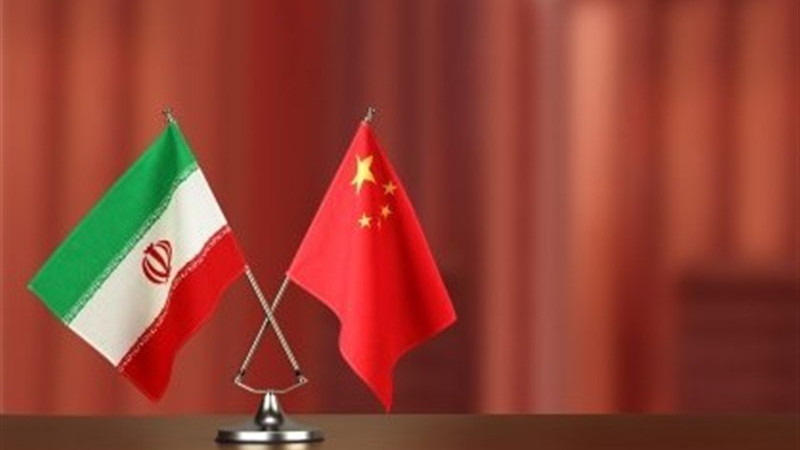
As the world reels from the sudden, massive US-Israeli bombardment of Iran in Operation Epic Fury, the stakes for Beijing have grown exponentially. The assassinations of Iran’s supreme leader and numerous high-ranking officials, alongside Washington’s explicit commitment to regime change in Tehran, represent a geopolitical earthquake and the expansion of Trump’s aggressive foreign policy into Beijing’s own neighborhood. Unlike other regional partners, Iran is a crucial part of China’s Belt and Road Initiative, a pillar of its energy security, and is heavily integrated into China’s regional system through organizations such as BRICS. Yet, as strikes rain down on Pasteur Street and Iranian retaliatory strikes hit nearly every country across the Middle East, Xi Jinping’s playbook remains remarkably unchanged.
This habit of silence is becoming an increasingly deafening factor in geopolitics.
The quiet approach was foreshadowed just weeks earlier when Chinese influence came under sharp assault in the opening days of the new year. America attacked Venezuela merely hours after then-President Maduro welcomed a Chinese diplomatic delegation, now stuck in a city deafened by explosions, helicopter rotors, and gunfire. While the country was a far-flung outpost of Chinese influence and accounted for only around five percent of China’s overall oil consumption, despite holding the world’s largest oil reserves, it was still one of Beijing’s closest partners in Latin America.
Such a blunt, unapologetic US operation, which invokes Washington’s decision-making during its period of near-unchallenged global hegemony in the 1990s and early 2000s, was only met with the standard boilerplate condemnations from the Chinese Foreign Ministry. Neither the People’s Liberation Army nor the Ministry of Finance took even a symbolic step to stand with Venezuela. The events of early January served as a very public stress test for China’s red lines, and the results were unmistakable: while Beijing is happy to sign infrastructure deals, build dominant export relationships, or buy heavily discounted crude, it does not provide access under its tight military or political umbrella or protection from direct US action.
Beijing’s Long Game
Why would the world’s ascendant superpower stand by while its primary anti-Western partners – those who had explicitly signed up for its own offer of multipolarity – are systematically targeted and destroyed in the sharpest American military escapades in decades?
Beijing’s answer lies in cold, pragmatic calculation, bolstered by the massive economic victories it had secured just a year prior.
The first months of President Trump’s second term were marked by the failure to renegotiate America’s trade imbalance with Xi Jinping’s China. After months of repeated escalations, tariffs on certain Chinese goods in America reached a peak of 245%, while Beijing’s spiked to around 125%. It looked like an explosive divorce between the world’s two largest economies and military powers, the fear of which set global markets into collapse and triggered trading halts across the world.
Instead, China began blocking access to its near-monopoly on the refining of various rare earth minerals – resources that, while typically not living up to their stated rarity, are crucial for all kinds of advanced production and useless without refinement. Within months, the trade war would stabilize with a 30% US tariff on Chinese exports, down to 20% by the end of the year.
China’s victory seemed to reaffirm the collapse of US hegemony and the ushering in of the multipolar world. The Middle Kingdom ended 2025 resurgent. It showed its ability to prevail on trade terms, while Washington had isolated its global allies from Canada to the European Union and Japan. Trump’s tariff attack on India was a significant win for Beijing, as New Delhi stood its ground and India’s Prime Minister Modi visited China, meeting with Xi for the first time in seven years to reset relations.
Triumph through Inaction
Feeling secure in an economic and diplomatic resurgence as a result of Trump’s tariff policies, Beijing now sees no reason to interrupt what it perceives as another costly mistake. In China’s calculations, occupying Venezuela’s long-eroded oil sector while simultaneously attempting regime change in a heavily armed, deeply hostile Iran will likely bog the Trump administration and its successors in two simultaneous multi-trillion-dollar quagmires. Furthermore, America’s sudden pivot back to aggressive hard-power policies reminiscent of the Cold War and early 2000s has heavily undermined its recent efforts to build soft power across Latin America and the broader Global South, offering a significant lifeline to both Beijing and Moscow, which have each eroded soft power through their respective entanglements in the South China Sea and Ukraine.
Even further, while the conflict has dangerously affected oil prices in China, most of the profits ultimately go to its beleaguered Russian ally. The prices of Russia’s brand of oil, ‘Ural Crude,’ have risen from a catastrophic <$35 per barrel in January to an exceptional $71.9 per barrel following the conflict, turning what would’ve been a budgetary disaster into a surplus to fund its continued war against Ukraine.
The evidence of Washington’s mounting burden is concrete and growing. A preliminary Pentagon estimate, reported by The Atlantic and cited by members of Congress, put operational costs at approximately $1 billion per day – a figure that, when combined with pre-strike repositioning costs and equipment losses, has already pushed the total bill past $5 billion in just the opening days of the campaign. Worse, Iran’s retaliatory strikes have not merely been symbolic or reserved. A precision drone strike damaged the AN/FPS-132 early warning radar at Al Udeid Air Base in Qatar – a $1.1 billion installation central to CENTCOM’s ballistic missile detection architecture across the Gulf – in a developing trend of Iran targeting radar installations crucial to Gulf and US missile defenses. An even deeper vulnerability, however, lies in America’s interceptor stockpiles. Analysts at the Stimson Center and CSIS warn that high-end interceptors like THAAD and SM-3 – already strained by Ukraine, Gaza, and last year’s 12-day conflict with Iran – cannot be replenished at the pace of war, with some systems requiring years of production time to replace. The situation has grown serious enough that Washington is reportedly weighing the transfer of THAAD and Patriot batteries from South Korea to the Middle East – a move that would expose a treaty ally on North Korea’s doorstep to fill a gap of Washington’s own making. According to the Economist, America’s Gulf allies alone are consuming more interceptors daily than US companies produce in a year. For Beijing, which has watched America’s missile defense architecture absorb blow after blow, these are not incidental complications. They are the compounding costs of precisely the kind of military overextension China has been content to wait out.
For Zhongnanhai, the facts present a clear path. Why should China risk military or economic confrontation to save Caracas or Tehran when Washington is already bleeding military resources and diplomatic capital? Rather than risk its current advantages and outgrowth potential, China is securing a long-term victory by positioning itself as a stable alternative, while its primary geopolitical rival exhausts itself through costly interventions. While the road to a multipolar world may run to Beijing, as dust settles in Venezuela and Iran, it is clear that embarking upon it comes without guarantees, at least for now. Those who dare take the pilgrimage are, ultimately, allies without assurances.
The views expressed in this article belong to the author(s) alone and do not necessarily reflect those of Geopoliticalmonitor.com.