
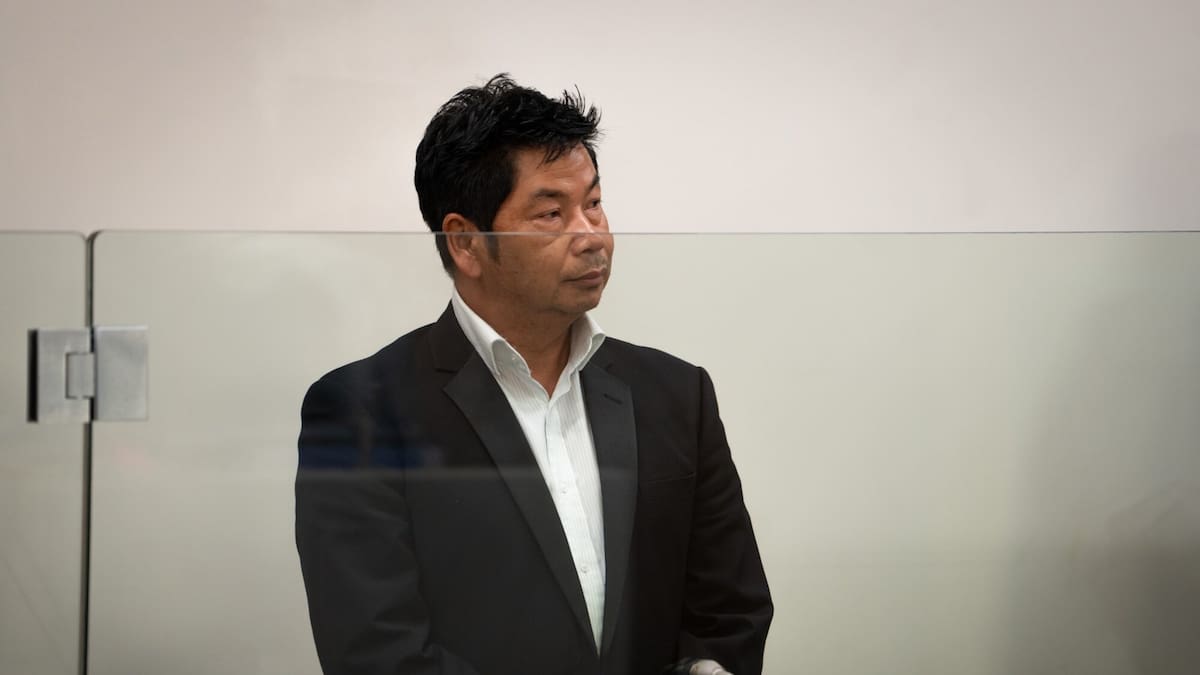
Kor is listed on LinkedIn as the manager of CK Design & Drafting Services. He was also the director of CK International Holdings and used his business account to receive the two victims’ stolen money in February 2023.
Though the judge found he was not party to the sophisticated investment scam, Kor acted as a “money mule” and was reckless as to whether the funds landing in his account were the proceeds of crime.
Kor transferred most of the money to accounts in Singapore. About $67,000 was still sitting in his account when it was frozen by his bank in March 2023. The money was later used to pay court-ordered reparation to the victims.
Carla O’Neil lost $100,000 in an elaborate investment scam in which she thought she was putting the money into a Citibank term deposit. Photo / Michael Craig
One of them was North Shore real estate agent Carla O’Neil who lost $100,000. She was tricked into believing she was investing in a low-risk Citibank term deposit.
She said being defrauded had caused shame, severe stress, sleepless nights and anxiety. It had also shaken her confidence in people, institutions and herself.
“She has to look her child in the eyes and carry the weight of shame and uncertainty,” Judge Stephen Bonnar, KC, told Kor during his sentencing.
The other victim was a widow who lost $135,000. She said the money had been saved by her and her late husband through years of hard work. It was meant to secure their son’s financial future.
Her world “collapsed” after learning she had been conned. She suffered panic attacks so severe she couldn’t breathe and was still too ashamed to tell her son what happened to the money.
“She no longer trusts people, fears the internet and has been prescribed anti-depressants,” the judge said.
“Her confidence is shattered and she must work longer than she ever planned because of the loss of her life savings.”
Chamroeun Kor (right) in the dock at Auckland District Court during his sentencing on money laundering charges. Photo / Cameron Pitney
Judge Bonnar said Kor was not a fraudster and ultimately did not benefit financially from the scam.
However, he played a pivotal role in the scheme and was instrumental in the victims losing their money.
“You turned your mind to the possibility that the funds received were the proceeds of crime, nevertheless you continued to deal with those funds.
“Without you, there would not have been a bank account into which deposits could be made, and without you the funds would not have made their way offshore.”
Kor claimed he was directed to send funds overseas by ‘Raffi’
The judge read from an affidavit Kor submitted to the court.
It detailed how he’d come to New Zealand from Cambodia and built a drafting company through hard work and word of mouth.
The company struggled after the Covid pandemic and he had looked for other business interests to help financially.
Kor travelled to several countries, met an associate called Raffi and the pair discussed business ventures, the court heard.
It was agreed Raffi would source building materials such as marble and slate to import into New Zealand.
Kor’s job was to find funds to pay for the imported products but he was rejected by banks.
Raffi then claimed he had found New Zealand investors and made logistical arrangements, the court heard.
Chamroeun Kor can finally be named after abandoning his bid for name suppression following his convictions for money laundering. Photo / Cameron Pitney
“You say the $235,000 appeared in your bank account from the two victims,” Judge Bonnar said. “Raffi directed you to send that money to Singapore.”
Kor wanted to wait a week before sending the money, because the large transactions could attract attention, the court heard.
In all, he sent $167,000 overseas in four transfers, while $67,000 remaining in his business account was frozen by the bank.
Judge Bonnar said Kor had been “relieved to have got the money from somewhere after being rejected by the banks”.
He now agreed he’d put “too much trust in Raffi” and accepted he should have asked more questions and done due diligence.
Judge Stephen Bonnar, KC, refused to grant permanent name suppression, saying the public had a right to know. Photo / Sylvie Whinray.
Kor’s lawyer Charle Megala said his client was remorseful, had no previous convictions and did not realise the venture was a scam.
He had begun paying $250 a week in reparation to the victims towards their losses.
Megala argued Kor should be granted a discharge without conviction and permanent name suppression. A conviction might prevent him from being a director of his company and publication of his name could ruin his business.
The judge dismissed the applications, saying he must denounce the offending and deter others from using their bank accounts to receive stolen money.
There had been a “significant increase” in financial scams targeting the public that often had devastating impacts for victims.
Any negative impacts on Kor’s employment or professional reputation were the “ordinary consequence” of criminal offending, the judge said.
Judge Bonnar sentenced him concurrently to six months’ home detention on each charge and ordered reparation of $60,000 for the first victim and $7800 for O’Neil.
Judge Bonnar declined a further suppression order, saying the public had the right to know Kor’s identity.
Kor’s money laundering crimes ‘moderately grave’
Kor appealed the judge’s sentence and suppression decision. The matter was heard in the High Court at Auckland in November.
A judgment by Justice Mathew Downs dismissed the sentencing appeal, ruling that Kor’s offending was “moderately grave” and home detention was appropriate.
The offending had significant impact on the victims and there was a need for general deterrence.
The judge said money laundering could be committed with “relative ease” and could also cause great harm.
“This case is illustrative of both propositions.”
Kor then abandoned his suppression appeal, meaning he can now be named. He declined to comment.
Carla O’Neil was reimbursed by her bank for a scam where she lost tens of thousands of dollars. Photo / Alex Burton
O’Neil was one of the first investment scam victims to go public with her story after a wave of fraud cases in late 2022 and early 2023.
She helped spearhead a victims’ group that has highlighted failures in the banking system, calling for compensation and better safeguards to protect customers.
In 2024, the Banking Ombudsman ordered O’Neil’s bank, BNZ, to reimburse nearly $300,000 to her and another victim, Borja Ares.
The Ombudsman ruled that the BNZ missed crucial “red flags” concerning the scam and failed to act with reasonable skill and care.
Lane Nichols is Auckland Desk Editor and a senior journalist for the New Zealand Herald with more than 20 years’ experience in the industry.
Sign up to The Daily H, a free newsletter curated by our editors and delivered straight to your inbox every weekday.