
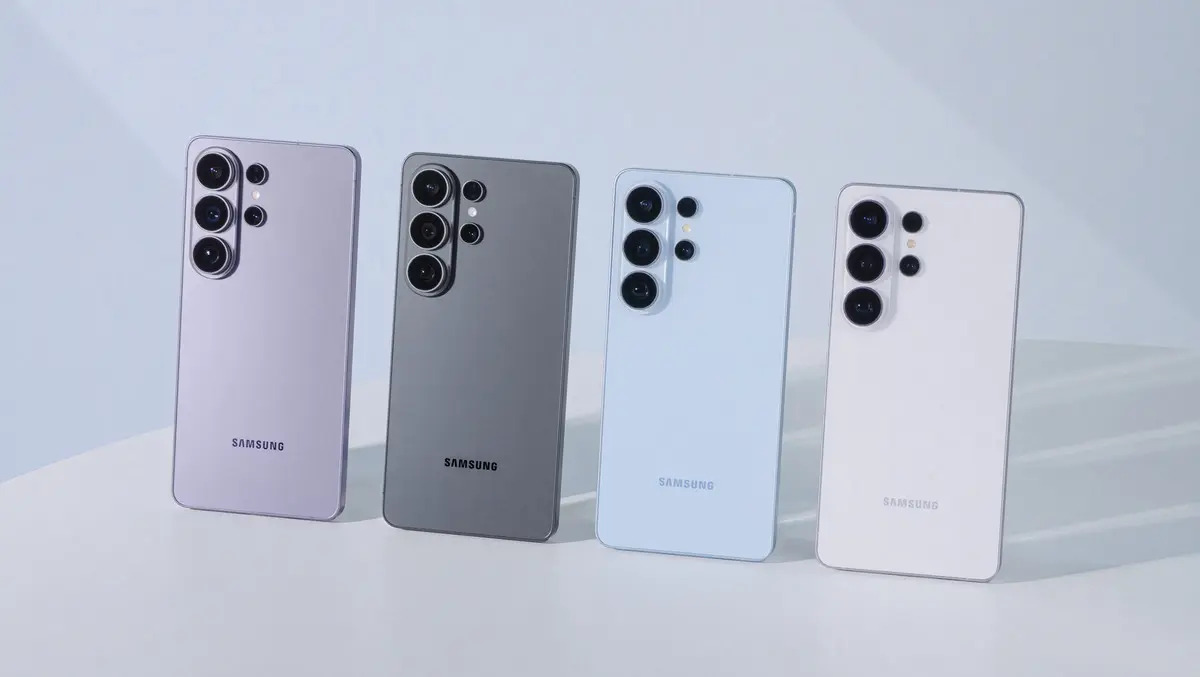
The Galaxy S26 Ultra follows a familiar path. The phone still feels unmistakably part of Samsung’s Ultra range, but there are small refinements across the body.
The device is slightly thinner and lighter than the previous generation. The frame uses armour-grade aluminium and the front glass is tougher than before. The phone remains a large handset, but it sits more comfortably in the hand thanks to softened edges.
Samsung has also redesigned the camera layout. Instead of individual lenses rising from the back panel, the cameras now sit within a raised island. It improves durability around the lenses but introduces a small wobble when the phone rests on a table.
The built-in S Pen remains a defining feature. It slides neatly into the chassis and works well for note-taking and sketching. Samsung has shifted its focus toward productivity rather than remote camera controls, which were once part of the stylus experience.
Water and dust resistance remain at IP68. The handset feels solid and well assembled. Nothing about the design suggests compromise.
Display focus
Samsung equips the S26 Ultra with a 6.9-inch Dynamic AMOLED display. Resolution sits at 3120 x 1440 and the refresh rate scales between 1Hz and 120Hz depending on content.
Brightness is one of the panel’s strengths. The display remains clear outdoors and handles strong lighting without difficulty. Colours appear vivid, though Samsung still offers multiple display profiles if you prefer a more neutral look.
The headline feature this year is Privacy Display. When enabled, the screen reduces visibility from side angles while maintaining a clear view when looking directly at the phone.
The feature can be applied across the entire display or limited to selected apps and notifications. The aim is to prevent others from seeing messages or personal information in public spaces.
The trade-off is subtle but noticeable. Contrast drops slightly and colours appear less vibrant while the privacy mode is active. Some users may prefer to leave it disabled unless needed.
Camera hardware
Samsung keeps the familiar four-camera arrangement on the rear.
The main camera uses a 200-megapixel sensor paired with a brighter lens than before. Alongside it sits a 50-megapixel ultra-wide camera and two telephoto cameras providing 3x and 5x optical zoom.
The improvements focus mainly on light capture. The main and 5x cameras now allow more light into the sensor, which helps in darker scenes.
In daylight the S26 Ultra produces detailed images with strong dynamic range. Colours remain vibrant, sometimes leaning toward Samsung’s characteristic saturation.
Low-light performance benefits from the brighter optics. Night photos show improved sharpness and fewer motion artefacts compared with earlier models.
Zoom remains a highlight. The 5x camera delivers sharp results at moderate distance and digital processing extends zoom further. Extremely long zoom levels remain usable for reference shots rather than detailed photography.
Samsung’s camera app includes many modes. It can feel crowded at first glance, though advanced users will appreciate the flexibility. Expert RAW remains available for photographers who want full control over exposure and editing.
Video recording also sees small refinements. Stabilisation performs well during movement and night video appears cleaner than before.
Performance pace
Inside the S26 Ultra sits Qualcomm’s Snapdragon 8 Elite Gen 5 processor customised for Samsung. The chip delivers strong performance across everyday tasks.
Apps open quickly and switching between multiple programs feels smooth. Demanding games run without difficulty and frame rates remain stable.
Samsung pairs the processor with either 12GB or 16GB of RAM depending on storage configuration. Thermal performance also improves thanks to a redesigned vapour chamber cooling system.
The phone runs Android 16 with Samsung’s One UI 8.5 interface. The software blends Samsung features with integrated AI tools.
Several AI functions help summarise content, manage notifications and assist with everyday tasks. Many of these features operate quietly in the background rather than demanding constant attention.
Samsung promises seven years of software and security updates. That commitment remains among the longest support periods in the smartphone market.
Battery life
Battery capacity remains at 5,000mAh. The figure matches recent Ultra models but efficiency improvements extend practical usage.
During typical testing the phone comfortably lasts a full day with heavy activity. Moderate use can stretch toward a day and a half.
Video streaming, web browsing and photography place predictable demands on the battery. The handset rarely struggles to reach the evening without a recharge.
Charging speeds improve slightly. Wired charging now reaches up to 60W with a compatible adapter. A half-hour charge restores a large portion of the battery.
Wireless charging remains available and supports fast wireless pads. Samsung still does not include a charger in the box.
Software experience
One UI continues to evolve. Samsung’s interface remains feature-rich but generally well organised.
Multitasking works particularly well on the large display. Split-screen apps and floating windows allow the S26 Ultra to function almost like a small tablet.
The S Pen complements this approach. Handwritten notes convert into text quickly and screen annotation tools are reliable.
Samsung’s ecosystem integration also plays a role. The phone connects easily with Galaxy tablets, laptops and earbuds.
Price question
The Galaxy S26 Ultra sits firmly at the top of Samsung’s smartphone range. Buyers expect a complete experience at this level.
The S26 Ultra largely delivers that. Performance is strong, the display remains impressive and the camera system continues to perform reliably.
Changes this year are evolutionary rather than dramatic. The privacy display introduces a new concept, while the camera and processor upgrades refine an already capable device.
For users upgrading from an older Galaxy model, the improvements will feel meaningful.
Samsung’s flagship remains one of the most capable Android smartphones available. The S26 Ultra simply continues that tradition with careful refinements rather than radical change.