
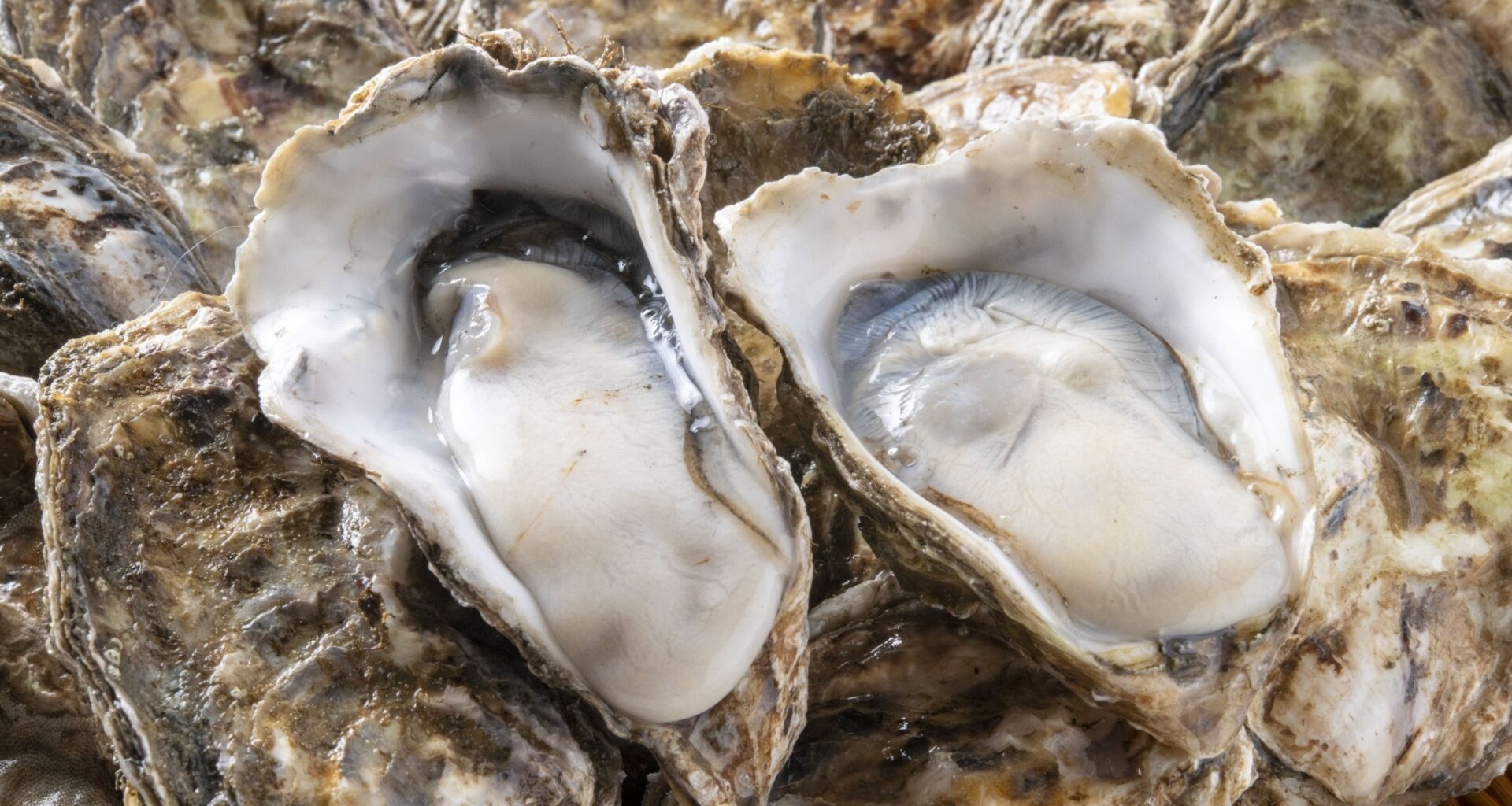
Oysters sit quietly on the ocean floor, filtering water and building thick shells that protect them from predators and rough conditions.
Those shells are not just simple coverings. They are carefully built structures made mostly of calcium carbonate, a mineral that oysters must constantly produce and maintain. To do that, the animals manage their internal chemistry with impressive precision.

New research from Harvard University suggests oysters may not be working alone. Scientists have found evidence that tiny microbes living inside the oyster could help create the conditions needed for shell formation.
The discovery hints at a quiet partnership that may help oysters survive in oceans that are becoming more acidic.
The chemistry behind a shell
Oysters live in coastal waters where conditions change constantly. Tides shift, temperature moves up and down, and acidity can vary throughout the day. Despite all this, oysters manage to keep the chemistry inside their bodies stable.
That stability matters because shell formation depends on it. Calcium carbonate forms only under the right chemical conditions. If the environment inside the oyster becomes too acidic, shell growth becomes more difficult and requires more energy.
Researchers already knew oysters could regulate their internal pH to keep things steady. The animals have the genetic tools needed to maintain that balance even when surrounding seawater becomes more acidic.
Looking closer at oyster microbes
Andrea Unzueta Martinez is a postdoctoral fellow in the Girguis Lab for Ecophysiology, Biogeochemistry, and Engineering at Harvard.
After studying oysters during her doctoral work, Unzueta Martinez began asking a new question: Oysters host communities of microbes, but what role do those microbes play?
“I wanted to start taking a look at what the microbes were doing for the animal host in terms of chemistry regulation,” she said.
Unzueta Martinez focused on a small pocket of fluid located between the oyster’s soft body and its shell. This space is sealed off from the surrounding seawater.
“This fluid is completely closed off from the environment so that there’s no way that a random seawater microbe could just float its way in there,” she said. “We have no idea how these microbes got in there in the first place.”
A hidden microbial partner
To study the microbes inside that sealed space, Unzueta Martinez built a small sampling system that worked like a catheter.
The device created a watertight port that allowed her to collect fluid samples without exposing the pocket to outside seawater. She then examined both the oyster and the microbes living in the fluid.
The results showed something surprising. Genes in the oyster and the microbes were activating at the same time.
Even more striking, the microbes were switching on genes linked to calcium carbonate formation.
“The microbes were expressing genes that are known to help precipitate calcium carbonate,” she said. “And calcium carbonate is the material that the shell is made out of.”
That discovery raised an obvious question. Could the microbes be helping the oyster build its shell?
Signals between host and microbes
The study uncovered another interesting pattern. When the microbes became active, the oyster began expressing genes connected to its neuroimmune system.
This system normally detects foreign invaders like bacteria. But in some animals, that same system can also help manage beneficial microbes through chemical signals.
Unzueta Martinez found the interaction puzzling and exciting at the same time.
“What’s going on? Are they coordinating? Can the host somehow communicate with its microbiome via the neuroimmune system to coordinate in regulating chemistry?”
“It raises more questions than answers,” she said.
A broader pattern in nature
The research took place in the lab of Peter R. Girguis, professor of Organismic and Evolutionary Biology and co-director of the Harvard Microbial Sciences Initiative.
Girguis noted that the findings fit into a growing body of evidence that animals often rely on microbes to help run basic biological processes.
“We often think of animals as doing all the heavy lifting on their own, and sometimes that may be true,” he said. “But more often than not, when we look somewhere, we find microbes playing some role in an animal process.”
“It’s a reminder that all of us as animals live in this microbial world.”
That help might save oysters energy. Instead of doing all the chemical work needed to build shells, they may share part of the job with microbes that live safely inside their bodies.
Why this matters in a changing ocean
Ocean waters are gradually becoming more acidic as carbon dioxide levels rise. That shift makes it harder for shell-building animals like oysters, clams, and mussels to produce calcium carbonate.
“As ocean pH gets lower, it costs an animal more energy,” explained Girguis.
If microbes help maintain the right chemical environment for shell growth, that partnership could make a real difference. The microbes gain a protected place to live, while the oyster receives chemical assistance.
“But if that can be shared even just a tiny bit by microbes that are helping make the conditions favorable for shell growth and the microbes benefit by having a place to live where they’re not preyed upon, then that’s the start of a really good relationship.”
Looking toward extreme environments
Unzueta Martinez hopes to continue exploring this type of relationship in other marine animals. Her next targets include deep-sea bivalves such as Bathymodiolus mussels and Calyptogena clams.
These animals live near hydrothermal vents, some of the harshest environments on Earth. Despite extreme temperatures and chemical conditions, they thrive.
“These animals are thriving and they also have microbiomes,” she said. “This is a great opportunity to take a look at this trifecta of the host and the microbiome and environmental chemistry regulation across different environments.”
Understanding how these partnerships work could reveal new clues about how marine life survives in difficult conditions.
Lessons beyond oysters
The study also touches on a bigger idea about life on Earth. Humans often associate microbes with disease, but most microbes living in and around animals provide benefits.
“But the overwhelming majority of microbes that play a role in human life confer advantages to us,” Girguis said.
Scientists already know microbes help humans digest food and maintain gut health. The oyster study adds another example of how animals may rely on microscopic partners to handle complex chemistry.
“If we can start to disentangle the ways that a simple oyster, which has a much simpler immune language, is ‘talking’ to the microbes, we can better understand the oysters’ resilience,” said Girguis.
For oysters facing an increasingly acidic ocean, that quiet conversation with microbes may be one reason they endure.
The full study was published in the journal Proceedings of the National Academy of Sciences.
—–
Like what you read? Subscribe to our newsletter for engaging articles, exclusive content, and the latest updates.
Check us out on EarthSnap, a free app brought to you by Eric Ralls and Earth.com.
—–