
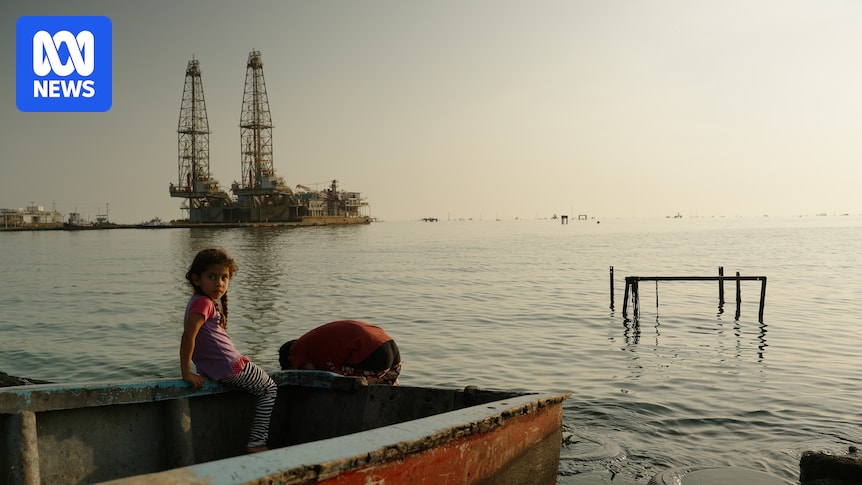
On paper, Venezuela should be an oil-churning powerhouse.
It sits atop an estimated 303 billion barrels, which translates to about 17 per cent of the world’s total known oil reserves.
“From the time we are born, they tell us how rich we are because we have so much oil,” said Venezuelan mother Isabel Delgado, while watching her son at baseball practice in Maracaibo, one of the nation’s key oil regions.
“It’s part of our identity.”
In the early 1970s, Venezuela was one of the world’s top producers, pumping as much as 3.75 million barrels of crude oil per day, but years of mismanagement, corruption, and sanctions reduced the nation’s output to a fraction of that.
As the widening conflict in the Middle East creates the “largest supply disruption in history” in the global oil market, according to the International Energy Agency, fresh questions are being asked about Venezuela’s potential to step up and plug the gap.
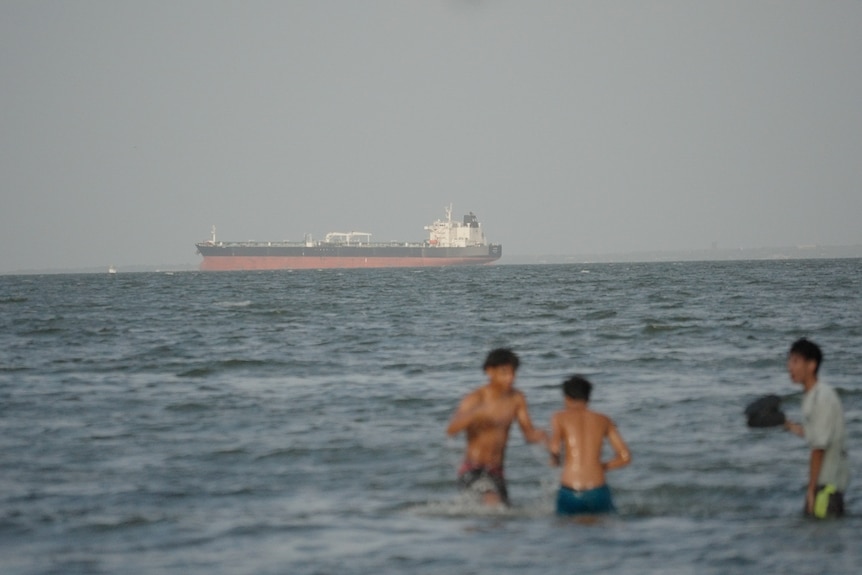
A huge oil basin under Lake Maracaibo once helped make Venezuela one of Latin America’s richest countries. (Foreign Correspondent)
But the picture on the ground inside Venezuela is sobering.
Working with local producers in the country, Foreign Correspondent went to Venezuela’s oil regions to reveal the crippled state of its oil industry.
Experts warn it will take at least five years to reverse decades of neglect, which have left the country with aging pumps, leaking pipelines and decaying infrastructure.
“Venezuela can be a big producer,” said Argus Media’s Editorial Manager for Crude and LPG, Gus Vasquez.
“But … that’s going to take a lot of investment.”
Trump’s oil takeover
According to US President Donald Trump, the price tag on that investment is at least $US100 billion.
That is what he has asked American oil companies to spend in order to “rebuild capacity and the infrastructure necessary” in Venezuela.
“We’re going to be extracting numbers in terms of oil like few people have seen,” Trump proclaimed in early January.
His administration is effectively in charge of Venezuela’s oil industry after the removal of the nation’s President Nicolás Maduro in a military operation in January.
It is overseeing the sale of Venezuela’s existing stocks, sending profits back to the interim authorities led by interim president Delcy Rodríguez, and controlling how they are spent.
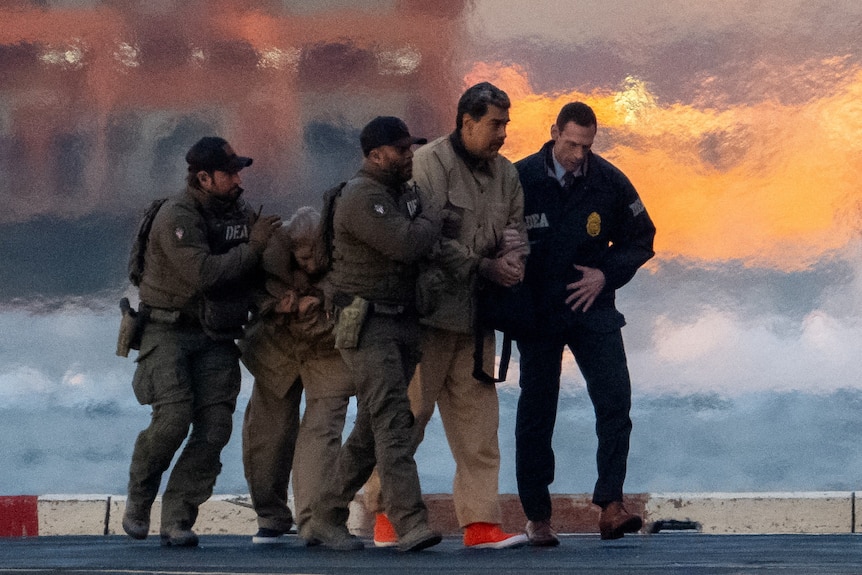
Captured Venezuelan President Nicolas Maduro and his wife Cilia Flores are escorted to a US court hearing. (Reuters: Adam Gray)
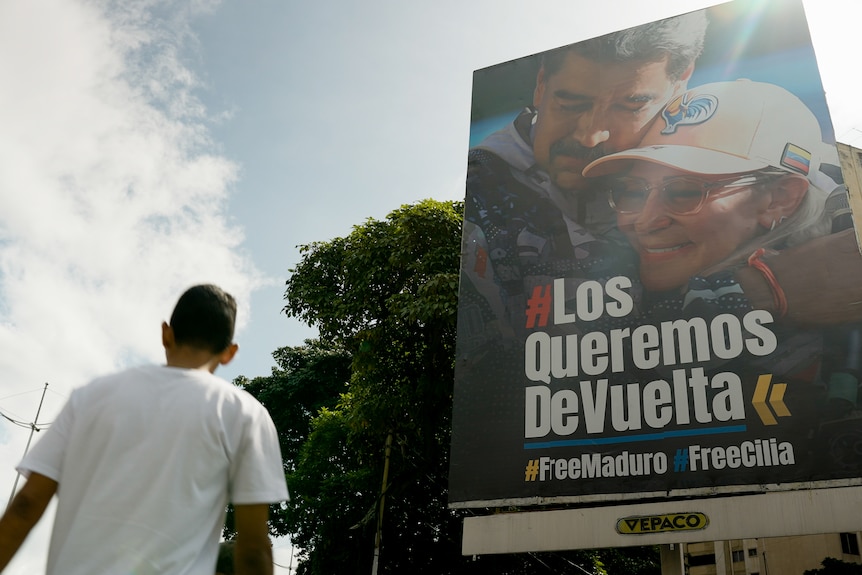
A billboard in Venezuela demanding their return. (Foreign Correspondent)
The US has also eased several sanctions, allowing American and international companies to buy, transport and refine Venezuelan crude once again.
Washington has also pushed the Venezuelan authorities to make changes to legislation around its oil sector, making it more attractive to foreign and private investment after years of state control.
But analysts say there has been little sign of major oil companies committing billions.
“Right now, nobody’s having that conversation,” Mr Vasquez said.
“I think short term there’s quick wins and people will go for those … but longer term, that’s a different conversation.”
Venezuela’s oil decline can be traced back to 1999, when the late President Hugo Chávez took office.
Investment dropped after foreign companies operating in Venezuela were threatened with expulsion if they did not accept new contracts giving the state oil company, Petróleos de Venezuela (PDVSA), a majority share in joint ventures.
This saw the departure of US oil giants such as ExxonMobil and ConocoPhillips, which lost billions of dollars in seized oil assets.
That history still hangs over investors.
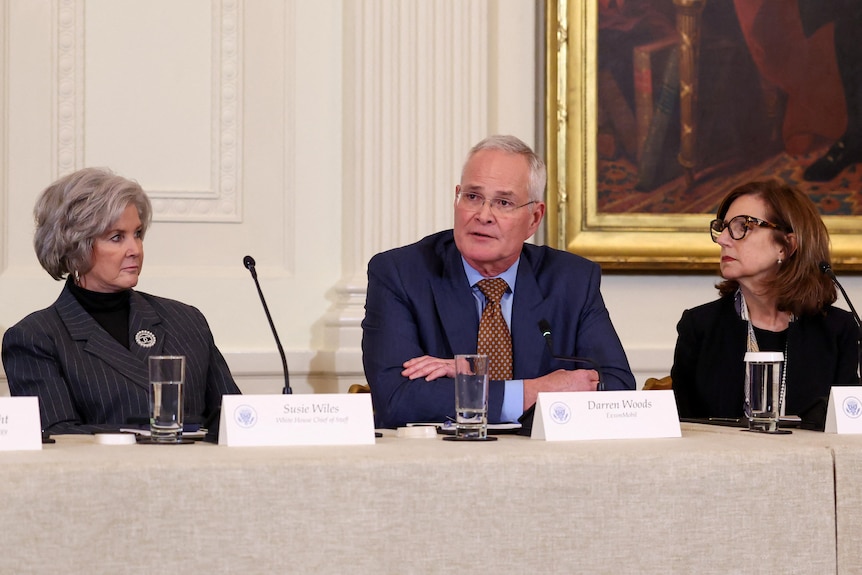
ExxonMobil CEO Darren Woods during a meeting with Donald Trump earlier this year. (Reuters: Kevin Lamarque)
During a meeting with Trump, the CEO of ExxonMobil, Darren Woods, raised these concerns.
“We’ve had our assets seized there twice,” he said. “To re‑enter a third time would require some pretty significant changes from what we’ve historically seen here and what is currently the state.”
Considering the legal and commercial frameworks in place today, he added, Venezuela is currently “un-investable”.
Mr Vasquez, who used to work for Venezuela’s state oil company, said many share that caution.
“You get burnt once, you’re going to be more careful the second time around — that’s just human nature,” he said.
“For there to be a return to … those 3.5 million barrels and all this foreign investment, you’re going to need more change than just getting rid of Maduro.”
An industry stripped bare
The industry has also suffered from a lack of maintenance and a massive brain drain.
In the early 2000s, Chávez co-opted the state oil company to fund his socialist revolution.
After protests and strikes by staff who complained that PDVSA was being politicised, Chávez responded by sacking 18,000 employees — almost 40 per cent of the workforce.
Over the next two decades, under Chávez and his successor Nicolás Maduro, the state oil company was essentially gutted, analysts say.
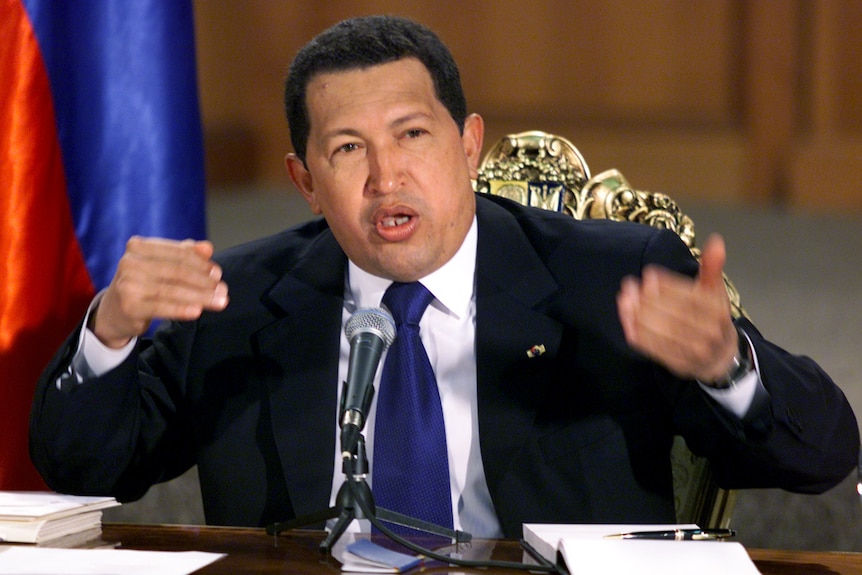
The late Venezuelan president Hugo Chavez speaks with journalists during oil industry strikes in 2002. (Reuters: Daniel Aguilar)
“Technocrats were replaced by party hacks,” said Chris Sabatini, a Latin America fellow for the London think tank Chatham House.
“And because they basically robbed the profits and revenue of PDVSA to turn it into their own political projects, there is no reinvestment in machine upgrades or new exploration.”
In 2019, targeted sanctions by the United States on PDVSA further hampered the company’s operations and revenue and drove the industry into ruin.
Today, the disrepair is clearly visible.
Around Lake Maracaibo, the birthplace of Venezuela’s oil story, mechanical pump jacks still pull thick sour crude up from the ground.
A huge oil basin sits beneath the lake and aging pipelines regularly leak crude into its waters, which fishermen say damages their nets and boats.
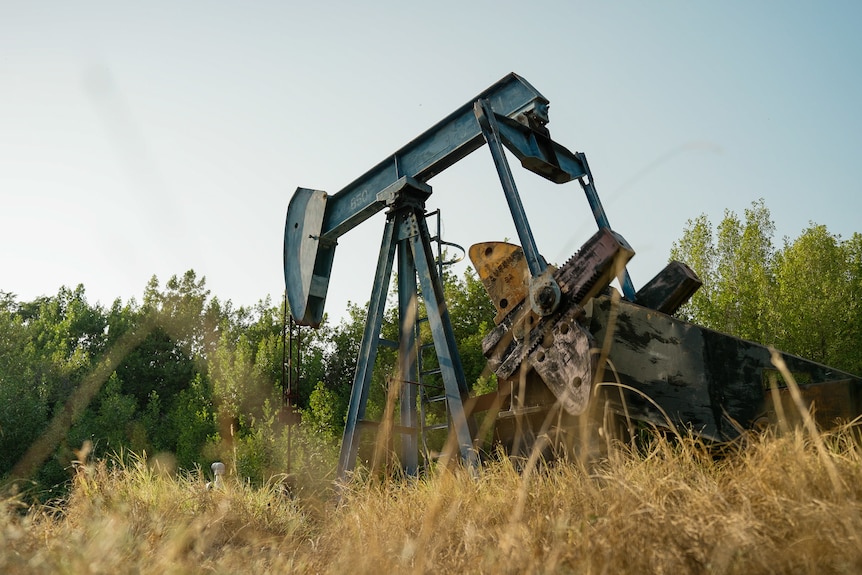
Old pump jacks near Lake Maracaibo are still pumping sour crude, a type of oil that is difficult and expensive to extract. (Foreign Correspondent)
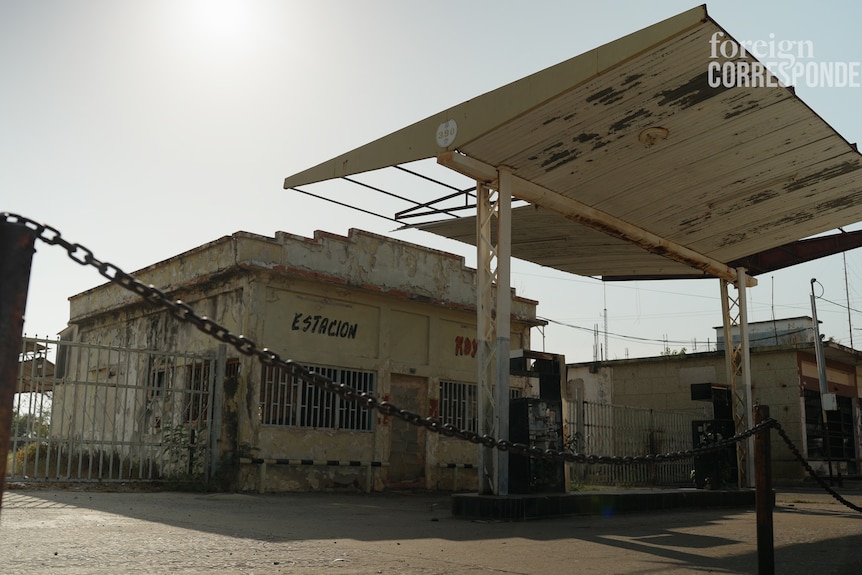
A disused petrol station in Cabimas, Venezuela. (Foreign Correspondent)
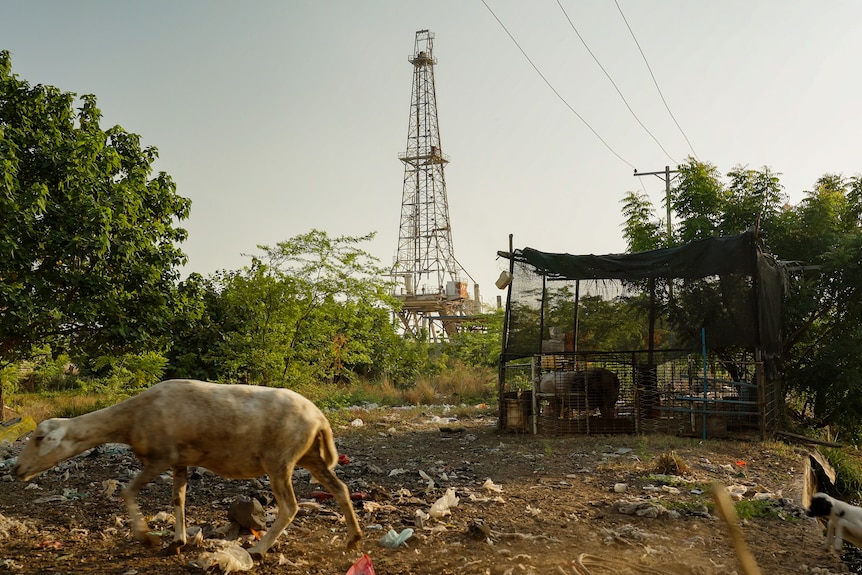
Foreign companies once invested heavily in Venezuela’s oil industry but many lost their assets when they were forced out. (Foreign Correspondent)
“It arrives on all the shores and we can’t go out because the boats get dirty and that is a lot of wasted money for the owners,” a local fisherman told Foreign Correspondent.
In the nearby city of Cabimas, pieces of infrastructure that would have been part of Venezuela’s industry now sit in a junkyard, ready to be sold for scrap.
“We can see it in its streets — [they’re] completely destroyed; there is no major infrastructure,” Yohan Flores said, a local environmentalist.
“And with Cabimas being that source of income through the oil system for all of Venezuela … Cabimas doesn’t deserve to be in the state it’s currently in.”
Plugging the gap
In recent weeks, the stakes for Venezuela’s oil revival have only grown.
The escalating war in the Middle East has effectively closed the Strait of Hormuz, reducing traffic through one of the world’s most important trade routes from 20 million barrels a day to “a trickle”, according to the IEA.
But observers say even with Venezuela’s interim authorities opening up the oil sector and foreign companies positioning themselves to re-enter, any impact would be slow to materialise.
“There are very few options to compensate for such a huge loss of oil and gas,” said geopolitical and energy policy strategist Neil Quilliam.
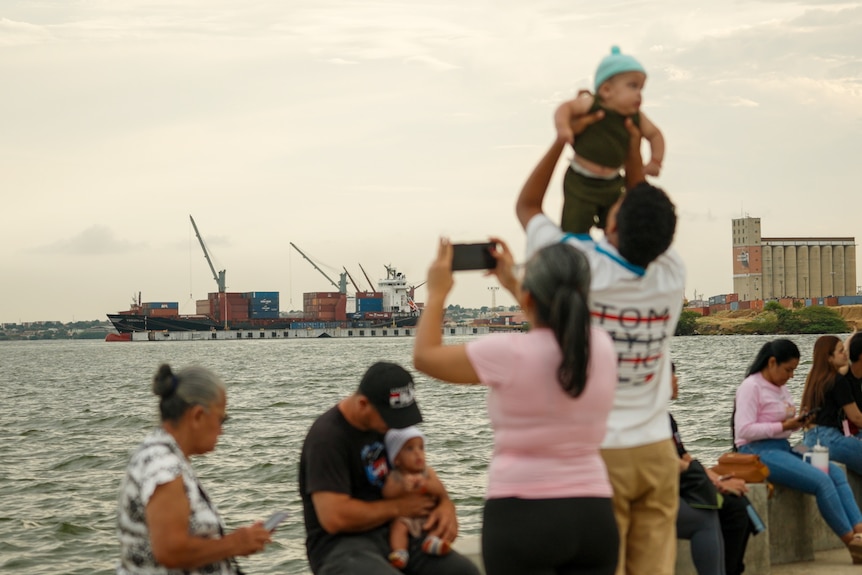
Venezuela only exports about 250,000 barrels of oil a day, down from more than 3.5 million at the industry’s peak. (Foreign Correspondent)
The IEA recently announced a plan to release 400 million barrels of oil, but ultimately these measures all pale in comparison to the gap left by the stalled traffic in the Gulf, which Quilliam said is one of the only good options available for now.
“The Venezuelan exports are negligible … around about 250,000 barrels, which is very, very small,” he said.
“So it’s not going to make a big difference. Oil doesn’t come to market very quickly. You’re looking at probably really a five-to-seven-year time frame.”
It is a view shared by Dr Sabatini.
“This is not a question of just sticking a straw in the ground and sucking up the oil and exporting it,” he said.
Watch Trump’s Venezuelan Oil Grab tonight on Foreign Correspondent, 8pm on ABC TV and ABC iview.