
By Jarrod Lucas and Mya Kordic, ABC
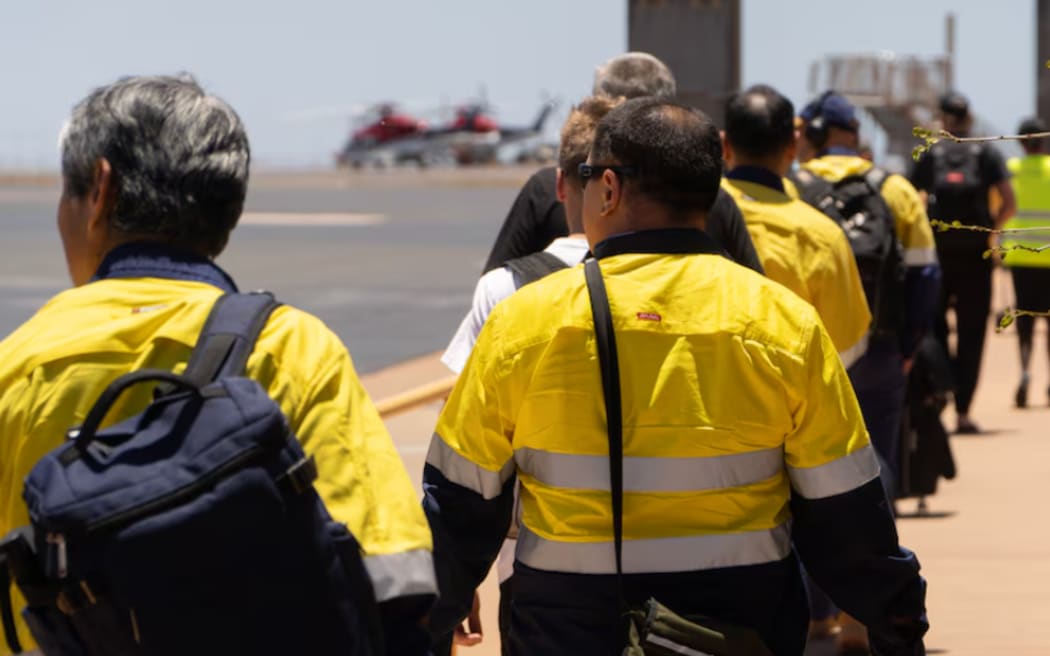
FIFO workers are being stood down as a result of the fuel shortages.
Photo: ABC / Cody Fenner. File photo
Operations at a remote Western Australian gold mine will grind to a halt in one of the first signs that fuel shortages, created by the war in the Middle East, are impacting small and medium-sized businesses in the state’s diesel-reliant resources sector.
While the agriculture sector has been quick to raise the alarm ahead of its annual seeding campaign, the WA mining industry’s major players have so far downplayed the impact on operations from the fuel crisis which has consumed state and federal politics.
But for smaller industry players, like privately owned mining contractor Blue Cap Mining, fuel shortages have reached a tipping point. The company standing down about two-thirds of its 180-strong fly-in fly-out workforce in the state.
“We had about 50 to 60 people affected over the weekend, and probably another 50 to 60 over the next few days will be told to stay home rather than come to work,” Blue Cap’s managing director Ashley Fraser told ABC Radio Perth on Tuesday morning.
Blue Cap’s operations in WA include the Devon gold mine near Laverton, about 900 kilometres north-east of Perth, which sees ore mined from the open pit trucked almost 300 kilometres away for processing.
But that work, which consumes about 15,000 litres of fuel a day, is set to grind to a halt as Fraser said independent distributors cannot maintain adequate supply.
“My primary concern is increasing our storage capacity on site, because I can’t see it being solved any time soon,” he said.
Blue Cap had less than a fortnight’s supply of fuel, at normal run rates, stored in on-site tanks.
“We’ll be dialling down our production until we can get some surety around what that fuel supply looks like,” Fraser said.
“The feedback that we’re getting is don’t expect more than 30 to 40 percent of the fuel you normally get, once or twice a week,” he said.
Mining vulnerable
According to the Institute for Energy Economics and Financial Analysis, Australia’s resources sector consumes almost 10 billion litres of diesel annually.
It said one large haul truck can use one million litres of diesel in a year.
The mining industry consumed 35 percent of the diesel used in Australia during the 2023-24 financial year, according to the Australian Bureau of Statistics (ABS).
The sector’s consumption has risen by more than 90 percent since the 2010-11 financial year to 9.6 billion litres in 2023-24.
Fraser said like farmers, smaller players in the mining sector relied heavily on independent fuel distributors.
He said his company was far down the “pecking order” compared to the big miners which enjoyed a greater level of fuel certainty.
“It’s frustrating, it’s not a level playing field and it’s probably not unlike the impacts that we all felt during Covid-19,” he said.
“It’s all well and good to say Australia has lots of supply, we have full tanks in Singapore – what’s not being said is there is not a 100 percent supply for all.
“Small and medium-sized businesses wouldn’t be in this position if there wasn’t an issue.”
Situation ‘concerning’: premier
WA Premier Roger Cook said the situation for Blue Cap Mining was “very concerning.”
“That’s why we have our fuel industry operations group that meets on a daily basis, to identify where these shortages are and make sure the trucks get there as a matter of priority,” he said.
“We’ll obviously reach out to this company to work out what their circumstances are and how we can help.”
Opposition Leader Basil Zempilas said Blue Cap highlighted how the government needed to do more to make sure key industries were well supplied with fuel.
“Western Australia is the engine room of the nation’s economy and that engine runs on diesel,” he said.
“So any shortages of diesel fuel are going to greatly impact Western Australia and Australia’s economy more broadly, so of course we have to make sure that there are adequate supplies getting through to industry and agriculture.”
Association of Mining and Exploration Companies CEO Warren Pearce said the break down of commercial fuel supply chains, an event he “feared”, was happening.
Meanwhile, the Chamber of Minerals and Energy WA CEO Aaron Morey said the disruption at Blue Cap Mining was not an isolated incident.
“We’re aware of another operator in and around the Goldfields area that’s had some challenges in getting sufficient fuel,” he said.
-ABC