
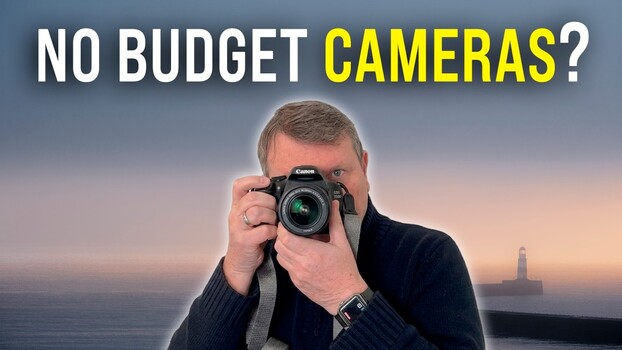
Buying a dedicated camera used to be an accessible step up from whatever you shot on before. Today, that entry-level market has largely collapsed, and the gap between smartphone photography and “real camera” photography has quietly become a financial wall for anyone trying to cross it.
Coming to you from Jason Row of Rowtography, this candid video lays out exactly how the camera industry priced out beginners and what that means for anyone trying to make the jump from smartphone to dedicated camera. Row points to two forces squeezing the budget end of the market: technology creep and the smartphone revolution. Around 2012, you could walk out with something like a Nikon D5100 and a kit lens for roughly £450 to £500. That same entry-level experience now costs closer to £1,000, and a kit lens at that price point is nearly impossible to find from a major manufacturer. Row argues the lower end of the market didn’t just shrink; it disappeared, and what replaced it was a tiered system where you either shoot on your phone or you spend serious money.
The lens market tells the same story. Row points out that a 24-105mm zoom, a lens that isn’t particularly fast or cutting-edge, runs well over £500. What used to be a budget zoom category has been pushed up in price as manufacturers load lenses with stabilization systems, focus limiters, and USB-C firmware ports. Row questions whether any of that is actually useful to someone just starting out, and it’s a fair question. The saving grace here is third-party manufacturers, and Row gives credit to companies like Sigma, Tamron, and a growing wave of Chinese brands such as 7Artisans, which are producing solid glass at prices that are at least closer to what the budget end of the market used to look like.
There’s also a cultural dimension Row raises that doesn’t get talked about enough: cameras as luxury goods. A segment of buyers purchases cameras not to shoot with but to wear, and that demand gives manufacturers room to push prices higher regardless of what the technology actually justifies. The compact camera market, which used to funnel curious newcomers into budget DSLRs, was wiped out by smartphones over a decade ago. That pipeline is gone. What Row is describing is a market that lost its on-ramp and hasn’t rebuilt one, even as smartphone photography keeps raising the bar for what casual users expect.
The good news, and Row does get to it, involves the used market. The shift to mirrorless has flooded the market with capable DSLRs at a fraction of current mirrorless prices, and the lens options that go with them are equally affordable. How Row breaks down exactly what to look for and what to realistically expect from that used gear is worth hearing in full. Check out the video above for the full rundown.