
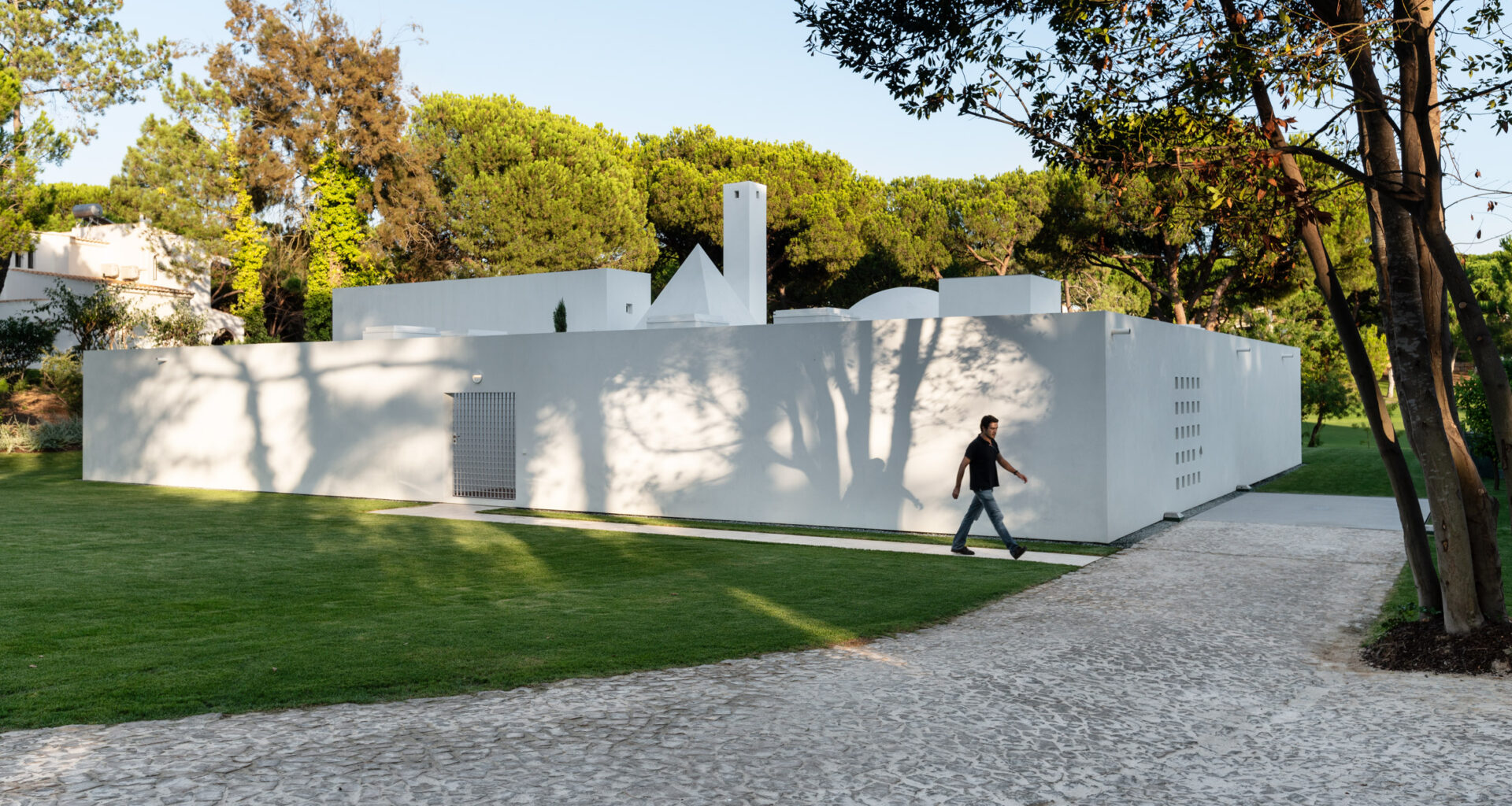
Portuguese architect Eduardo Souto de Moura describes how his career began almost by chance in the first video in a series produced by Dezeen.
Speaking in the short film, the Pritzker Architecture Prize laureate explained that his decision to study architecture came largely from a desire to pursue subjects he enjoyed, such as history, philosophy, drawing and physics.
“To tell the truth, I never thought I would be an architect,” said Souto de Moura in the video interview. “It just happened.”
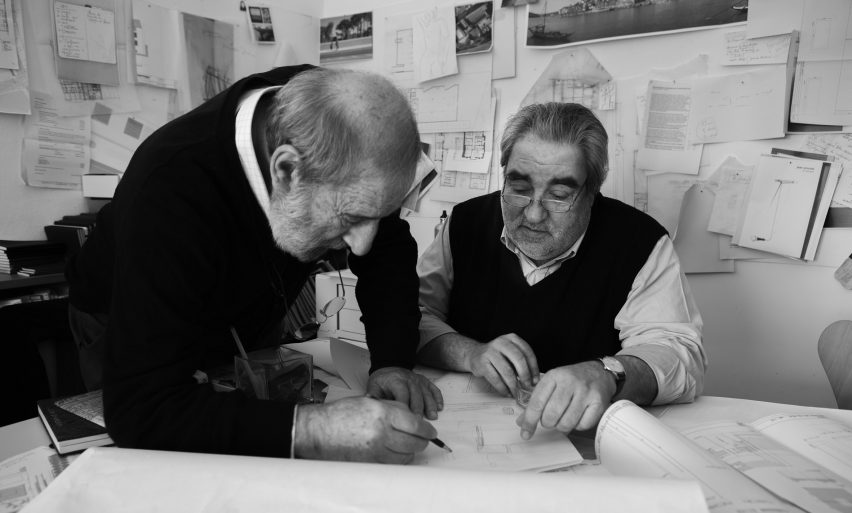 Eduardo Souto de Moura (right) reviewing drawings with Siza Vieira. Photo by Juan Rodriguez
The architect studied during the period surrounding Portugal’s Carnation Revolution, which he described as a formative moment in his professional life. The revolution created what he characterised as several years of celebration and social transformation during his early training.
After graduating, Souto de Moura joined the studio of fellow Portuguese architect Álvaro Siza, where he worked for five years. According to Souto de Moura, Siza eventually encouraged him to leave the office so that he could develop his own architectural identity.
“After five years Siza said that I had to leave the office because if I stayed in his office I would never become an architect,” he recalled.
His first significant independent commission came while he was completing Portugal‘s compulsory military service. Working at night, Souto de Moura designed a market building in the northern Portuguese city of Braga.
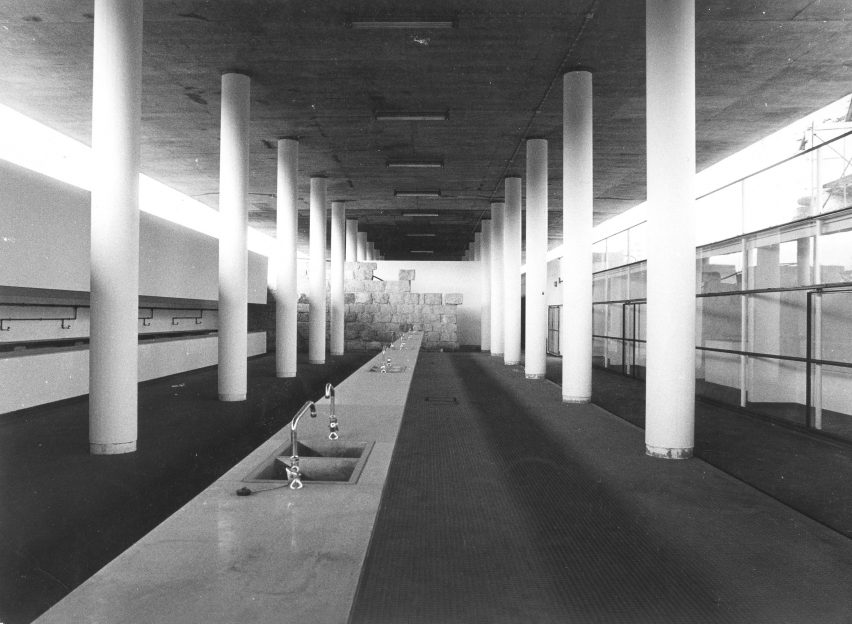 Braga Municipal Market was one of Souto de Moura’s first independent projects. Photo by Manuel Magalhães
The project later became an important moment in his career after construction problems forced part of the building to be demolished and redesigned. Souto de Moura responded by reworking the spatial relationships so that exterior areas became interior spaces and vice versa.
“What was outside became inside and what was inside became outside,” he said.
Souto de Moura compared the process to the way buildings historically change function over time, arguing that architecture is defined by its ability to adapt. In the case of the Braga market, he said, a centuries-long process of architectural transformation was compressed into just a decade.
“It is like a particle accelerator,” he said.
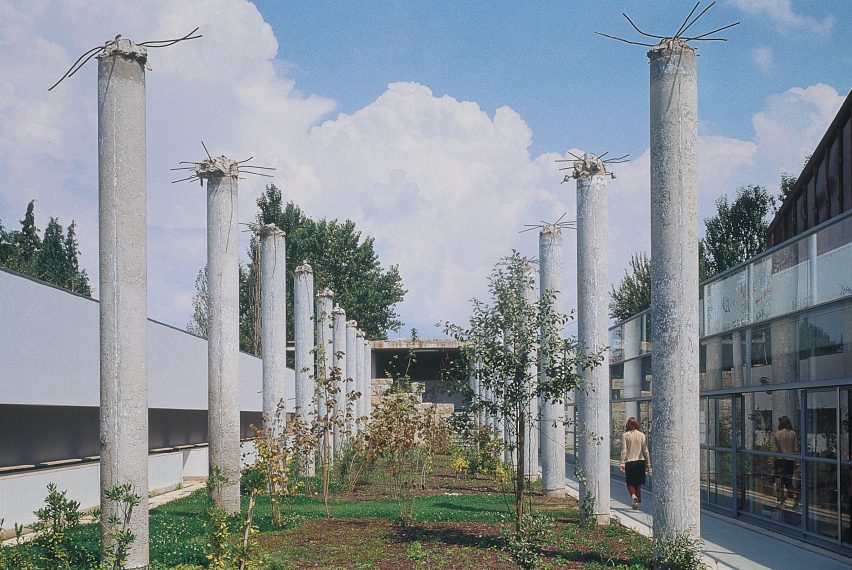 Souto de Moura later transformed Braga Municipal Market into a dance school. Photo by Duccio Malagamba
Throughout the film, the architect reflects on how the idea of transforming existing structures has continued to shape his work.
He cites projects including alterations to a protected house in Quinta do Lago, which he subtly enlarged without altering its appearance, as well as a residence in Porto built partly from stones taken from the ruins of an unfinished house linked to a disgraced financial official during Portugal’s dictatorship.
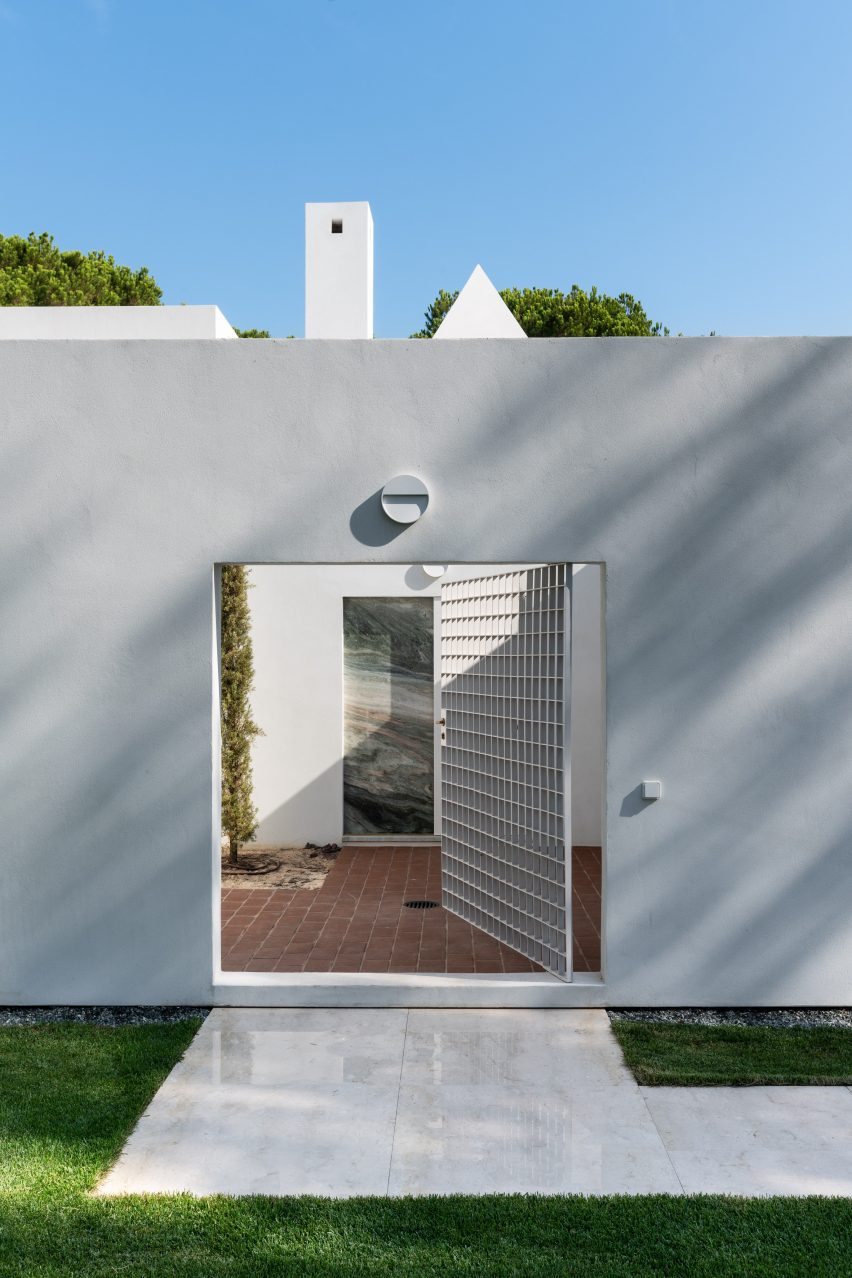 Souto de Moura altered a protected house in Quinta do Lago. Photo by Luís Ferreira Alves
For Souto de Moura, these projects demonstrate a broader principle about the evolution of architecture.
“The history of architecture shows us that architecture is truly that,” he said. “Buildings lose their original function and take on a new function.”
The architect also argues that contemporary approaches to heritage conservation can sometimes resist this process of change.
“Nowadays it is not like this,” he added. “There are very conservative organisations that say the heritage is untouchable. It is the denial of history.”