
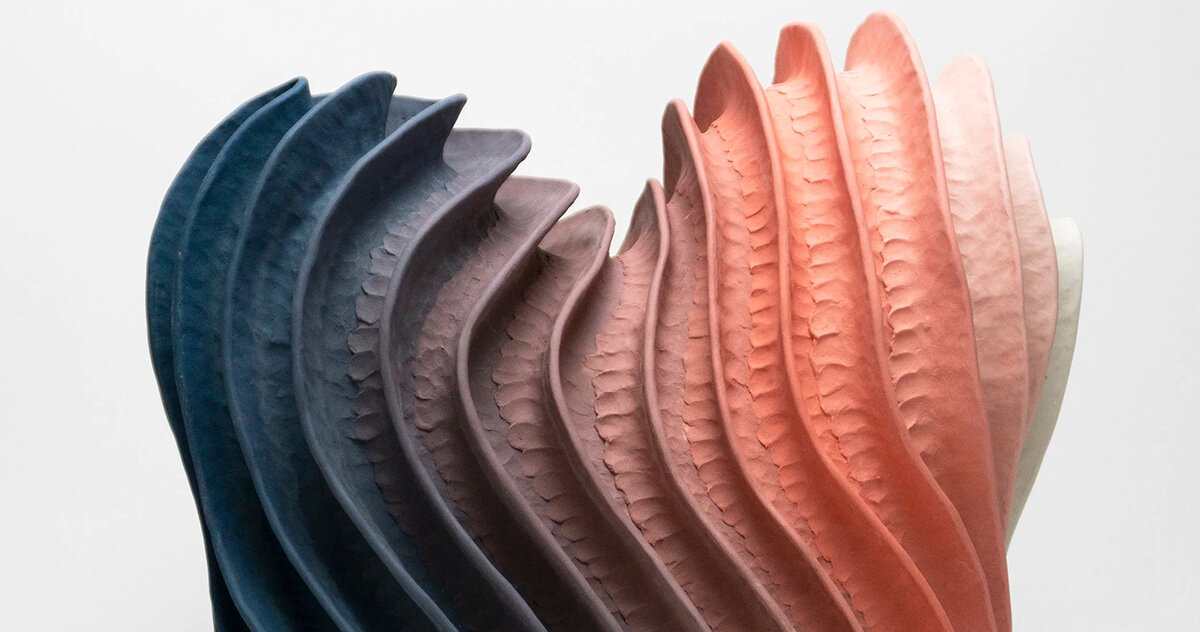
Ceramic organisms to show in Chicago
In Life Forms, artist Janny Baek approaches ceramics as a speculative tool, using clay, color and pattern to model alternative ways of imagining growth and change. Working primarily with pigmented porcelain and hand-built techniques, she combines and manipulates colored clays to produce layered, shifting surfaces that suggest transformation rather than fixed form. In a new exhibition set to open on March 20th, 2026, at Joy Machine gallery in Chicago, she treats utopia not as an ideal end state, but as a way of testing how material, structure and organic reference can generate new, more hopeful possibilities for how forms and systems might evolve.
The works gather across the space as a series of small presences that appear midway through transformation. Some open outward like blossoms. Others stretch upward with limbs that resemble wings, stems, or shells. Each piece carries a quiet sense of motion, as though the forms continue to shift even after the firing process has fixed them in place. The exhibition introduces a speculative landscape built entirely from ceramic. Baek’s sculptures hover between recognizable structures and unfamiliar ones, drawing loosely from plants, animals and geological formations. Their silhouettes bend, flare and extend through hand-built gestures, giving the works a sense of growth that feels incremental.
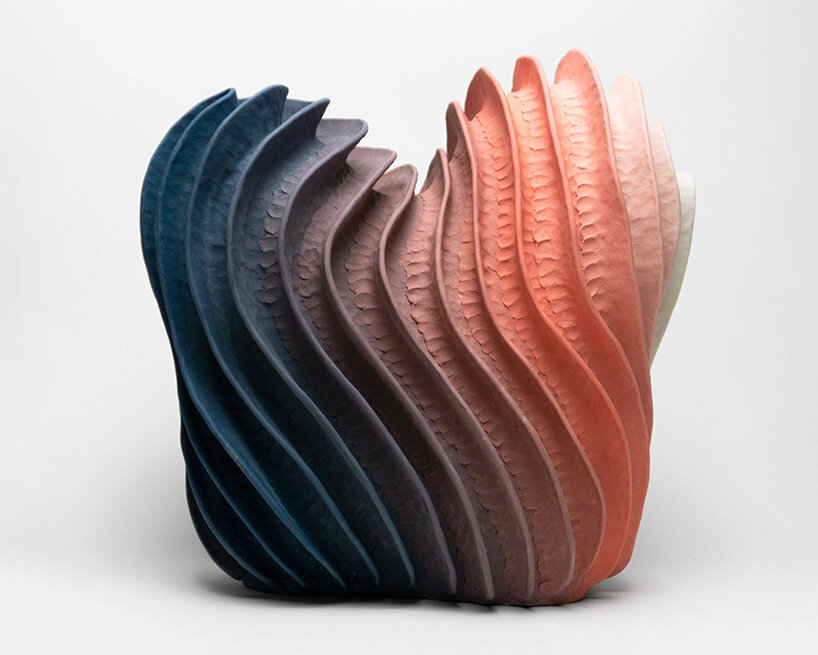
Janny Baek, oscillator 2021 | images courtesy the artist
an additive process by janny baek
Artist Janny Baek’s path to ceramics moves across several disciplines, and that layered background is visible in the construction of the work. Born in Seoul and raised in Queens, she studied ceramics at the Rhode Island School of Design before working as a sculptor for animation and toy design. A later degree in architecture from Harvard University introduced a different scale of thinking about structure and assembly.
That design perspective shapes the sculptures throughout Life Forms at Joy Machine. Many begin with coiled bases that support rising bodies of clay. From there, additional sections gather and branch outward, giving the ceramic forms a structural logic similar to small built environments. Each element appears to be added through successive gestures, which allows each work to grow gradually rather than arrive as a fixed image.
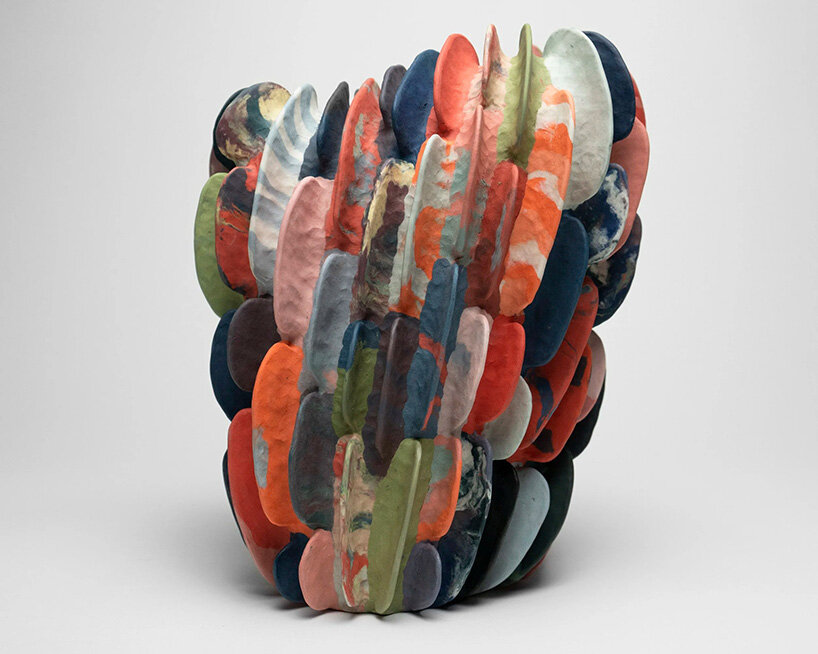
Janny Baek, feathered vessel, 2022
Clay as a thinking material
Color plays a central role in Janny Baek’s ceramics exhibition. She works with nerikomi, a Japanese ceramic technique that combines layers of differently colored clay before shaping the final object. When the material is cut or stretched, marbled patterns and gradients move through the surface of the sculpture.
For Janny Baek, these patterns carry conceptual meaning alongside their visual impact. ‘My material choices are a way of thinking about natural processes,’ she explains. ‘Color gradients as the continuous nature of change, a multitude of colors as potential, abundance, and vitality, and patterns as signals and communications.’ Within the ceramic body, color becomes part of the structure rather than an applied finish.
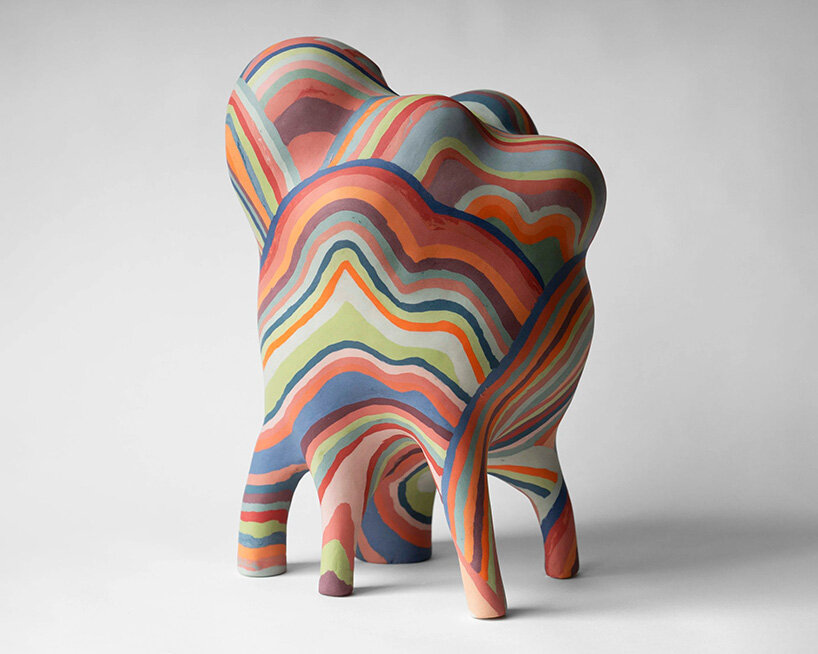
Janny Baek, prismatic walking cloud, 2023
All together, Janny Baek’s ceramic sculptures read as inhabitants of an imagined ecosystem. Some appear upright and alert, while others slump across the plinth as if reaching toward light or water. The surfaces ripple with bands of color that move through the clay like currents.
The works sit somewhere between abstraction and representation. A viewer might see petals, feathers, or shells, though the forms resist settling into a single identity. That ambiguity gives the ceramic pieces their sense of life. They feel like organisms caught at an early stage of evolution.
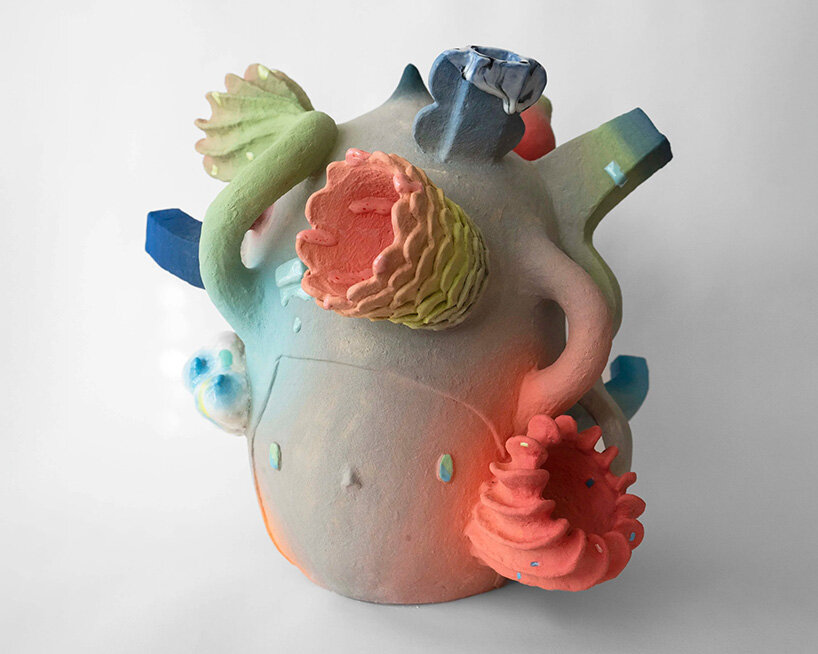
Janny Baek, dream state, 2024
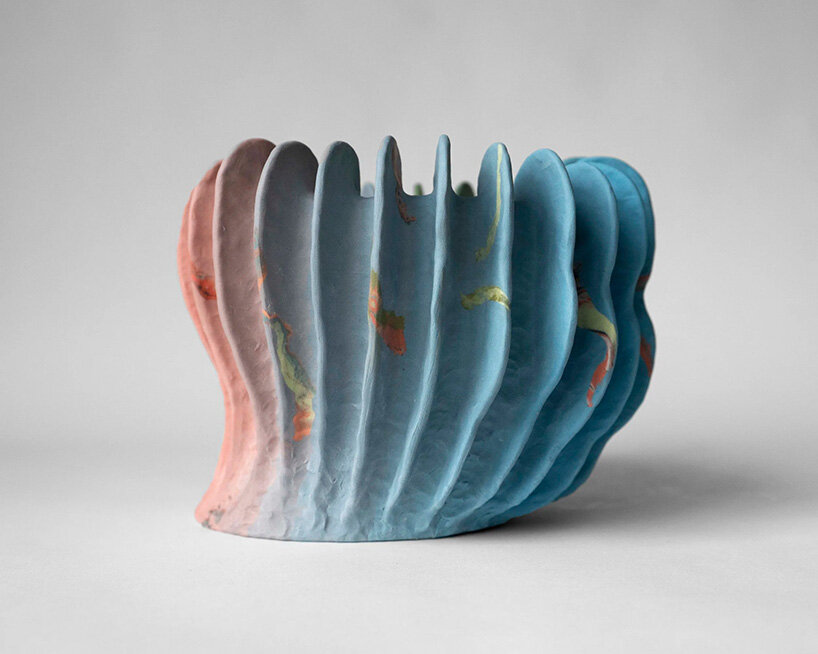
Janny Baek, wavelet, 2023