
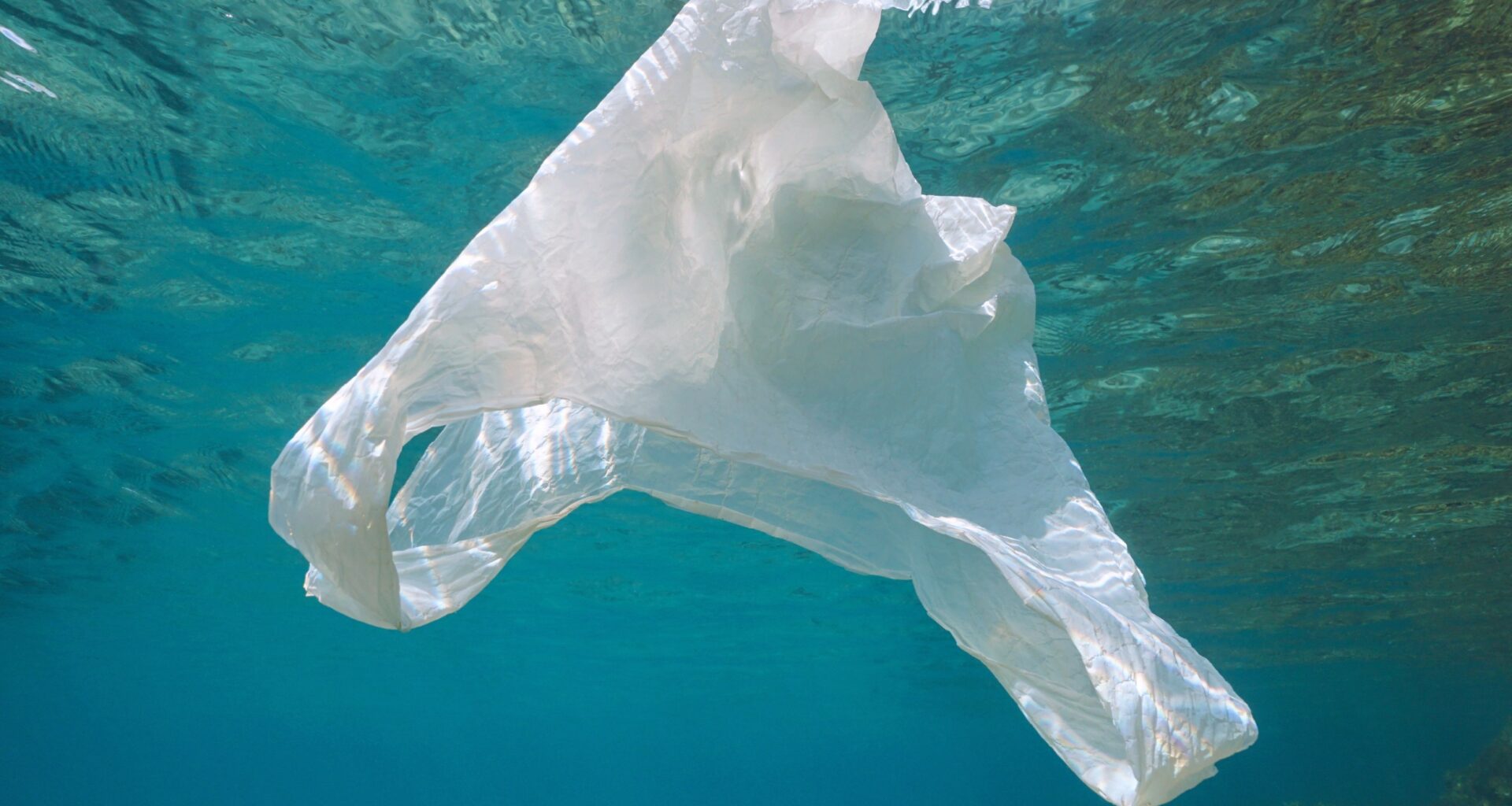
Most people hear “biodegradable plastic” and picture something that simply disappears – like a leaf breaking down on the forest floor. In reality, it’s far less automatic.
These materials don’t just vanish on their own. They need the right microbes, the right conditions, and a chemical structure that those microbes can actually use.

Without that combination, “biodegradable” can end up meaning “slow to change” rather than “quickly gone.”
A new study from MIT takes a closer look at what that process really looks like in the ocean. Instead of a simple, one-step breakdown, the researchers found something more complex and more realistic.
Microbes break plastic together
In the study, scientists tracked how ocean bacteria interact with a widely used biodegradable plastic, and the process turned out to be anything but simple.
Instead of one microbe doing all the work, the breakdown happens in stages. One bacterium cuts the plastic polymer into smaller pieces, and other microbes consume what’s left.
This “division of labor” helps explain why the same biodegradable product may disappear quickly in one place but linger in another. It all depends on whether the right microbial mix is present.
That uncertainty matters. Biodegradable plastics are meant to reduce pollution, but most are tested under ideal composting conditions – not in the ocean, where environments are colder, saltier, and constantly changing.
So scientists are still left asking: how long do these materials actually last in the real world? This study brings us closer to a clearer answer.
What the MIT team actually found
The big takeaway is that bacteria don’t necessarily “eat plastic” in one clean move. A plastic polymer is like a long chain. For many microbes, it’s not immediately usable. Someone has to cut it first.
In the MIT work, one microbe played that “opener” role, cleaving the polymer into its component chemicals.
Once those smaller molecules existed, other bacteria could take over and feed on each chemical. Put simply, one bacterium turns the plastic into food-sized pieces, and others finish the meal.
That matters because it suggests biodegradation can stall if the right mix of microbes isn’t present.
You might have bacteria that can eat the breakdown products but not the intact polymer. Or you might have the polymer-cutter, but not the microbes that efficiently mop up the resulting chemicals.
The overall speed depends on the whole community, not just one organism.
Microbes control breakdown speed
Microbial communities vary widely across the ocean, and the bacteria in one patch of water won’t perfectly match those in another.
Temperature, nutrients, oxygen levels, and even the season all influence which microbes thrive. If the “right” microbes are scarce, plastic can linger much longer. If they’re abundant and active, degradation speeds up.
That variability is one of the main reasons scientists struggle to predict how quickly biodegradable plastics disappear in real-world conditions.
Not all plastics degrade equally
Not all biodegradable plastics behave the same. Even when two products carry the same label, differences in polymer chemistry and manufacturing can change how accessible they are to microbes.
Some formulations are easier to break apart, while others resist microbial enzymes. Additives, structure, and processing choices all influence how “edible” the material is.
That’s why lead author Marc Foster, a Ph.D. student in the MIT-WHOI Joint Program, says there’s no single timeline for breakdown.
“There is a lot of ambiguity about how long these materials actually exist in the environment,” Foster said.
“This shows plastic biodegradation is highly dependent on the microbial community where the plastic ends up. It’s also dependent on the plastics – the chemistry of the polymer and how they’re made as a product.”
Microbes could guide plastic solutions
Understanding that microbes work in teams doesn’t just answer the question of “how long does it last?” It also points toward better solutions.
If scientists can identify which microbes handle the first cutting step and which ones consume the resulting chemicals, they can begin designing better materials.
These plastics could break down more reliably in real environments, not just in labs or industrial compost facilities.
There’s also potential for controlled microbial “recycling” systems, where plastic waste is not simply broken down and dispersed, but converted into useful molecules on purpose.
Real-world biology matters most
The study is a reminder that biodegradation is biology – living organisms carrying out chemistry.
If biodegradable plastics are going to truly reduce harm, researchers need to understand that biology in detail, rather than treating biodegradability as a one-size-fits-all property.
This MIT work doesn’t present biodegradable plastics as a silver bullet. Instead, it shows what the process actually looks like in the real world and why results can vary so widely.
In the ocean, plastics may be broken down through microbial teamwork – one organism starts the job, and others finish it. Whether that team exists where the plastic ends up can make all the difference.
—–
Like what you read? Subscribe to our newsletter for engaging articles, exclusive content, and the latest updates.
Check us out on EarthSnap, a free app brought to you by Eric Ralls and Earth.com.
—–