
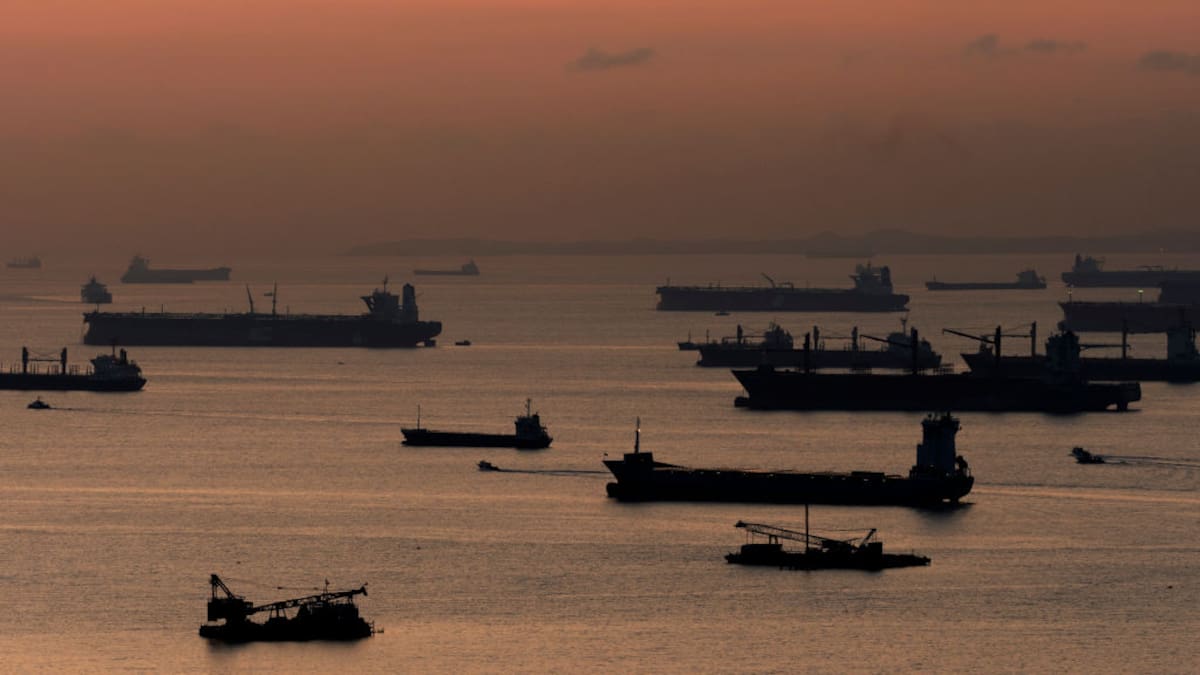
That’s a good question. While there’s no shortage of speculation about what might happen, it’s all limited by the fact that nobody knows how long the war will last. Or, more specifically: how long will the Strait of Hormuz remain effectively closed?
That variable allows a lot of rope for both optimists and pessimists to conjure scenarios that range from complacent to panicked.
While the Government clearly needs to plan for worst-case scenarios, it probably makes sense for the rest of us to focus more tightly on what we know for sure.
With oil prices sitting at around the US$100 mark and pump prices for 91 octane having now topped an average of $3 a litre, here’s what economists are forecasting.
First up, inflation
ANZ and BNZ both lifted their Consumers Price Index inflation forecasts yesterday to peaks of 3.6% and 3.8% respectively.
BNZ is picking that for the second quarter, and ANZ is picking its peak in the third.
Westpac economists were slightly more optimistic with their revision on Monday, picking a peak of 3.2% in the second quarter.
Earlier this week, Finance Minister Nicola Willis said Treasury’s current worst-case scenario would see annual inflation hit 3.7%.
That scenario factored in the prospect of the conflict continuing all year, we were told.
Willis was quick to point out that while this was bad, it was still lower than the inflation rate in Australia right now, at 3.8%.
BNZ’s head of research Stephen Toplis warned that Treasury’s outlook might be a bit optimistic and notes that his 3.8% inflation call is an extreme-case scenario.
“[There was] around a 50% chance that it doesn’t get to 3.8%. But that also means there is an equal chance that it turns out greater than that,” he said.
BNZ’s forecasts assume that the average price of 91-grade petrol stays where it is now at $3.05 through to the end of April and then falls relatively aggressively.
“To us, that seems a relatively conservative view,” Toplis said. “We also assume that second-round effects are well-contained and that the currency does not depreciate rapidly. These are starting to look like fairly heroic assumptions.”
Well, there’s always a worst-case scenario. But it seems reasonable to base forecasts on what has happened so far.
For some more calming context about this crisis, you can’t go past Toplis’ take on Monday, which reads like the kind of thing (dare I say it) that our Prime Minister might be saying to ease any sense of public panic.
“Let’s get this straight, based on current information, the world is not going to end,” Toplis wrote.
“Fuels are expensive and are getting more so. Supply is heavily restricted. But demand will fall and alternative supplies will rise. And then, one day, the Strait of Hormuz will reopen.
“The problem is that this takes time. So, in the interim it is imperative that businesses, households and governments alike prepare for the worst while hoping for the best, knowing that no matter what, a significant adjustment process is underway.”
Interest rates outlook
Economists are also relatively sanguine about the outlook for interest rates.
Westpac’s Satish Ranchhod notes that (at the time of writing) markets are more than fully priced for a 25-basis-point rate hike by September and a follow-up hike by the end of this year.
In fact, the markets have pretty good odds on a hike in July.
“However, we think this will likely prove a misreading of the RBNZ’s [Reserve Bank] approach to monetary policy,” Ranchhod said.
“Higher interest rates now would not prevent the oil-related rise in inflation already in train.”
Meanwhile, hiking interest rates sooner would likely compound any downturn in economic activity caused by the rising cost of living.
That would potentially exacerbate the downturn in inflation once the shock passes and oil prices recede, Ranchhod said.
So, even with a substantial lift in the inflation outlook, Westpac still expects the RBNZ will be hesitant to hike rates sooner than previously anticipated.
“Instead, we continue to expect the RBNZ will remain on hold until December,” Ranchhod said.
“In a severe event that materially dampens global and domestic growth – especially one in which fuel supply is rationed – the RBNZ could even consider rate cuts.
ANZ’s Miles Workman also said his updated outlook for inflation has no immediate implications for his Official Cash Rate (OCR) call … but …
“In fast‑moving situations such as this, assumptions can become out of date quickly,“ he said.
Okay, hold that thought …
GDP outlook
No, not the fourth-quarter data we get tomorrow (I’ll get to that). What does the oil shock do to the outlook for growth, ie the long-promised economic recovery?
Westpac has revised down its 2026 gross domestic product (GDP) outlook to reflect headwinds from the oil shock. It now sees growth of just 2.8% (down from 3.3%).
“We also expect that unemployment will now take longer to fall,” Ranchhod warns.
Treasury has 2.5% annual growth forecast in its worst-case scenario.
BNZ’s Toplis isn’t convinced by that, calling it “overly optimistic”.
Stephen Toplis, Head of Research at BNZ.
“Based on the economy growing an average of 0.7% per quarter [in the calendar year], we end up forecasting annual average growth of only 2.4% as our central forecast,” he said.
That would be 2.9%, looking at the December quarter 2026 relative to December 2025.
“Whatever your point of comparison, it seems the worst-case scenario could be a lot worse than Treasury envisages,” he said.
That fourth quarter
For the record, here’s what economists are picking for fourth-quarter GDP when it lands on Thursday at 10.45am.
Westpac and ASB are the most optimistic, forecasting a 0.4% lift for the quarter. Kiwibank and BNZ are expecting 0.3% growth for the quarter.
And ANZ comes in as the most downbeat, picking just 0.2%.
Here’s hoping it lands at the upper end. We’re going to need those extra growth points as the war starts pulling activity back.
If we get 0.4%, that would translate to a 1.6% rise in GDP over 2025, marking the first full year of per-capita growth since 2022, Westpac senior economist Michael Gordon said.
That’s something to smile about, surely.
The result would offer “a reasonably clean read on the economy’s momentum, without the seasonal distortions and other timing issues that have affected previous quarters”.
“That said, it’s a dated read on the state of the economy, and even more so in light of the rapidly evolving events in the Middle East,” Gordon adds, before we get too upbeat.
Through the ‘looking through inflation’ looking glass
Can the Reserve Bank really look through inflation above 3% until December?
Those who see the single mandate on keeping inflation in the 1-3% target band as a hard-and-fast rule will be sceptical.
Quietly, though, I suspect the coalition Government (which killed the dual mandate with its focus on unemployment) would be glad to see the RBNZ hold fire, at least until November.
Last week, I answered a question about why the Reserve Bank continued to cut interest rates even though inflation was rising last year.
Without passing any judgment, I suggested that the RBNZ (and the consensus of most economists) felt the growth rate was bad enough to justify lowering interest rates into what is now considered stimulatory territory.
If the RBNZ still had a dual mandate (to target unemployment and inflation), there would be no question that the cuts were required, I said.
But given the single mandate to keep inflation between 1-3% and the way it has hung around at elevated levels, it seems legitimate to at least ask the question: “Did we miss the opportunity to really smash it into submission while we had the chance?”
A reader called me out on that overly diplomatic position:
Q: I may be reading between the lines here, but Liam, are you suggesting that the RBNZ has been acting as if there was a dual remit rather than an inflation-only one?
John O.
A: Okay, fair enough. I guess the short answer to John’s question is yes.
If inflation were really the only metric the RBNZ considered, then it would have to keep interest rates much higher while it waited for it to fall back below 3%.
Of course, there is some leeway built into the mandate – the RBNZ has to keep inflation in the target band “on average over the medium term”.
Central bankers, these days at least, seem to take a generous view of the medium term.
It remains to be seen how hawkish (tough on inflation) new Governor Anna Breman will be.
But under Adrian Orr – both with the change to a dual mandate and the change back – the RBNZ was careful to point out that it always considers a range of economic factors, including unemployment, in its monetary policy assessments.
There has to be some sense of realism about how high interest rates can go without utterly crushing an economy.
Before the war …
The past week has delivered a steady run of monthly economic data, most of it suggesting the economy continued to improve through February.
Okay, it’s also the last round of monthly data to be untouched by the turmoil of the Iran conflict.
But as with the GDP figures, it’s still helpful to get a clear read on where we were at as economists recalibrate their forecasts.
And good news is still better than bad news.
Immigration
Immigration figures on Friday showed the brain-drain trend has really started to turn.
Net migration hit 23,200 for the 12 months to January, compared with 19,700 in the year to January 2025.
Annualised net migration for January was 41,000, which is getting close to long-term averages.
Stats NZ records show annual net migration peaked at a gain of 135,500 – both in the year to October 2023.
Meanwhile, annual migrant departures which peaked at 121,200 in the year to May 2025, have eased gradually to 114,200 for the year to January.
Migration is a double-edged sword for economic growth. Too much can inflate an economy and flatter economic growth, which won’t look so good on a per capita basis.
But when numbers slump very low, as they have in the past year, it can become a headwind for economic activity, not least in the housing market.
Tourism numbers (almost) back in black
The short-term visitor arrival numbers, also out on Friday, showed we’re now back to 97% of the tourism numbers we had pre-Covid.
Total border crossings, which include outbound Kiwi tourists, were up 2% on pre-pandemic levels.
It’s been a long haul (excuse the pun) back for the tourist sector so it seems particularly cruel to be facing this new crisis.
Electronic cards
Retail spending in February bounced back after a slow January, with almost every retail category seeing an increase in spending month on month, according to new data from Stats NZ.
Spending in the retail industries in February 2026 grew by 1.4% or $95 million compared with January, with core industry spending lifting 1.6% or $103m month-on-month.
Breaking it down by category, spending on hospitality had the largest monthly increase, up 2.4% or $35m, with consumable spending growing by 1.8% or $49m.
Spending on durable items also grew, rising by 1.3% or $21m.
Apparel also reversed its decline for the first time in months, with spending lifting by 1.9% or $6.4m.
The non-retail (excluding services) category, which includes medical and other healthcare, travel, tour arrangements and postal and courier delivery, increased by 2.1% or $47m from January 2026.
For the record, Kiwis spent less on fuel in February, down 1.2% or $5.6m.
Service slowdown
The services sector in New Zealand fell back into contraction during February, according to the BNZ-BusinessNZ Performance of Services Index (PSI).
That was a disappointing slump for a sector (think retail and hospitality) that has been struggling for the past few years.
Perhaps the fall captures some of that lower retail spending that was picked up in January, and for which the rainy weather took some blame.
The PSI for February was 48.0 (a PSI reading above 50.0 indicates that the service sector is generally expanding; below 50.0 that it is declining). This was 2.7 points lower than January and below the average of 52.8 over the history of the survey.
BNZ senior economist Doug Steel was appropriately downbeat on the result: “Alas, today’s PSI suggests the economy is recovering at a slower pace than we might have expected. The PSI comes as a real disappointment, given that Friday’s Performance of Manufacturing Index (PMI) was relatively upbeat”.
Liam Dann is business editor-at-large for the New Zealand Herald. He is a senior writer and columnist, and also presents and produces videos and podcasts.
He joined the Herald in 2003. To sign up to his weekly newsletter, click on your user profile at nzherald.co.nz and select “My newsletters”.
For a step-by-step guide, click here. If you have a burning question about the quirks or intricacies of economics send it to liam.dann@nzherald.co.nz or leave a message in the comments section.
Tags:
- about
- after
- and
- burning
- Business
- Click
- comments
- deeper
- dive
- economic
- Economics
- economists
- every
- expect
- GDP
- have
- here
- Inflation
- inside
- interest
- into
- intricacies
- leave
- leftfield
- liamdannnzheraldconz
- message
- missed
- more
- New Zealand
- News
- newsletter
- NewZealand
- NOW
- NZ
- oil
- on
- question
- quirks
- Rates
- section
- send
- shock
- sign
- some
- take
- the
- week
- weekly
- welcome
- what