
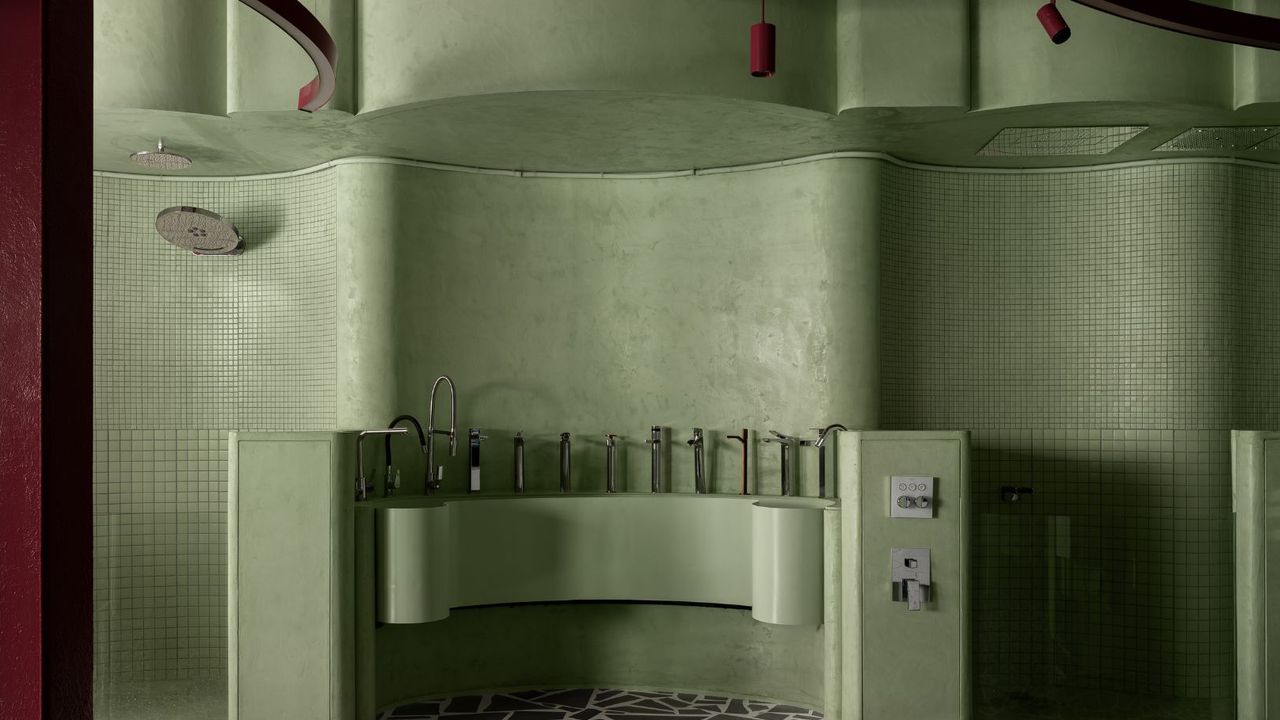
Green need not appear only as paint applied on walls. In fabric, it becomes an accent; in tiles, you can play with glossy and matte finishes; in stone, it can dominate an entire room. Materiality plays a huge role in defining the impact of the green used. “The Indian green marble gives a fantastic colour, but it has a lot of visual weight and character. I advise using it in moderation, in washrooms, kitchens and floorings. For more private spaces like bedrooms, I would instead opt for lighter, more sober greens, through soft furnishings, accent walls, wallpaper and upholstery,” explains Manzur.
Accent Or Immersion?
Sanchit Arora employs a warm, moody, jewel-toned olive green couch as a subtle accent in this intimate set-up.Avesh Gaur
For those hesitant about committing to an entirely green space, designers recommend introducing it in smaller, calibrated gestures. “Small design moves in green like a kitchen island, a backsplash, bold cabinetry, or a feature wall can become the hero of your space. We even love it in transitional zones like corridors, powder rooms, verandahs,” the duo at MuseLAB recommends.
Zara Eisa of Mumbai-based Zara Eisa Associates finds herself returning to sage green often. “It is subtle, elegant and timeless, and offers a gentle starting point for those hesitant about introducing too much colour. It almost behaves like a neutral,” she points out.
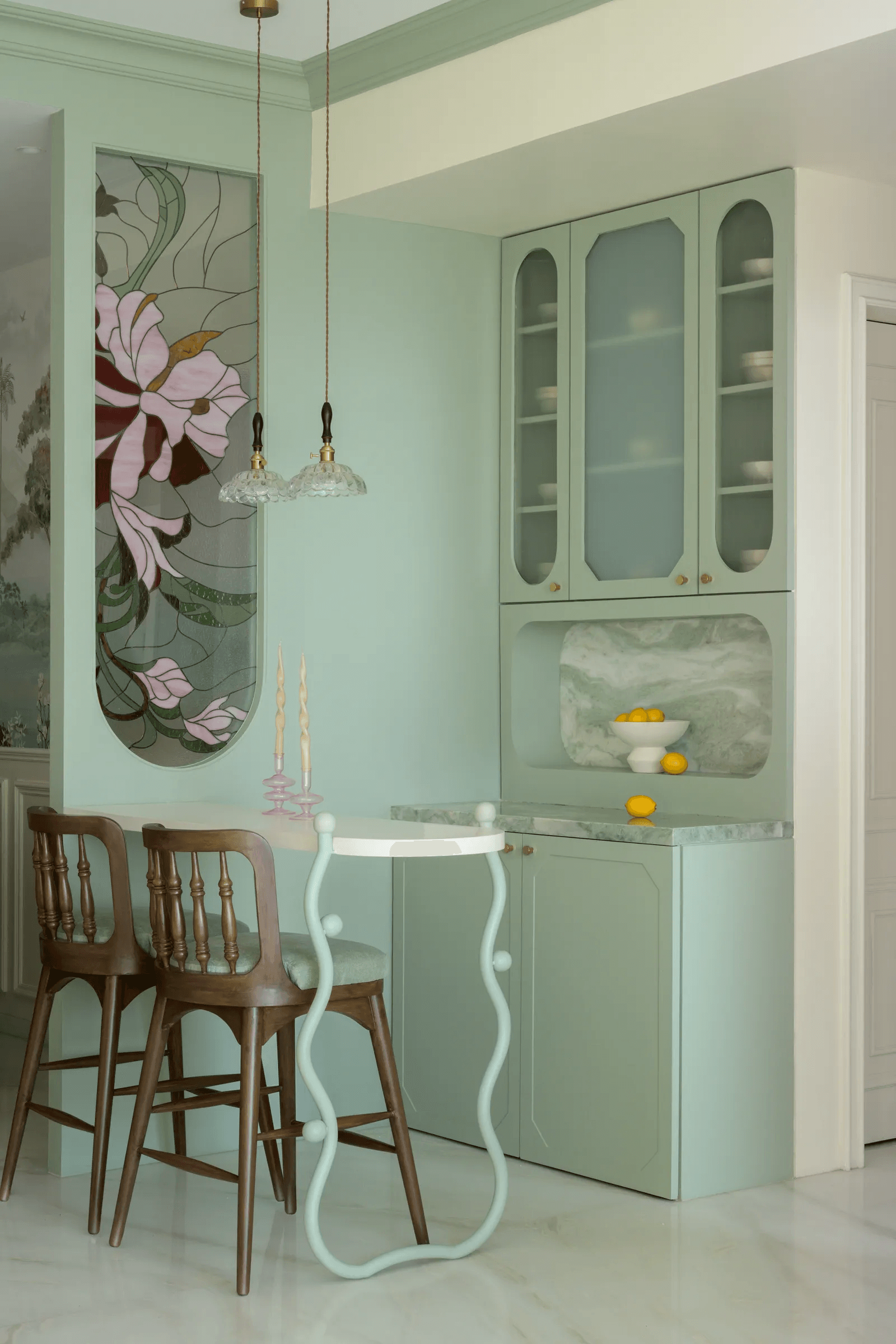
Gentle sage green tones take centre stage in this Mumbai home by Zara Eisa.Wabi Sabi Studio