

“I think those who read the history of previous incidents, whether intentional or accidental, are very aware of what we’re talking about,” Balkhy said. An estimated 110,000 to 210,000 people died from the U.S. nuclear attacks on the Japanese cities of Hiroshima and Nagasaki in 1945.
As the war continues, some senior figures have begun to speculate on the use of nuclear warheads. David Sacks, Trump’s AI adviser, said he worried about “Israel escalating the war by contemplating using a nuclear weapon.” Trump rubbished the suggestion, telling reporters: “Israel wouldn’t do that.”
The WHO is refreshing its staff on how to respond in the event of a nuclear incident, including providing advice to officials on the public health risks and what measures people should take to protect themselves.
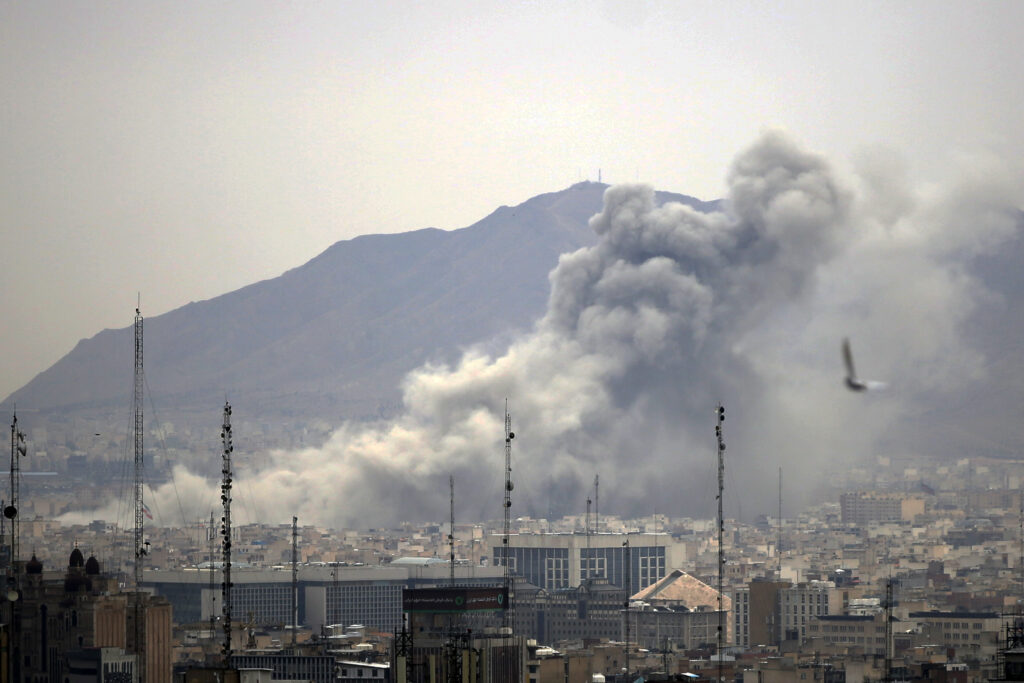 Smoke rises after airstrikes in Tehran, Iran on March 13, 2026. | Fatemeh Bahrami/Anadolu via Getty Images
Balkhy also warned there could be significant health impacts, such as respiratory illness, from the attacks on Iranian oil facilities earlier this month that have covered Tehran in smoke.
Attacks on health systems
Meanwhile, the WHO has continued to decry attacks on health infrastructure in the region.
The WHO has so far recorded 46 attacks on health workers in Iran and Lebanon, with 38 killed, since the war began on Feb. 28. Israel killed 14 health workers in Lebanon in two strikes on March 13, including an attack on the Bourj Qalaouiyeh primary health care center in the south of the country.