
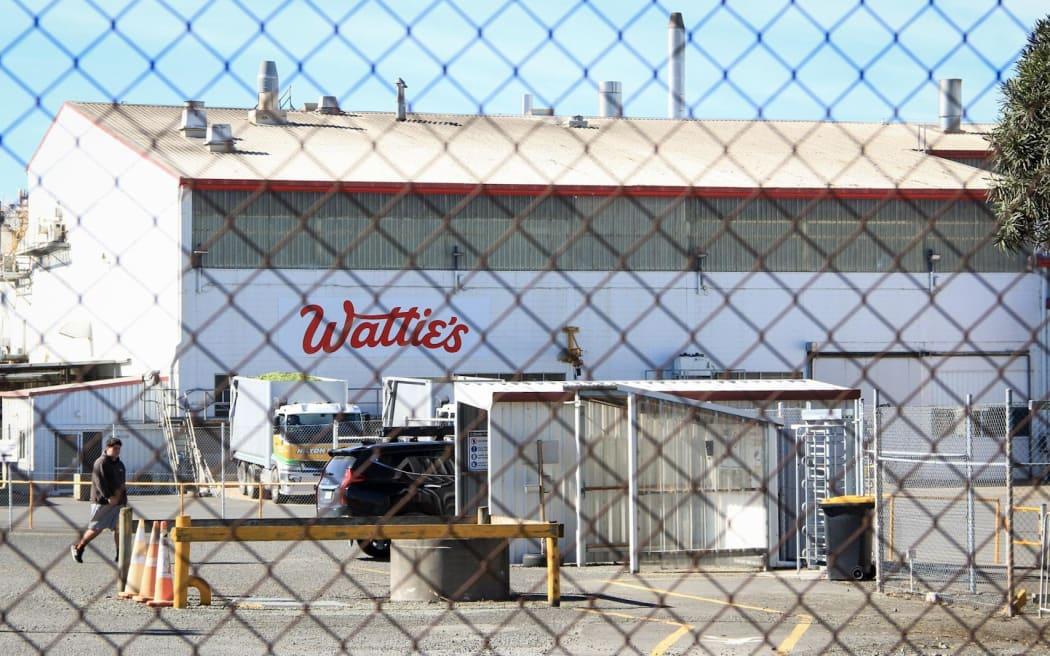
Wattie’s New Zealand’s proposal to stop producing frozen vegetables is expected to impact the country’s already-hurting vegetable growers and seed producers.
The seed industry was taking stock of what last week’s announcement by one of the country’s largest food producers, would mean for growers.
A well-known packet of Wattie’s frozen mixed vegetables of peas, carrots and corn for example, perhaps no more under new proposals.
Phased closures were also being proposed at its food factories in Christchurch, Auckland, and Dunedin, as well as its packing facility in Hastings.
Around 350 mostly full-time roles would be impacted, including vegetable growers – around 220 of them in Canterbury alone.
Heinz Wattie’s previously said the decision was not taken lightly, but was a necessary step to position the company for the future.
Industry group Seed and Grain New Zealand chief executive, Sarah Clark said if Wattie’s stopped contracting vegetables from the region, farmers would lose income from both the crop and the seed.
“The Wattie’s proposal is a really big blow for the arable sector as a whole,” she said.
“Several of our members supply pea seeds for sowing to Wattie’s, so the direct impact to our members, the seed companies, of their proposal is that there’ll be less demand for pea seed, and that in turn means fewer contracts for the farmers, the people who are growing those pea seed crops.”
Clark said the decision was “probably a kick in the guts” for growers after such a tough season marred by wet weather, causing root disease.
She said this was worsened by the rapidly increasing cost of fuel and fertiliser, due to the war in the Middle East.
“The sector’s having a tough time anyway.”
Clark said there were other pea varieties farmers could incorporate into their crop rotation to plug the pea gap.
“Farmers will be hit with a difficult decision about how they maintain their other crop rotations, without either the fresh pea crop that they had growing peas for Wattie’s or the crop of peas for seed production.
“So yeah, it’s a bit of a double whammy for the farmers, unfortunately.”
They’re heartbroken, gutted’
Forklift driver and E tū union delegate Kathy Perrin’s job was facing redundancy after more than 45 years at Wattie’s Hornby factory in Christchurch.
Everyone from young families juggling new babies and mortgages to workers who had been with the company for decades were facing redundancy, Perrin said.
Her colleagues were fearful of the tough job market and of what happened after the factory doors closed, she said.
Some had been there for several decades, and thought they would see out their working lives at Wattie’s.
The prospect of job hunting was daunting.
“My last interview for a job was in 1979.”
She wanted to see the government and union work alongside the company to support those who were made redundant with counselling, assistance with financial planning or help meeting rent or mortgage payments.
The union and local Wattie’s management were being supportive.
“This didn’t come from within New Zealand, it comes from outside – we’re globally owned.”
She said everyone was rallying around each other, but there was only so much the workers could do.
“They’re heartbroken, gutted.”
The closures came on the back of a wave of redundancies in the past year, including at Sealord, Griffins, Carter Holt Harvey and Smiths City amid economic downturn.
Company liquidations hit a 15-year-high last year.
‘I can’t make business stay in a district’
A “substantial” number of the suppliers were based in Canterbury’s Selwyn district, said mayor Lydia Gliddon.
She said the news had came as a surprise, and she been left with more questions than answers.
There was little the council could do to sway Wattie’s, but Gliddon said she would work to get more details.
“I can’t make business stay in a district, but I think it’s about advocacy, and connecting in and seeing actually what’s going on, trying to get some clarity about those contracts and what happens to them.”
Selwyn MP and associate minister of agriculture Nicola Grigg said the government has been focused on reducing unnecessary red tape and regulation for growers and farmers.
The decision would come as a blow for growers and distributors who were already grappling with rising fuel prices due to the war in the Middle East, and who had experienced losses in recent storms.
Wattie’s was founded in 1934 in Hawke’s Bay, starting with jams and expanding to fruits and vegetables.
H.J. Heinz Company, as it was known at the time, purchased the company in 1992.
In September 2025, Wattie’s reduced its peach production, cutting the contracts of around 20 Hawke’s Bay suppliers in the face of what it claimed was dumping from cheaper markets.
The Minister of Commerce confirmed that last month, after an investigation found Chinese company J&G International Co. Ltd had been dumping peaches, causing “material injury to the New Zealand industry.”
The company also announced in 2025 that it would also source fewer tomatoes, beetroot and corn from local growers due to a drop in demand.
Growers facing uncertainty
Key vegetable growing region Canterbury was also a seed powerhouse, producing more than half the world’s supply of hybrid radish and 40 percent of the global carrot seed supply, exporting to more than 60 countries.
Horticulture New Zealand chief executive Kate Scott said growers supplying Wattie’s now faced a great deal of uncertainty.
“This is tough news for the New Zealand vegetable sector and for the consumers who rely on locally grown and processed food,” she said.
“While we recognise this is a decision made within a global business, the consequences are very real here at home.”
Scott said growers could not keep producing crops without reliable markets for them, which over time would result in fewer vegetables being grown and processed in New Zealand.
“That would be a concerning direction for New Zealand. In a world where supply chains are increasingly disrupted and freight costs fluctuate; it makes sense to maintain strong domestic food production.”
Consultation on Wattie’s proposals will close next Wednesday on March 25th.
New proposals follow earlier cuts to crops
The company owned by American food giant Kraft Heinz decided to slash some of its crop intake following a review last year, impacting canned peach production, and corn, beetroot, tomatoes.
In recent years, the company made complaints about reports of cheaper imports being dumped into the New Zealand market to the Ministry of Business, Innovation and Employment (MBIE).
MBIE carried out a number of investigations over the past decade into dumping claims of various products, including peach products from countries like Greece, Spain, South Africa and China, and potato fries.
Investigations could result in duties being applied, which happened for preserved peaches from Spain in 2022 and canned peaches from Greece in 2021, among others.
Owner Kraft Heinz also recently rolled back earlier proposals to split up the business, which it told RNZ in September was unrelated to the decision to reduce peach production.