
Cover of “From the Ground Up: A strategy to unlock New Zealand’s geothermal potential”
The Government of New Zealand has launched a new geothermal strategy aiming for doubling geothermal output by 2040, among other goals.
The Government of New Zealand has released a new national strategy that sets out a long-term practical action plan to support the sustainable growth of the country’s geothermal sector. Among the goals of the strategy is to double geothermal energy use in New Zealand, both for power and heat, by 2040.
Click here to view the full document, “From the Ground Up: A strategy to unlock New Zealand’s geothermal potential.”
The strategy was launched by Resources Minister Shane Jones in Rotorua at an event attended by industry stakeholders and media. The final document follows consultation on a draft that was presented in 2025, with more emphasis on the cultural and economic importance of getoerhaml resources to tangata whenua and commitment to ongoing partnerships in development, protection, and economic participation.
Accelerating and diversifying geothermal deployment
Initiated by a Crown-led exploration drilling programme from 1949 to 1986, New Zealand is globally recognized as one of the pioneering countries in geothermal development. The Wairakei geothermal power station was the second in the world to be operational in 1958. Today, New Zealand holds the fifth spot in terms of installed geothermal power generation capacity at 1259 MWe as of the end of 2025.
However, the strategy recognizes that geothermal exploration in New Zealand has stagnated since the initial drilling efforts, impeded by high upfront costs and fragmented access to geothermal data. There is also a need to increase awareness and provide regulatory frameworks for low- and medium-heat applications.
Thus, the strategy sets out five central goals to deliver on its vision and desired outcomes:
Improve access to geothermal data and funding to enable development
Ensure regulatory and system settings are fit-for-purpose
Advance knowledge and uptake of existing geothermal technologies and geoheat opportunities
Enable place-based geothermal clusters
Drive geothermal science, research and innovation, including next-generation technologies
The document provides sub-objectives for each of the goals, with target timelines and milestones.
“Geothermal has been used for generations to power our regions and industries. This strategy provides momentum by clearing barriers, speeding up development, giving investors confidence and giving developers a green light to get on with it,” said the Minister during the launch event.
More than electricity generation
The strategy highlights the potential of geothermal energy in New Zealand beyond power generation. The term ‘geoheat’ captures the wider applications of geothermal heat in a variety of applications including horticulture, bathing, aquaculture, and heating for water and buildings. This also covers the use of geothermal heat and steam for industrial processes, such as tissue manufacturing in Kawerau and timber drying in Taupo.
Efforts are already underway to help grow this sector. One initiative under this category is the Geothermal Food Systems project led by Upflow in collaboration with Tauhara North No. 2 Trust. This initiative sims to integrate geothermal heat, electricity, and CO2 capture to create a self-sufficient growing environment for glasshouses. The project partners are moving towards a demonstration-scale deployment to validate the technology package.
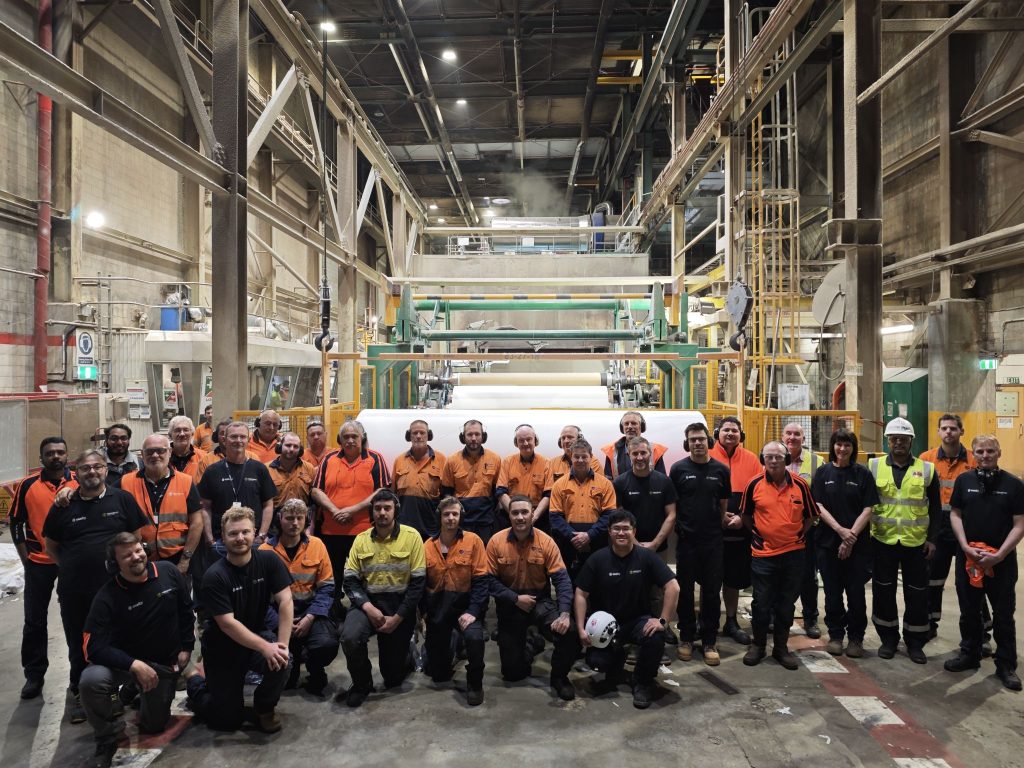 The commissioning team at the Kawerau paper mill facility of Essity in New Zealand (source: Essity)
In 2025, Earth Sciences New Zealand, Vegetables NZ, Tomatoes NZ and GeoExchange NZ announced work on a web-based tool that will help greenhouse growers in New Zealand understand and evaluate the potential to transition to geothermal heating. The future online mapping and information tool will draw on existing data and knowledge about low-temperature geothermal resource availability in the greater Auckland, Northern Waikato, and Bay of Plenty regions.
The potential for geoheat applications is also considered in the geothermal strategy, recognizing that current regulatory frameworks have only been designed for conventional geothermal use. Thus, the Government is aiming to do feasibility assessments and demonstration projects to provide businesses with the tools and confidence to adopt geoheat solutions.
Learning from the past
The document acknowledges the deleterious effects of geothermal development in its early years in New Zealand. Depletion of geysers and other surface geothermal features has happened in both Wairakei and Rotoria, mainly due to over-extraction of geothermal fluids in the 1960s and 1970s. Through the years, regional councils have worked with mautaranga to create strong systems to support the sustainable development of geothermal resources.
Partnering with tangata whenua is an important part of the geothermal strategy, ensuring that Maori development and priorities are brought to the forefront. Thus, one of the key goals of the strategy is to recognize the aspirations of iwi and hapu for sustainable geothermal management and use the Treaty of Waitangi as the guiding principle in ensuring that Maori values are upheld.
Source: Ministry of Business, Innovation, and Employment and Beehive