
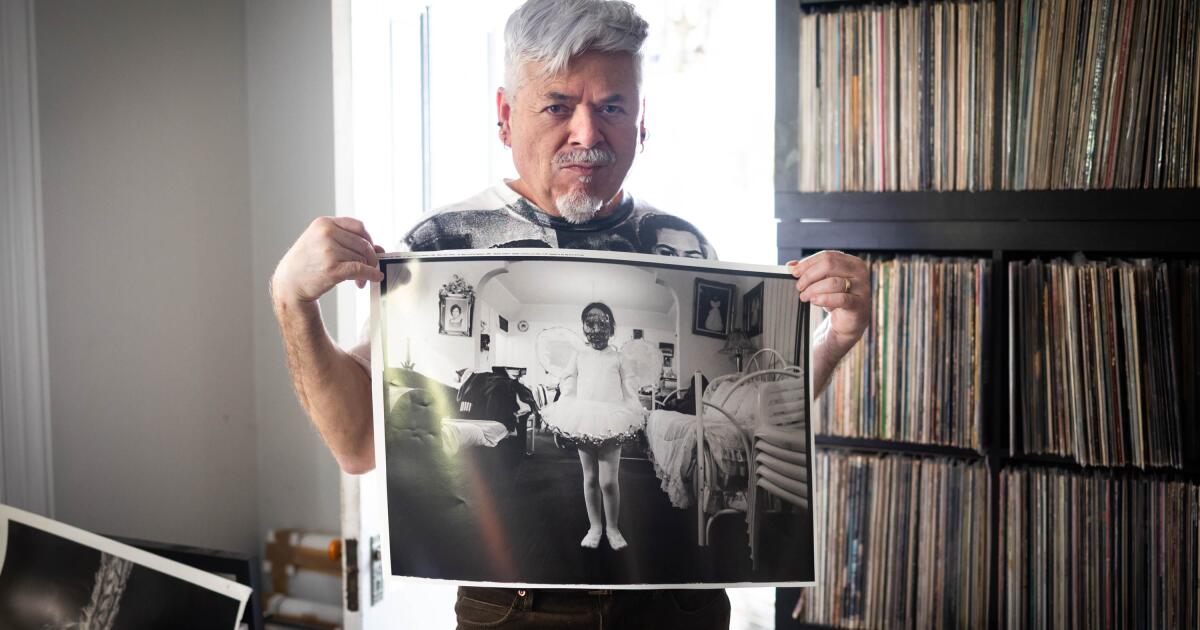
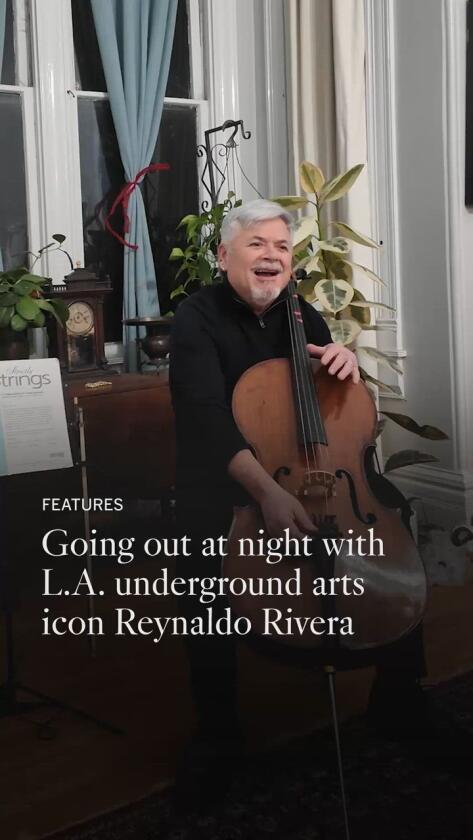
“It is like throwing out your own sex tape,” remarks artist Reynaldo Rivera about his new photography book “Propriedad Privada.”
We’re sitting on his living room couch, waiting for artist Emma Camille Barreto (his “newest muse”) to arrive for a night shoot. She’s running late, so Rivera and I settle into his cavernous Victorian home to speak about how he combed through decades of his archive to create the book. If his living room offers any clues, the task must have been challenging: hundreds, perhaps thousands, of his images hang on every wall and spill across many surfaces. Recently released by the boundary-pushing L.A.-based publisher Semiotext(e), “Propriedad Privada” (“Private Property”) compiles Rivera’s deeply private prints of lovers, friends and strangers. Dubbed his “Blue Series,” the intimate body of work examines the ephemeral nature of sex, desire and love.
Share via Close extra sharing options
“Guanajuato” (ca. 1997) shows a thin, boyish young man with only a towel wrapped around narrow hips as he flexes his biceps before a bedroom mirror. “Bianco, Reynaldo, Echo Park” (ca. 1995) plays with double exposure, presenting ghostly images of two men in bed. The room’s furniture remains eerily static, while their bodies’ movements leave traces imprinted around the frame.
The poetry and power of “Propriedad Privada” live in its thrilling abandon and constant ambiguity: It’s often unclear if Rivera and his subjects are friends, lovers or total strangers, such as in his portrait “Richard, downtown Los Angeles” (ca. 2023). Lit by street lights, the image features a striking man in a cowboy hat blowing bubblegum with a loose belt buckle. For Rivera, selecting the photos — many in beds, bathrooms and in the middle of sexual acts — wasn’t easy. “It’s like an exorcism for all this fear and body shame that I grew up with,” he says.
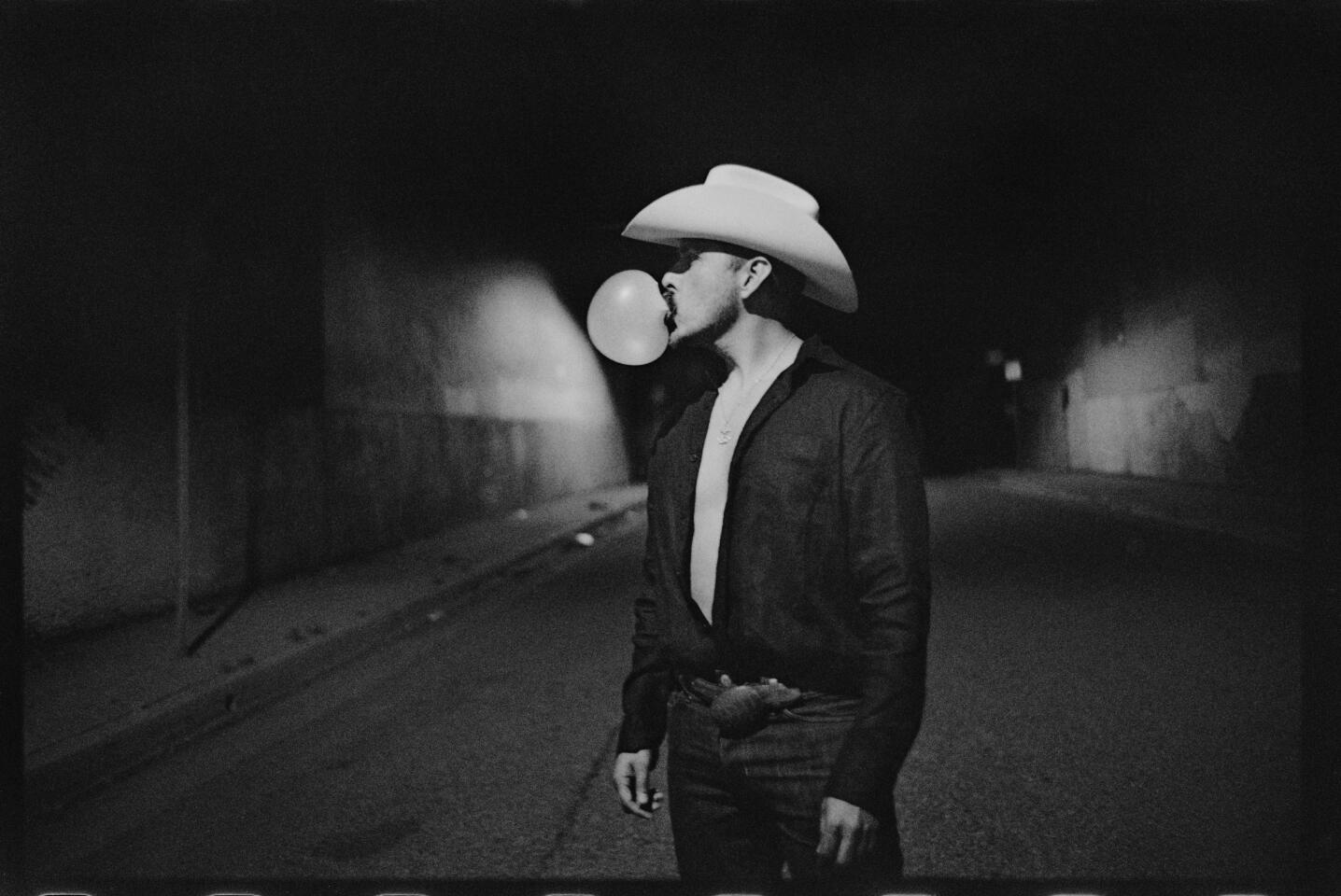
1/3
Reynaldo Rivera — “Richard, downtown Los Angeles,” 2023. (Semiotext(e))
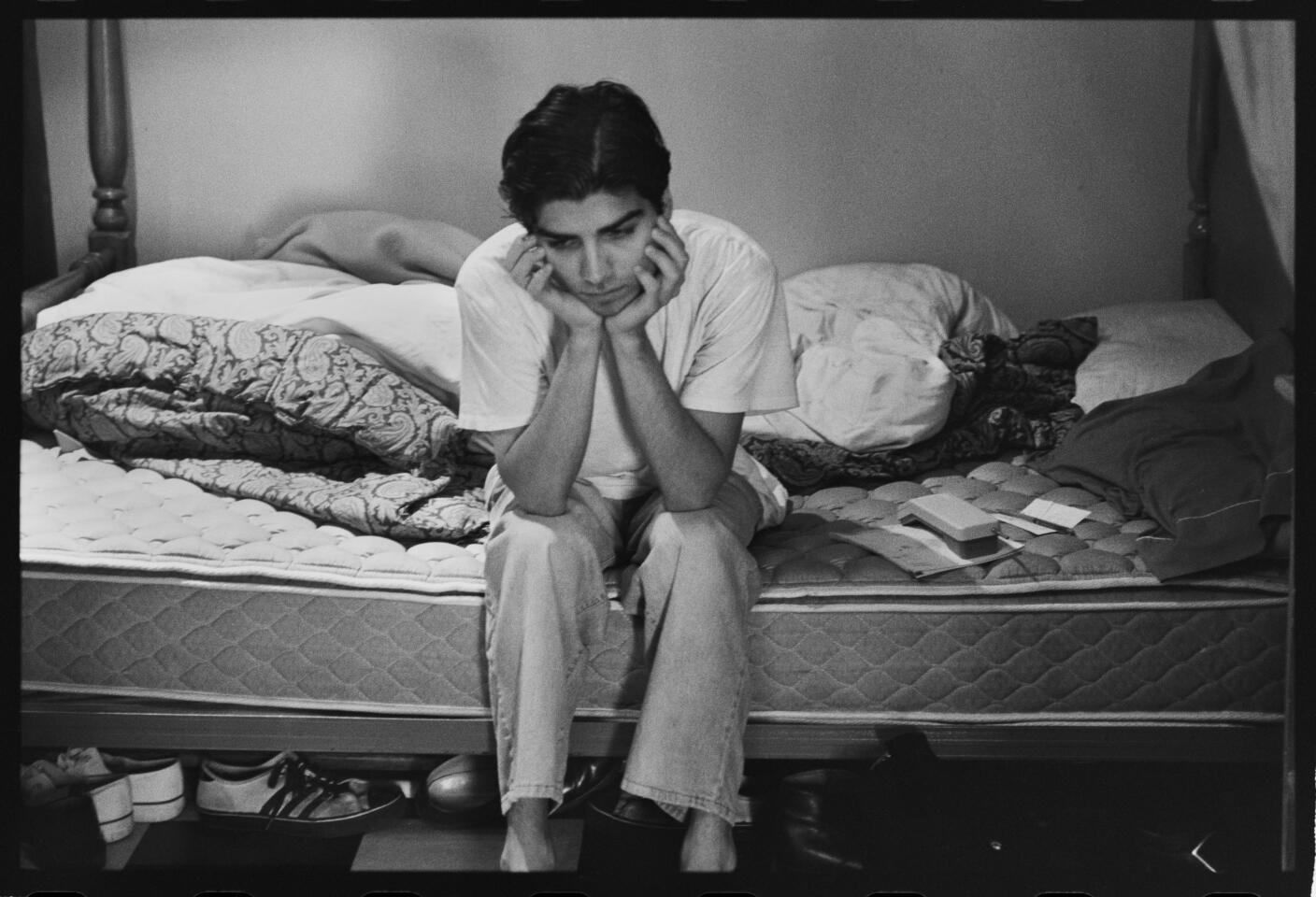
2/3
Reynaldo Rivera — “Bianco, Echo Park,” ca. 1993. (Semiotext(e))
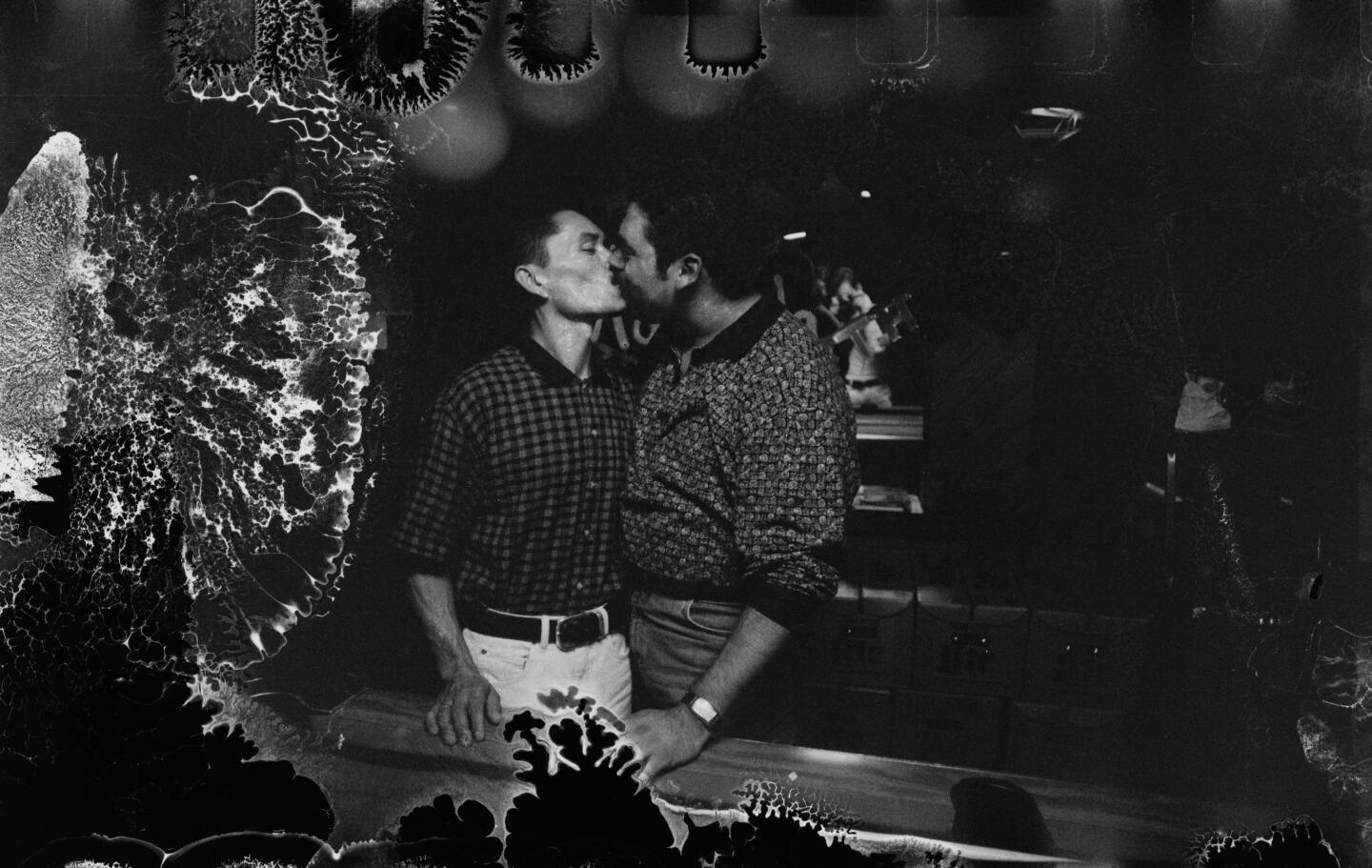
3/3
Reynaldo Rivera — “Patrons, Little Joy,” 1996. (Semiotext(e))
Reynaldo picks up a stack of postcard-sized black-and-white prints. “I’m the one that always ends up with everyone’s photos,” Rivera says. These aren’t his photos — they’re family mementos. He shuffles through them, reminiscing about his parents, siblings and cousins. Unlike some other major artists, Rivera never took any formal art classes, let alone attended an elite MFA program. His working class Mexican family, who moved often between Baja California, L.A., Pasadena and Santa Ana, “didn’t go to school.” As a teenager in the late ‘70s, Rivera often ditched classes. While skipping school to watch TV one afternoon, he was bewitched by a Hollywood Presents broadcast of a classic silent film.
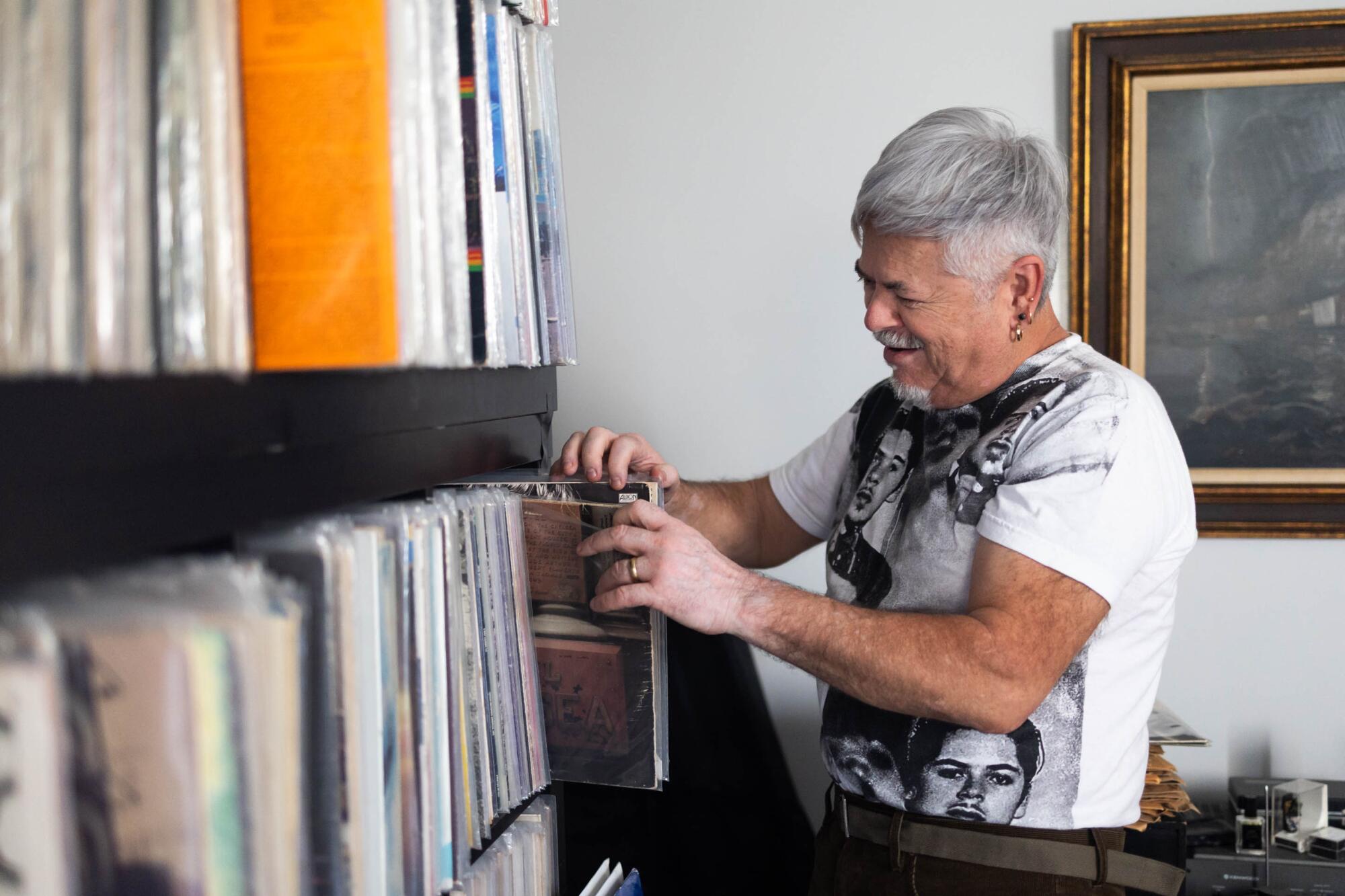
Rivera says selecting photos for his book wasn’t easy. “It’s like an exorcism for all this fear and body shame that I grew up with,” he explains.
(Brian Feinzimer / For The Times)
“I got into photography because of the movies,” he says. “I discovered silent movies … and I became a true fanatic. And so of course I wanted to do that.” Similar to how “Propriedad Privada” layers romance and longing, and hope and desperation, Rivera’s reasons for picking up a camera were complex. “I moved around a lot with my dad and it was a very lonely existence,” he recalls of his youth. “Photography allowed me to take all these people with me everywhere.”
Old Hollywood still haunts Rivera’s work. He shoots at night, using the moon and L.A.’s streetlamps to light his subjects. Despite our digital era, he remains committed to analog, avoids flashes and develops the negatives by hand. Rather than editing out imperfections, Rivera embraces the dust particles and light leaks that come with shooting on film. The resulting images emerge shadowy and noir-ish. They echo Orson Welles’ 1958 thriller “Touch of Evil” while capturing the subject’s tenderness and ecstasy. While noirs, of course, critique the crumbling American Dream, Rivera slyly comments on politics.
“I feel that my whole life, without thinking about it, has been a political act,” he says. “Our existence in itself, we don’t have to do anything, it’s already political.”
And though Rivera is perhaps best known for shooting L.A.’s queer Latino underground, he elides any simplistic categorizations. When I bring up today’s fraught political climate and the ICE raids terrorizing immigrants, Rivera seems unfazed.
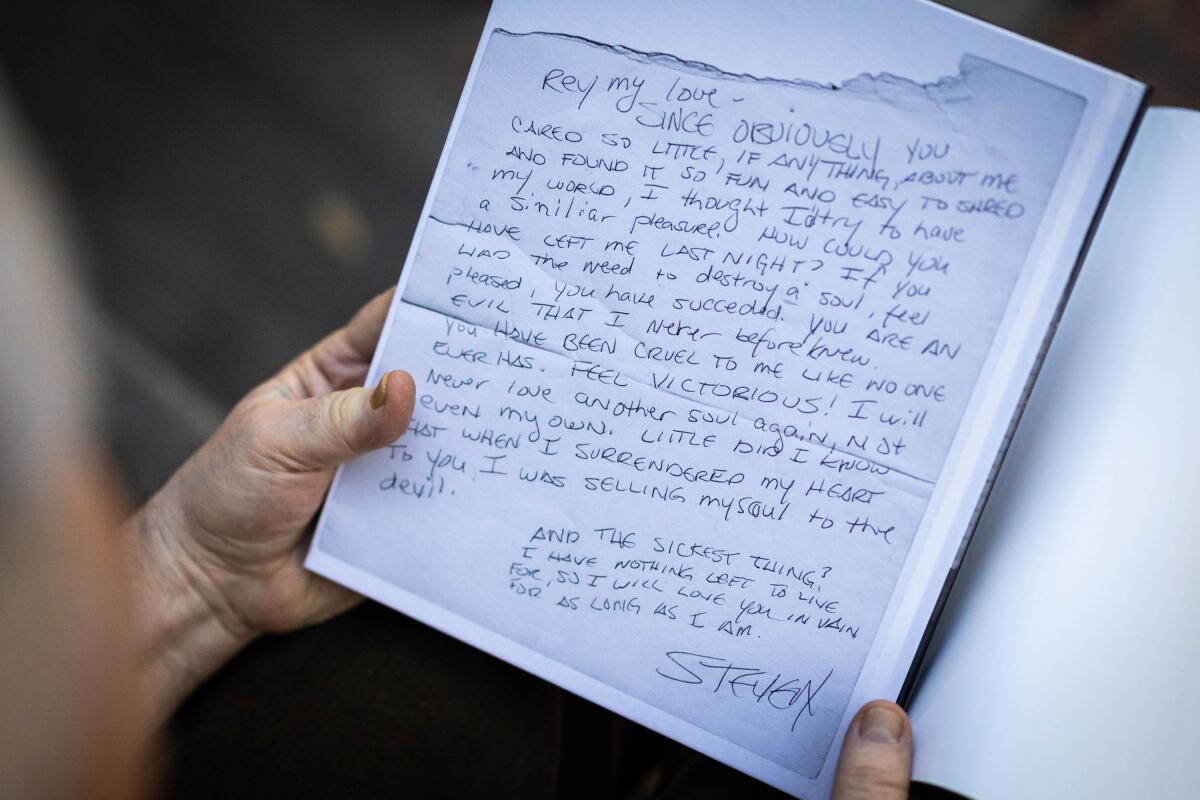
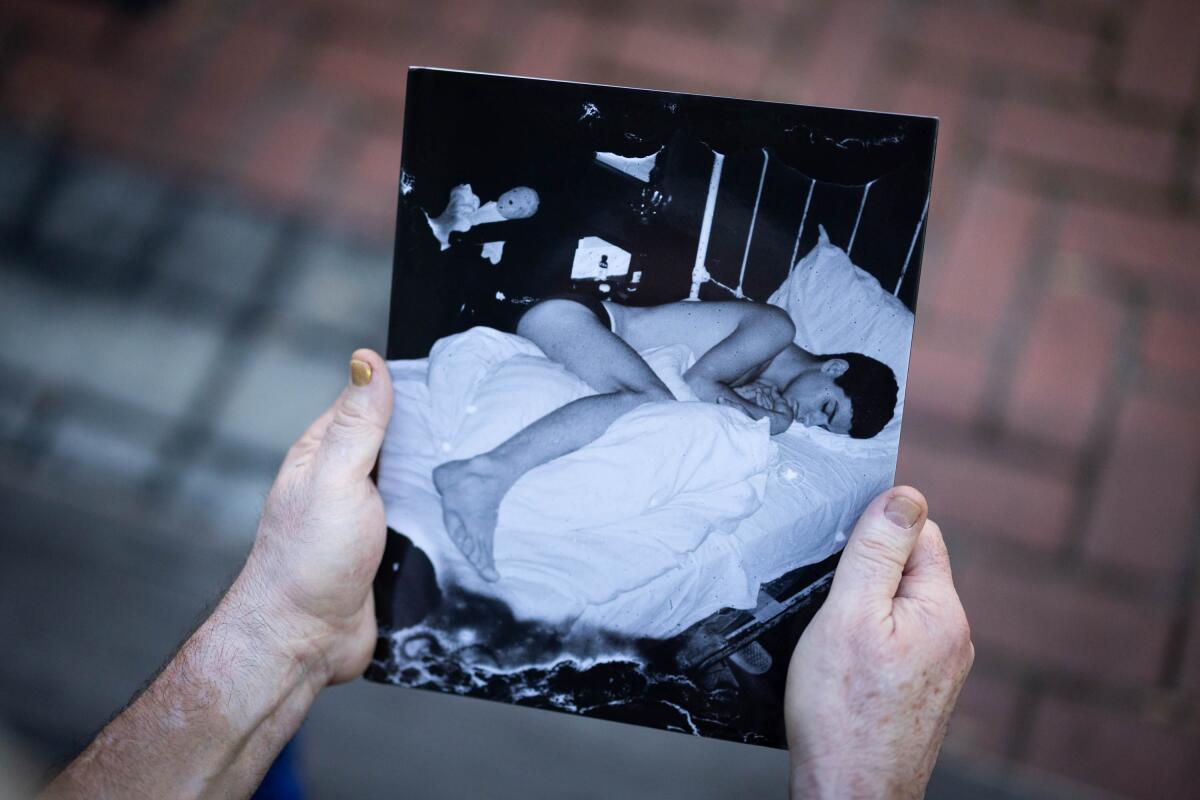
Rivera holds his new book, “Propiedad Privada.” (Brian Feinzimer / For The Times)
“You know what? The song remains the same,” he says. “They’re not doing anything that we haven’t experienced at some point.” When I press about the role of artists during this moment, he brushes aside the question: “When it comes to life, honey, I am nobody’s role model.”
That unsentimental spirit has always drawn me to Rivera’s work. Across all the faces and flesh in “Propriedad Privada,” a mesmerizing and messy humanity surfaces. That transparency evolves out of Rivera’s role. He stars in many of the photos, sometimes in self-portraits, other times having sex with his husband, and in others as a more slippery presence, fluidly morphing from photographer to participant. Just don’t call him a documentarian.
“I’m against saying ‘I document,’ I feel like that’s so clinical,” he says. “I never went to things to just take photos. I happened to be places. I was usually part of whatever was going on.”
In that sense, his art shares a spiritual DNA with autofiction, a literary style immortalized by many writers his publisher Semiotext(e) puts out. The book includes provocative texts from Semiotext(e) contributors like Chris Kraus, Hedi El Kholti, Abdellah Taïa, Lauren Mackler and French novelist Constance Debré, among others.
Debré writes: “First times are the most interesting philosophically speaking.” These stories and essays, which also circle the erotic, complicate the meanings of Rivera’s “Blue Series,” suggesting that who and how we love say as much about the objects of our desires as about ourselves.
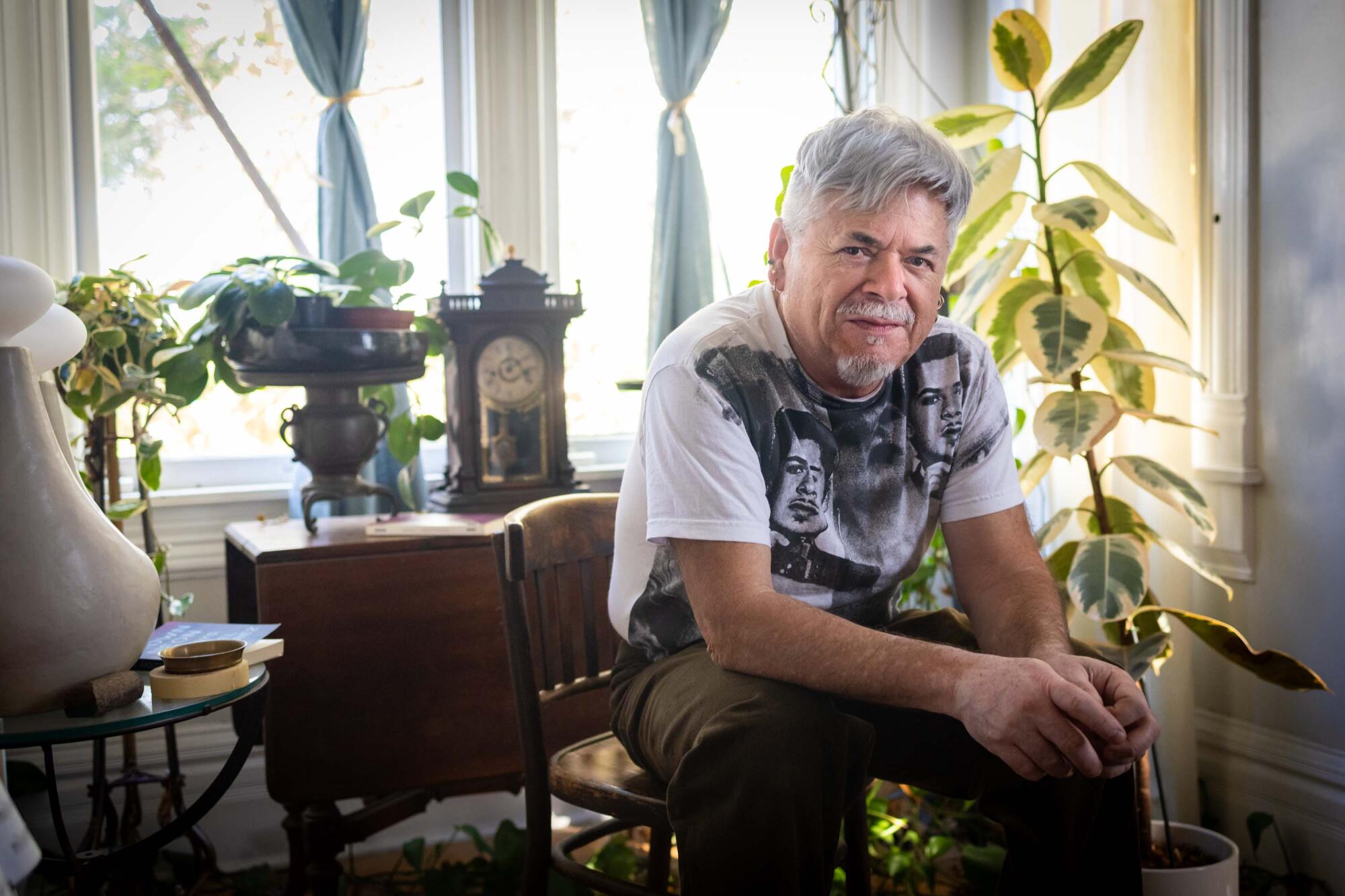
Rivera doesn’t see himself as a documentarian. “I never went to things to just take photos,” he says. “I happened to be places. I was usually part of whatever was going on.”
(Brian Feinzimer / For The Times)
Finally, the much-awaited Barreto arrives and Rivera drives us into Chinatown’s industrial heart. We park on an abandoned street and Rivera directs Barreto to stand in the middle of the intersection. As cars roll by, the streetlamp casts a pale light across Barreto’s face. Rivera’s shutter starts snapping. With my phone I film the two at work, when it occurs to me that my camera’s light may be ruining Rivera’s shot. I tell him to let me know if I’m getting in the way.
“Don’t worry mija,” he reassures me, winding more film into his camera. “Your light or shadows will also just become part of the finished piece.”
Loren is the founding editor of the art and literary conceptual ‘tabloid’ On The Rag and curator of the reading series Casual Encountersz.