
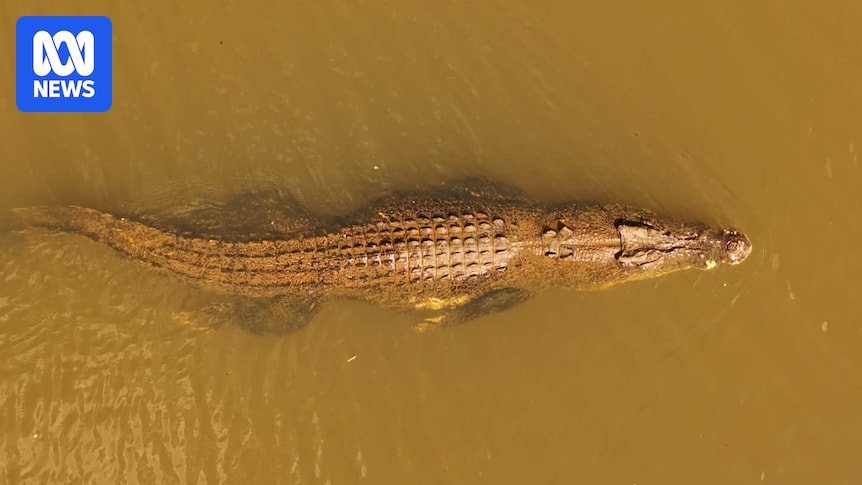
When a massive Queensland crocodile known as Old Faithful was transferred to Australia Zoo last November, the Irwin-owned park announced it was proud to become the animal’s “forever home”, and the state government welcomed the move as a public safety success story.
But a 7.30 investigation has raised questions about the conduct of the state’s crocodile catchers, including how the decision was made to capture the culturally significant animal and whether they followed their own laws.
Traditional owners in Cape York, who should have been consulted about his removal, maintain Old Faithful’s capture was a “wrongful arrest” carried out by “cowboys”.
Chief among their concerns are allegations that they were misled and excluded from key decisions affecting culture and Country. So much so that lawyers from the Environmental Defenders Office are considering lodging a human rights complaint.
Loading…”[The government] treat us like mushrooms,” says Rinyirru traditional owner Alwyn Lyall. “Keep you in the dark and feed you bullshit.”
Months after the crocodile’s removal, another major question remains unanswered.
Neither the environment department nor Australia Zoo will confirm whether Old Faithful is still alive.
Wild river to industrial estate
The fences loom above head height. Barbed wire twists along their peak. It is not a prison, though Mr Lyall says it feels like one.
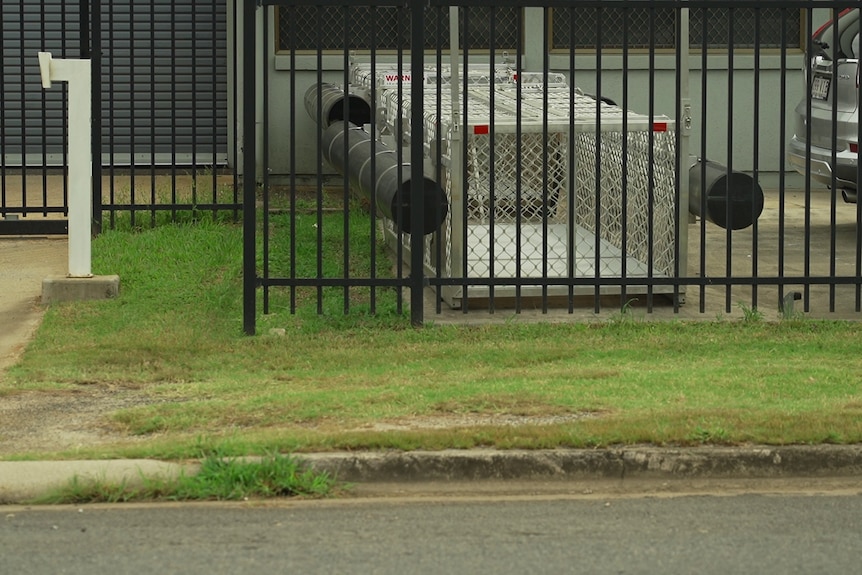
The Cairns depot where Old Faithful had been held. (ABC News: Tom Hartley)
“This is where the thieves live,” he tells 7.30.
Through the metal gates of the government crocodile holding facility in a dusty Cairns industrial estate, Mr Lyall catches a glimpse of stacked traps and concrete pens. It was here, he says, that Old Faithful was held for nearly two months in a shallow concrete pond.
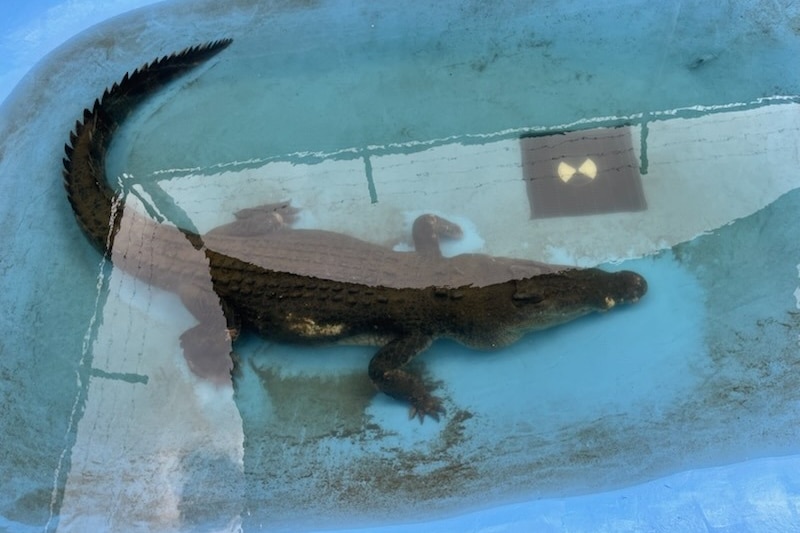
This photo of Old Faithful in the Cairns Facility was released by the Environment Department, DETSI. (Supplied.)
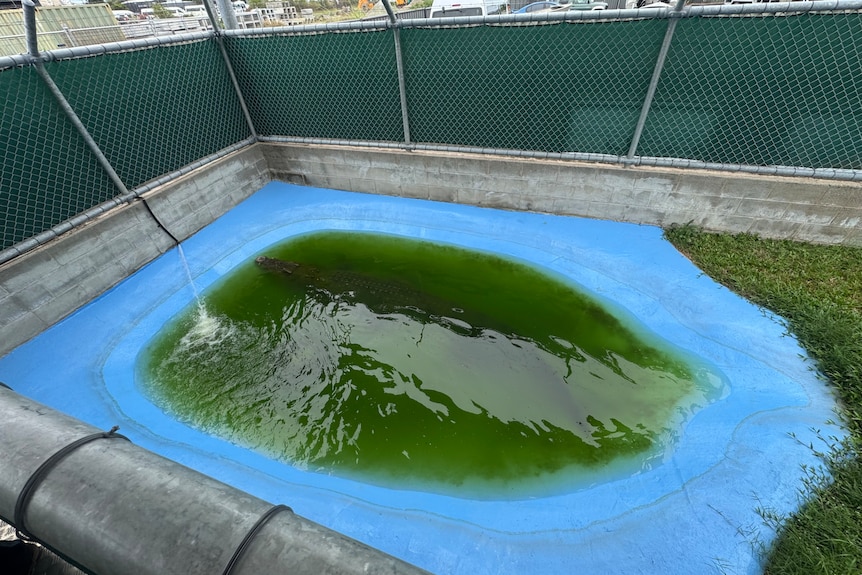
This was the state of the pond when Alwyn Lyall visited in early October 2025. (Supplied)
The “thieves,” Mr Lyall says, are the government’s crocodile catchers. Officers he once worked alongside but no longer trusts.
Old Faithful was a familiar presence along the Normanby River system in Cape York, once even a TV curiosity, featured in a Steve Irwin documentary.
A 4.5-metre saltwater giant, estimated to be more than 80 years old, is also classified as an “icon crocodile” under Queensland’s crocodile management plan.
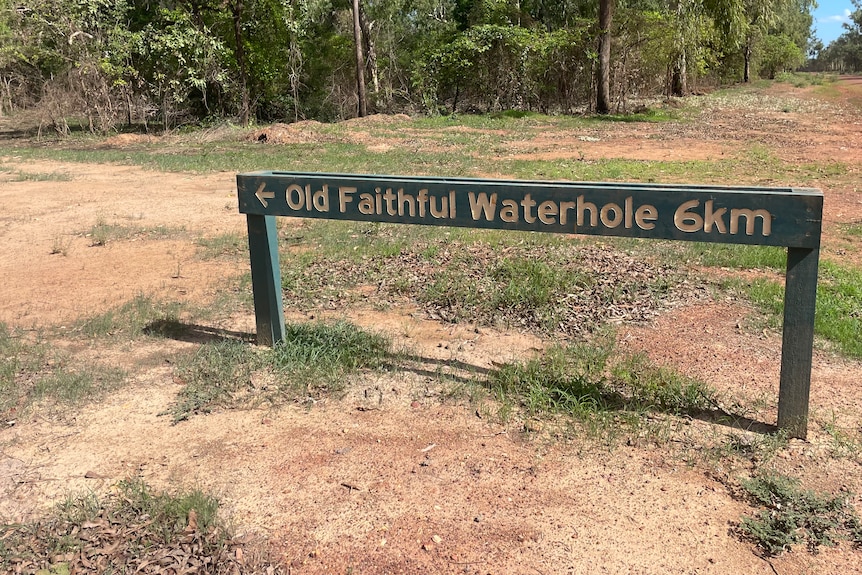
Old Faithful was the apex male of his namesake waterhole in Far North Queensland. (Supplied: Alwyn Lyall)
Under those rules, decisions about a crocodile’s fate are meant to involve consultation with traditional owners.
“As a totemic animal, that crocodile is a grandfather, a brother, and a father and a son to many people in my community,” Mr Lyall says.
“So when you take an animal like that, who is 80 years-plus, out of his home, it is very hard for some people to put it aside, or forget that animal.”
The croc snatch
Mr Lyall says he received a call last September detailing public concerns about aggressive crocodiles at Lakefield National Park raised by wildlife officers from the state’s environment department.
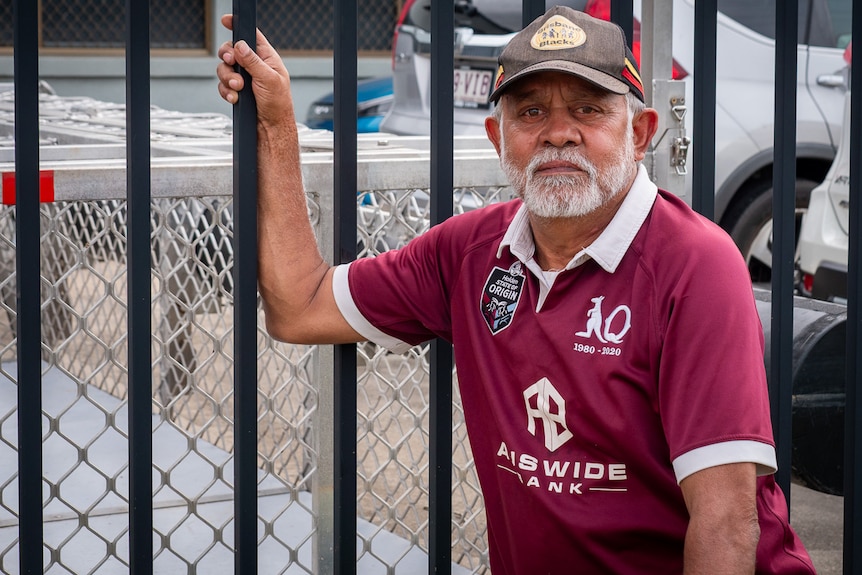
Alwyn Lyall has been running a long campaign for answers. (Supplied)
“I was under the impression someone’s life was in immediate danger,” he says, so he verbally agreed that any “problem” animal should be removed.
Days later, he discovered two crocodiles had been taken from the river system, after they had already been trapped and transported to the Cairns depot.
Invited to inspect them, Mr Lyall says what he saw raised immediate doubts.
It was Old Faithful, confined in a concrete enclosure.
“I remember thinking he looked big, fat and healthy,” Mr Lyall says.
Loading…
Nearby was another crocodile taken from the same system, a 3.2 metre saltie that Mr Lyall says appeared emaciated and missing part of its foot and tail.
“I had no doubt in my mind that would’ve been the problem croc,” he tells 7.30.
“If it was struggling to hunt, it makes sense it might’ve gone after someone’s fish.”
Mr Lyall then began asking questions. Why had the officers taken both animals? Which crocodile had actually been reported? And where was the evidence?
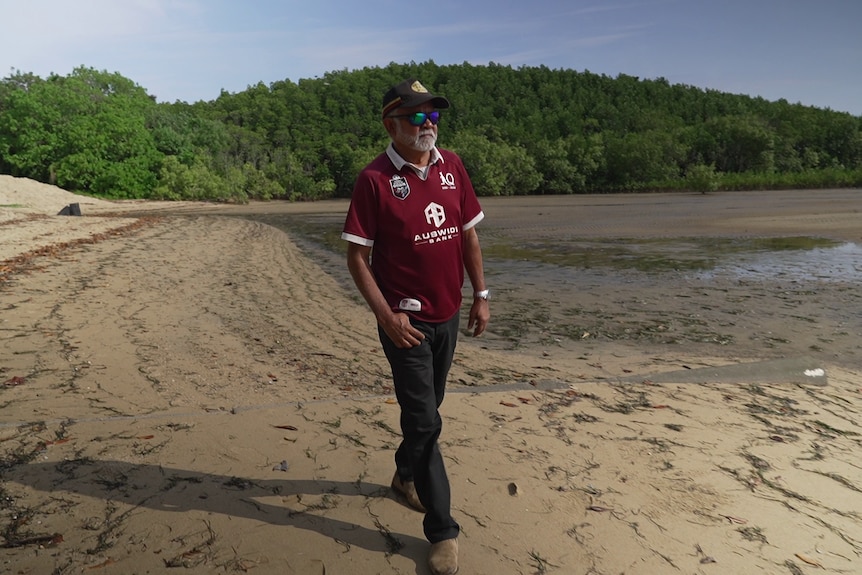
Alwyn Lyall in Far North Queensland. (ABC News: Brendan Mounter.)
He wrote to the Department of Environment, Tourism, Science and Innovation (DETSI) asking for incident reports, photos, “anything to justify the removal”. He says he got no reply.
“They just stopped talking to us,” he says.
Frustrated, Mr Lyall took his concerns to the media and sought help from the advocacy group C.R.O.C., which later engaged the Environmental Defenders Office to examine the decision.
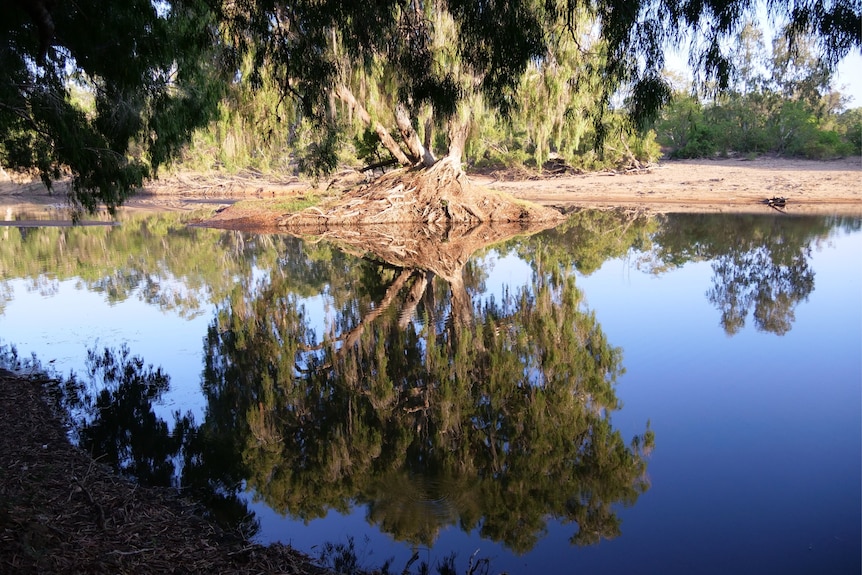
The area where Old Faithful lived before being captured. (Supplied: CROC)
As the weeks passed, his concerns deepened.
Under the joint management agreement for Rinyirru National Park, the government is required to consult with the traditional owners on decisions involving culturally significant animals.
Queensland’s Human Rights Act also requires public officials to consider Aboriginal cultural rights when making decisions that may limit them.
Mr Lyall believes those obligations were ignored as the decision to remove Old Faithful from the wild was made three days before the department made limited contact by email.
Australia Zoo goes quiet
He requested that if Old Faithful had to be rehomed, he should go to a wildlife sanctuary in Babinda, closer to Country. Mr Lyall says he never received a response to that request.
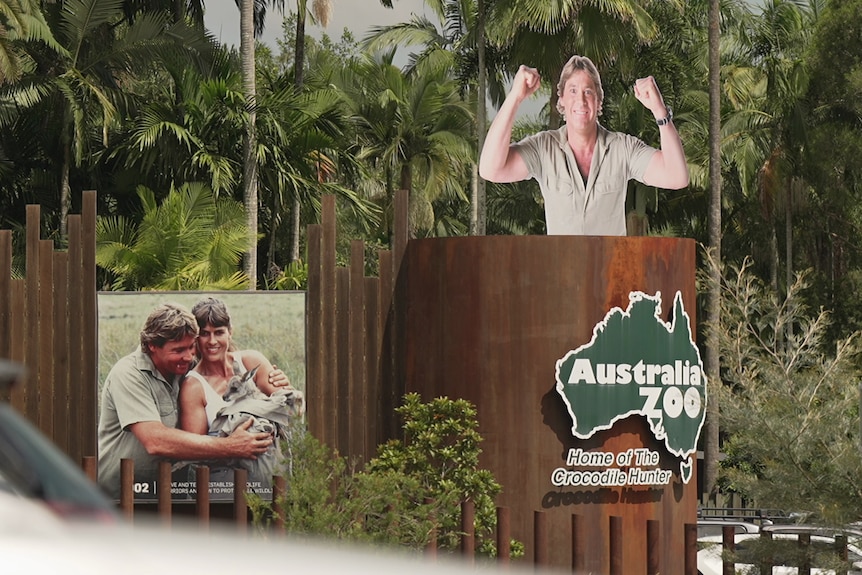
Old Faithful was transferred to Australia Zoo last November. (ABC News: Tom Hartley)
It wasn’t until he opened the Cairns Post one morning that he learned of Old Faithful’s fate in an online article, with Australia Zoo’s social media post confirming that he had been moved to Beerwah Zoo, more than 1,700 kilometres away.
There had been no phone call. No email.
The department later said the zoo was “the best-suited facility to accept and care for a crocodile of this size and significance,” and that relocating Old Faithful would support wildlife conservation and public education.
Since the relocation, Mr Lyall says he has repeatedly asked both the department and Australia Zoo about the crocodile’s condition.
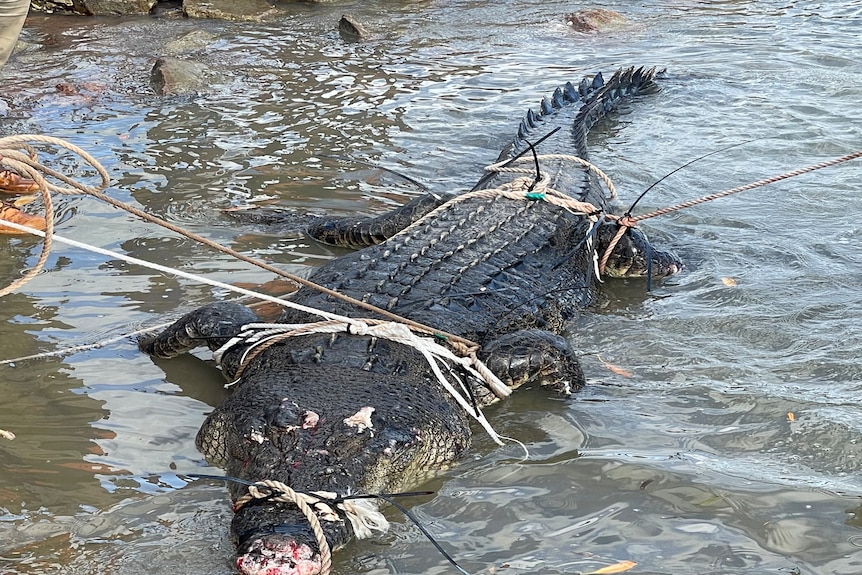
Traditional owners claim this crocodile at Napranum was a totem and that the department destroyed it without consent. (Supplied: CROC)
Loading Instagram content
7.30 asked both the department and zoo for updates. Neither responded.
Months later, Mr Lyall does not know if his community’s totem is alive.
The uncertainty worries him. There have been cases in Queensland where crocodiles have died following long-distance transfers.
“All of their actions [regarding Old Faithful] have been done in the dark or behind closed doors, without traditional owner engagement or consultation,” he says.
“We want to highlight that process — the way government keeps traditional owners out of the picture.”
Inconclusive evidence?
Seven weeks after Mr Lyall first requested evidence, and only after legal intervention from the Environmental Defenders Office, the department finally issued a four-page statement of reasons, dated November 4, 2025.
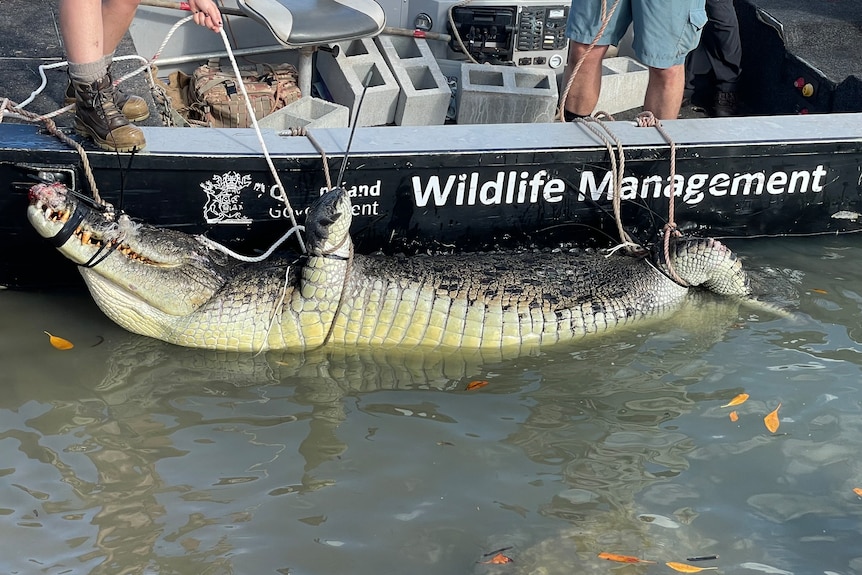
This culturally significant crocodile at Napranum was killed in 2024. (Supplied CROC)
It described a series of alleged incidents involving a large crocodile at Rinyirru, including reports of an animal “lunging up the bank at individuals with predatory intent,” “headbutting vessels,” and “biting outboard motors”.
The department concluded the crocodile posed a threat to public safety and should be removed.
“The statement of reasons can say anything, but without clear evidence, photos, video or documented reports, confirming that the behaviour being described was specifically Old Faithful and not another crocodile, it’s very difficult to accept those claims at face value,” Amanda French, from the Community Representation of Crocodiles, told 7.30.
The advocacy group became involved after receiving information from community sources suggesting the crocodile had been removed from the national park without proper engagement with traditional owners.
“When senior representatives of the Queensland government tell on-the-ground Indigenous rangers that an animal must be removed because it is a safety risk, that is not consultation,” Ms French says.
“Consultation means sitting down together, on Country, presenting the evidence, and working through the options collectively.”
Environmental Defenders Office managing lawyer Kirstiana Ward says the statement of reasons also makes no mention of the Human Rights Act or the Indigenous Management Agreement — both of which require meaningful consultation with traditional owners.
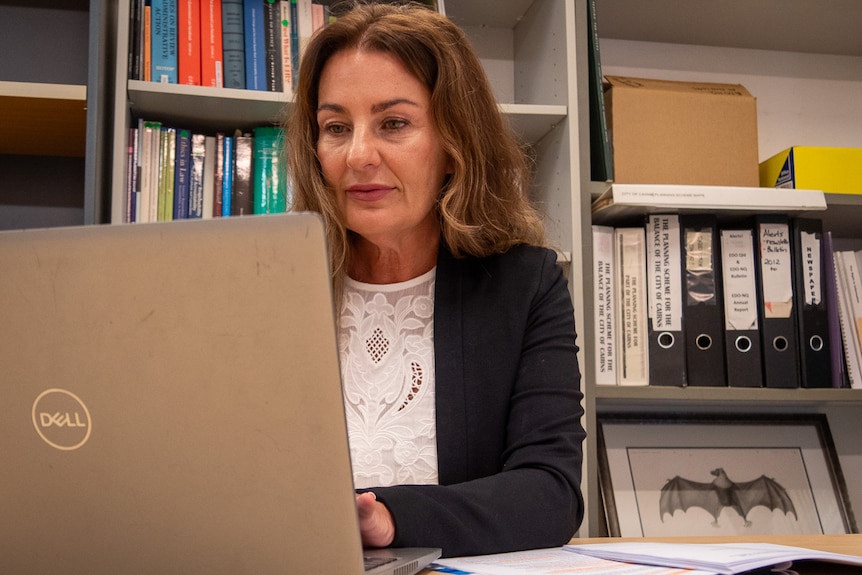
Kirstiana Ward is involved in the legal battle to save Old Faithful. (ABC News: Brendan Mounter)
For Mr Lyall, traditional owners, and other Queensland-based environmental groups, the saga reflects a deeper problem.
“It’s human behaviour that is creating the danger, and the crocodiles are paying the price,” he says.
“If people weren’t feeding crocodiles fish scraps, these interactions wouldn’t happen in the first place.”
Mr Lyall says the officers charged with catching and removing crocodiles were once welcomed as partners on Country. Now he says he no longer trusts them or their government department.
“I thought it was a system that worked with us,” he tells 7.30.
“I feel like the wool had been pulled over my eyes.”
No justice for killed crocs
Traditional owners say that Old Faithful’s removal reflects a broader pattern in which cultural rights are sidelined, management decisions are made behind closed doors, and laws meant to deter reckless behaviour in crocodile habitat are rarely enforced.
Under Queensland’s crocodile management framework, an animal can be declared a “problem crocodile” if it is considered a threat to human safety. Critics say the trigger is often not the crocodile’s behaviour, but people entering or interfering in crocodile habitat.
In 2023, Alister McPhee filmed himself wading into crocodile-infested water at the Bloomfield River with his dog. The dog was taken, and wildlife officers later shot a 4.2 metre crocodile. He received no penalty.
In September 2025, an American influencer known as “The Real Tarzan” posted videos handling freshwater crocodiles in Cape York. Authorities later said they were investigating, but no fine was announced.
Loading…
In Yarrabah in 2025, a 5-metre crocodile known as Big John, a totem for the Gunggandji people, was found decapitated. Despite a police investigation, no arrests have been made.
Queensland increased penalties for feeding or disturbing crocodiles in 2024, with maximum fines exceeding $26,000, but the environment department, DETSI, would not say whether any had been imposed.
Minister silent, premier curt
Mr Lyall says the silence from DETSI and the Queensland Environment Minister, Andrew Powell, has been deafening.
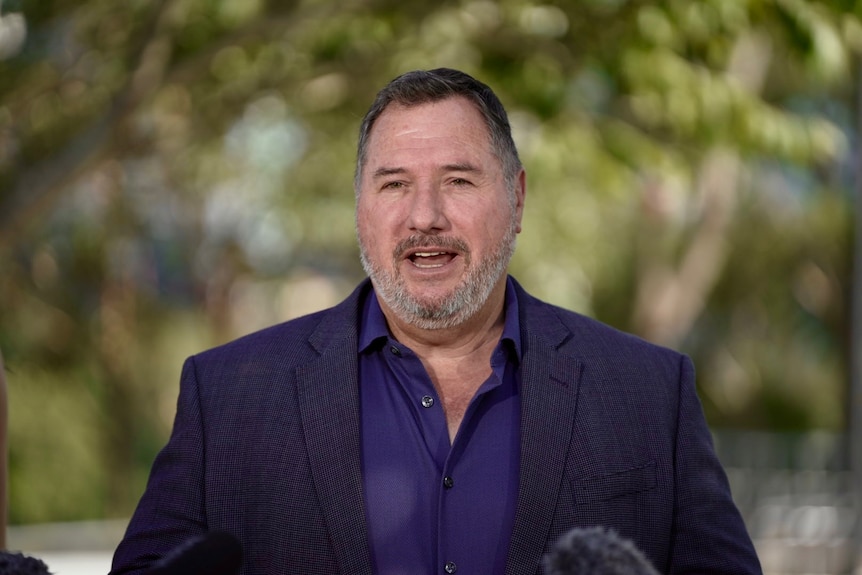
Queensland Environment Minister Andrew Powell has not responded to allegations raised by traditional owners (ABC News: Lucas Hill)
After Old Faithful’s relocation, he requested a meeting. The minister later sent an email defending his department’s actions, stating, “the decision to remove any crocodile from the wild is not one made lightly”.
Mr Lyall says he still has not been granted a meeting. He says the minister and the environment department’s conduct is “disgusting.”
Ms Ward says more than 400 letters were sent to Mr Powell about Old Faithful’s removal, including appeals from crocodile experts.
Mr Powell declined 7.30’s invitation to an interview, and his office did not respond to questions about Old Faithful, enforcement or the erosion of trust.
Queensland Premier David Crisafulli was asked if the silence from the environment minister and the department was a reflection of his government’s attitude towards traditional owners and cultural obligations.
The premier — speaking at a cyclone press conference — took issue with the “premise” of the question and added, “Those people matter to me … we’re a couple of days away from the big event, and we can discuss the crocodile after that.”
For Yidinji Traditional Owner Warren Martens, the issue goes beyond one crocodile.
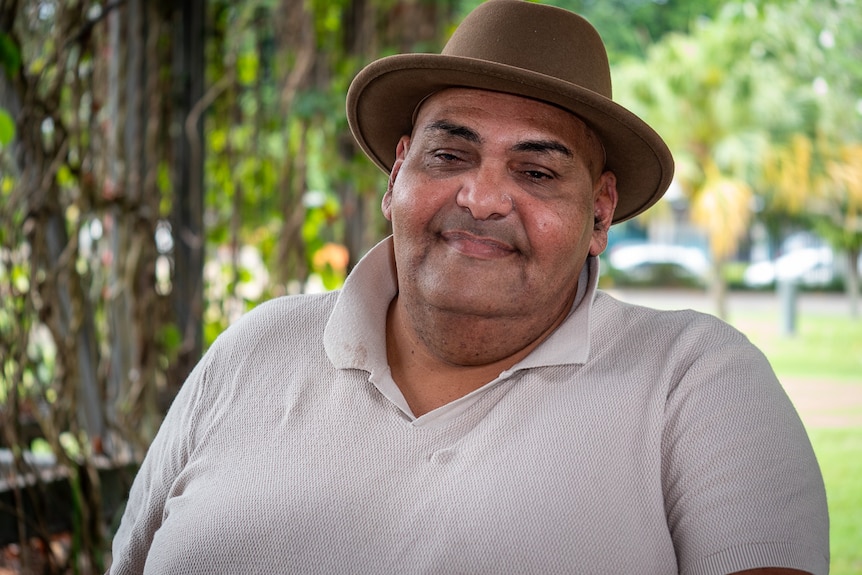
Warren Martens is a Gungganadji Elder and traditional owner. (ABC News: Brendan Mounter)
“The crocodiles are our family. It’d be like the department taking away our children,” Mr Martens says.
Now, Rinyirru (Lakefield) Aboriginal Corporation is proposing the establishment of a traditional owner-led crocodile management authority for the national park.
Under the proposal, rangers based on Country would undertake behavioural assessments and advise the department before any crocodile is removed.
The plan also includes education campaigns aimed at changing human behaviour in crocodile habitats.
Watch 7.30, Mondays to Thursdays 7:30pm on ABC iview and ABC TV
Contact 7.30
Do you know more about this story? Get in touch with 7.30 here.