
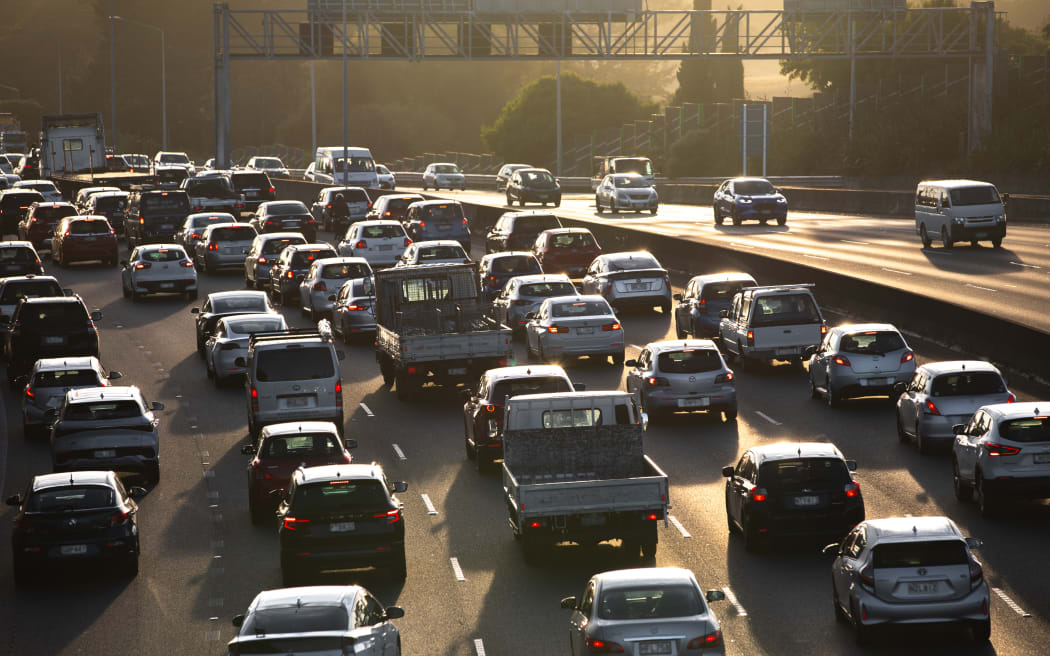
It’s now costing people nearly double to drive their own cars.
Photo: RNZ / Cole Eastham-Farrelly
Public transport is nearly half the price of driving to work in Auckland as fuel prices surge amid the escalating conflict in the Middle East
It comes amid huge uncertainty on the price of petrol in New Zealand following Israel’s attack on the world’s largest natural gasfield in Pars overnight, AA is warning.
The attack has increased uncertainty and seen Brent Crude prices surge to $US110 a barrel by 11am on Thursday (NZT).
Auckland Transport said before the Iran conflict began late last month, the cost of public transport was roughly the same as the cost of driving a vehicle with single occupancy in Auckland.
It’s now costing people nearly double to drive their own cars.
“The cost of petrol has risen at least 50 cents per litre since then, with a 15-kilometre single person commute now costing roughly 80 cents per kilometre, which is equal to about $12 for the total trip.”
AT said this did not include any parking costs.
Has your local petrol station run out of stock? Email us iwitness@rnz.co.nz
“On public transport, that same 15-kilometre trip would typically cost $4.90 and would be a significantly faster journey due to congestion and the availability of bus lanes, frequent rail and ferry services.”
“We can confidently say that the cost of driving 15-kilometres in or out of the city is now roughly double the cost of travelling the same distance by public transport.”
AT said the first week of March was the was the busiest for the public transport network this year with 2.217 million trips on bus, train and ferry services – up from 2.174 million trips, the same time last year.
It said this was likely just a result of more people using public transport rather than concerns over the cost of fuel.
However, it expects the trend will continue upward as the fuel crisis developed.
Auckland Transport said despite big numbers of travellers, it has plenty of capacity across the network.
Meanwhile, the Commerce Commission was watching petrol prices closely.
Commissioner Bryan Chapple said a report out later on Thursday would show that while fuel prices are increasing, they are still well behind the price increases happening offshore.
“What we are keen to see is that the market in New Zealand is as competitive as possible – that’s the best way to ensure that fuel prices are no higher here than they need to be,” Chapple told Midday Report.
“We can’t change the impact of imported costs being high, but what we can do is make sure they are as low as possible once they get here.”
He encourages people to shop around as it drives competition.
Sign up for Ngā Pitopito Kōrero, a daily newsletter curated by our editors and delivered straight to your inbox every weekday.